QUESTION IMAGE
Question
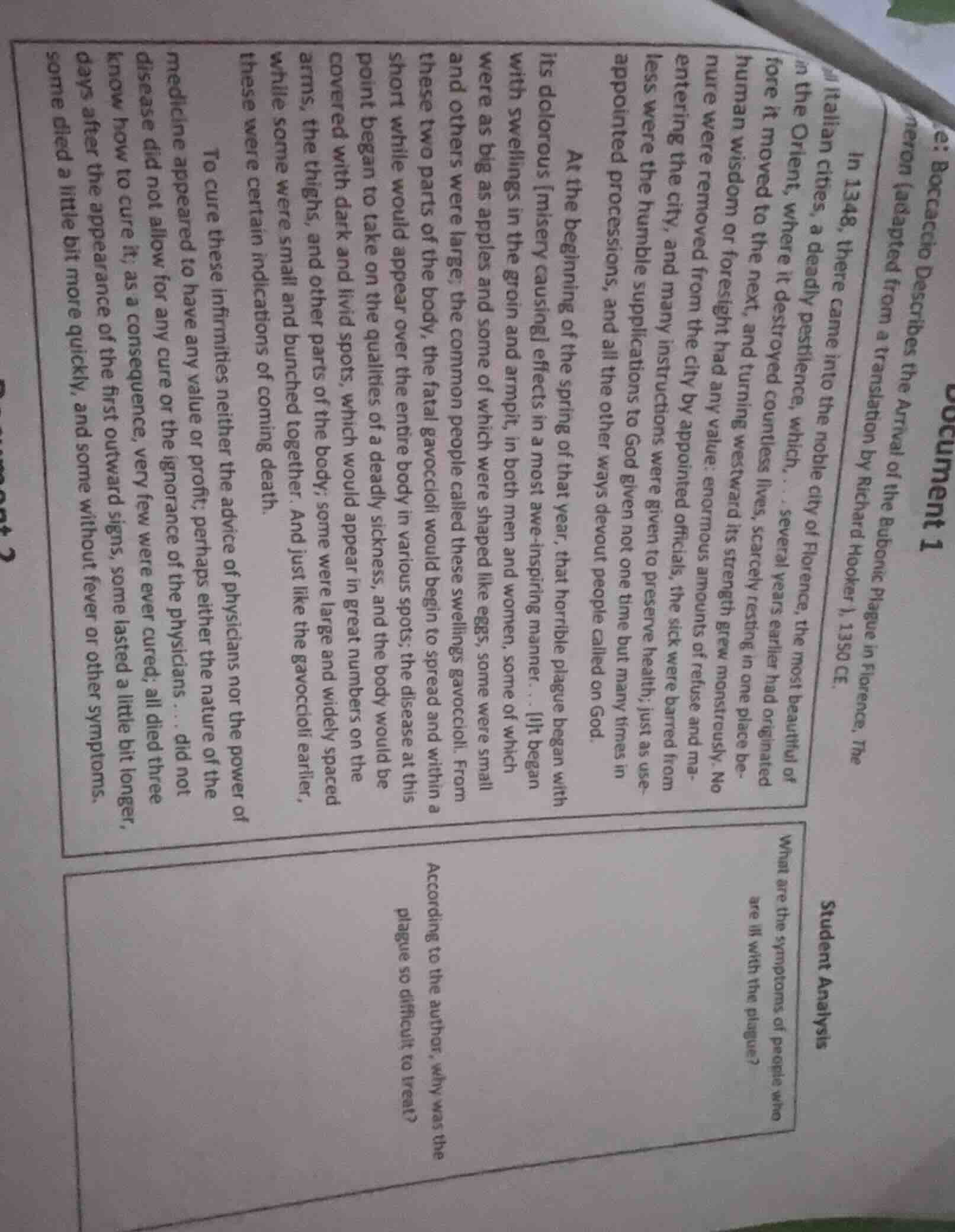
e: boccaccio describes the arrival of the bubonic plague in florence. the meron (adapted from a translation by richard hooker), 1350 ce. in 1348, there came into the noble city of florence, the most beautiful of italian cities, a deadly pestilence, which, ... fore it moved to the orient, where it originated human wisdom or foresight had any value: enormous amounts of refuse and ma- nure were removed from the city by appointed officials, the sick were barred from entering the city, and many instructions were given to preserve health; just as use- less were the humble supplications to god given not one time but many times in appointed processions, and all the other ways devout people called on god. at the beginning of the spring of that year, that horrible plague began with its dolorous misery causing effects in a most awe - inspiring manner. .. it began with swellings in the groin and armpit, in both men and women, some of which were as big as apples and some of which were small and others were large; the common people called these swellings gavoccioli. from these two parts of the body, the fatal gavoccioli would begin to spread and within a short while would appear over the entire body in various spots; the disease at this point began to take on the qualities of a deadly sickness, and the body would be covered with dark and livid spots, which would appear in great numbers on the arms, the thighs, and other parts of the body; some were large and widely spaced while some were small and bunched together. and just like the gavoccioli earlier, these were certain indications of coming death. to cure these infirmities neither the advice of physicians nor the power of medicine appeared to have any value or profit; perhaps either the nature of the disease did not allow for any cure or the ignorance of the physicians ... did not know how to cure it; as a consequence, very few were ever cured; all died three days after the appearance of the first outward signs, some lasted a little bit longer, some died a little bit more quickly, and some without fever or other symptoms. student analysis what are the symptoms of people who are ill with the plague? according to the author, why was the plague so difficult to treat?
1. Symptoms of people ill with the plague:
From the text, the symptoms are: First, painful swellings (gavoccioli) in the groin, armpit, arms, thighs, or other body parts. These swellings varied in size (from small to as big as apples/eggs). Then, dark and livid spots appeared on the body. The disease spread quickly, with some dying quickly (a few days) and others lasting a bit longer, some without fever or other symptoms.
The text says neither physicians' advice nor medicine worked. The nature of the disease was unknown to physicians, so they didn't know how to cure it. Also, the disease's characteristics (like rapid spread, varying symptoms) made treatment hard as existing medical knowledge and medicine were ineffective.

Snap & solve any problem in the app
Get step-by-step solutions on Sovi AI
Photo-based solutions with guided steps
Explore more problems and detailed explanations
- Painful swellings (gavoccioli) in groin, armpit, arms, thighs, or other body parts (varying in size: small, apple - sized, egg - sized).
- Dark and livid spots appearing on the body.
- Rapid progression: some died in a few days, others lasted a bit longer (some without fever or other symptoms).