QUESTION IMAGE
Question
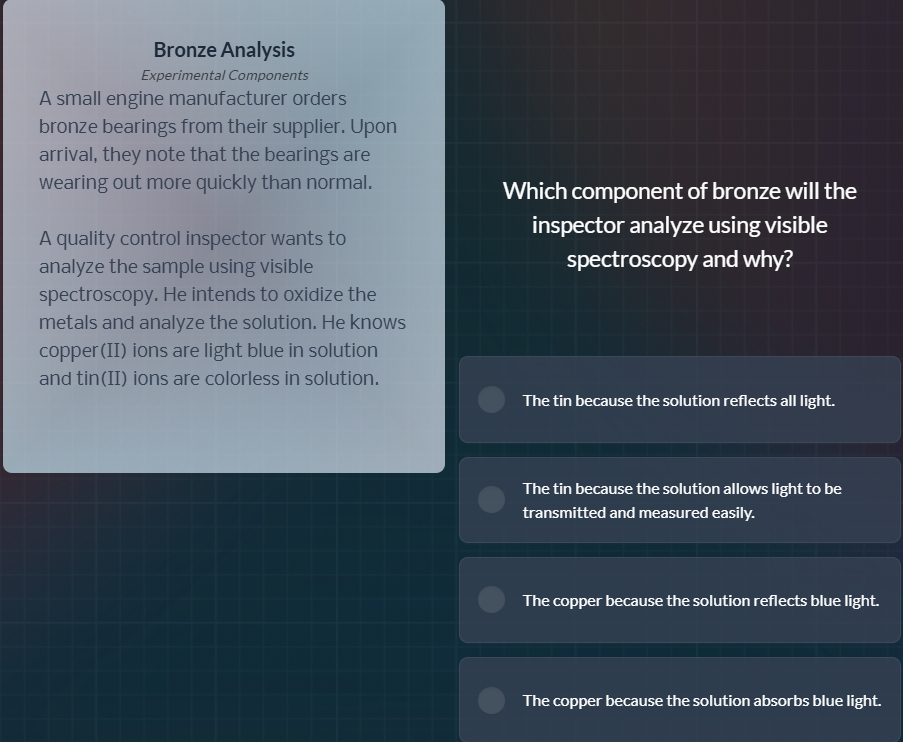
bronze analysis
experimental components
a small engine manufacturer orders
bronze bearings from their supplier. upon
arrival, they note that the bearings are
wearing out more quickly than normal.
a quality control inspector wants to
analyze the sample using visible
spectroscopy. he intends to oxidize the
metals and analyze the solution. he knows
copper(ii) ions are light blue in solution
and tin(ii) ions are colorless in solution.
which component of bronze will the
inspector analyze using visible
spectroscopy and why?
the tin because the solution reflects all light.
the tin because the solution allows light to be
transmitted and measured easily.
the copper because the solution reflects blue light.
the copper because the solution absorbs blue light.
Visible spectroscopy relies on measuring light absorbed by colored solutions, as colorless substances don't interact with visible light enough for analysis. Copper(II) ions form a light blue solution, which appears blue because it absorbs complementary (non-blue) visible light, making it detectable via this method. Tin(II) ions are colorless, so they can't be analyzed effectively with visible spectroscopy.

Snap & solve any problem in the app
Get step-by-step solutions on Sovi AI
Photo-based solutions with guided steps
Explore more problems and detailed explanations
D. The copper because the solution absorbs blue light.