QUESTION IMAGE
Question
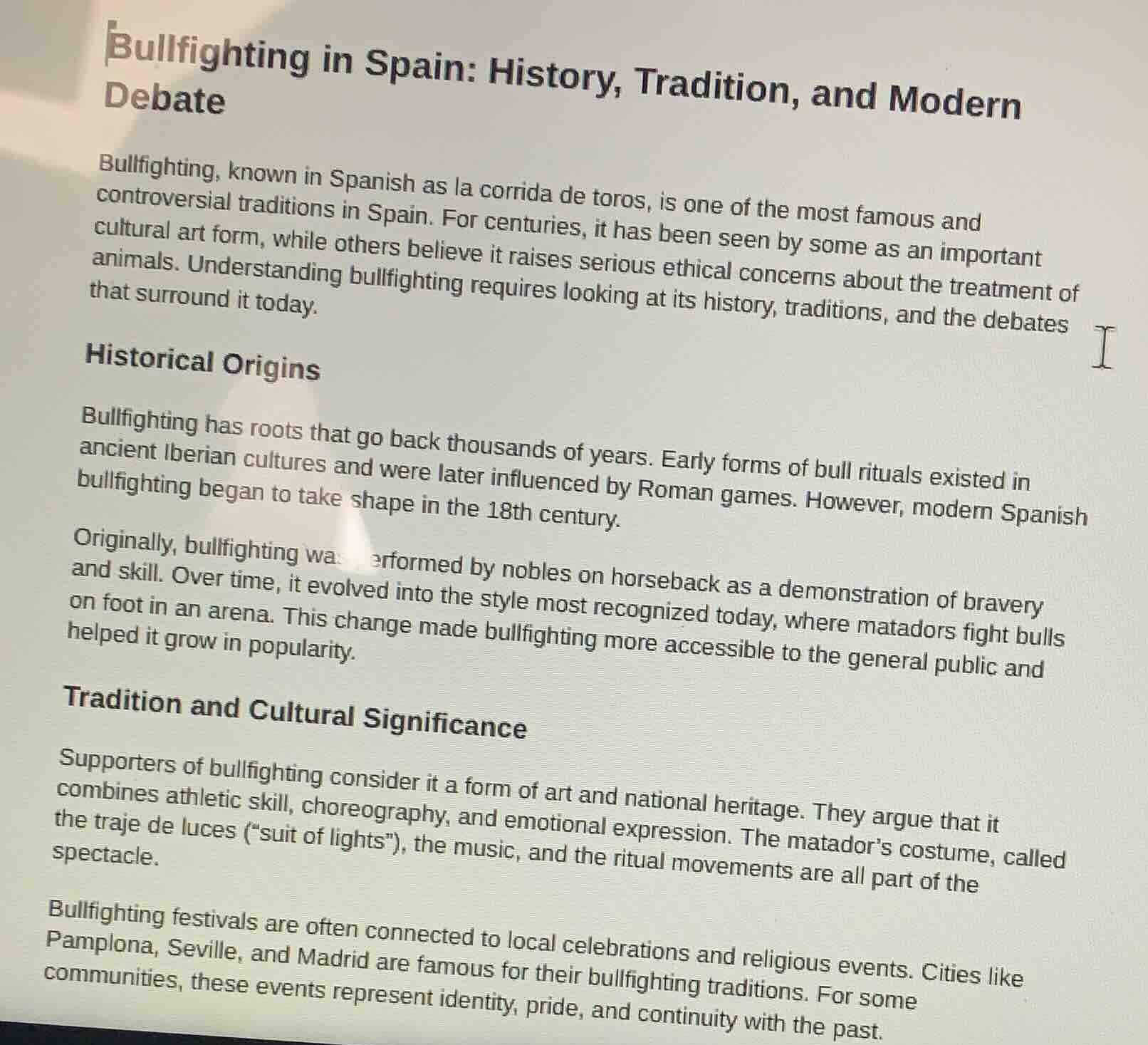
bullfighting in spain: history, tradition, and modern debate
bullfighting, known in spanish as la corrida de toros, is one of the most famous and controversial traditions in spain. for centuries, it has been seen by some as an important cultural art form, while others believe it raises serious ethical concerns about the treatment of animals. understanding bullfighting requires looking at its history, traditions, and the debates that surround it today.
historical origins
bullfighting has roots that go back thousands of years. early forms of bull rituals existed in ancient iberian cultures and were later influenced by roman games. however, modern spanish bullfighting began to take shape in the 18th century.
originally, bullfighting wa performed by nobles on horseback as a demonstration of bravery and skill. over time, it evolved into the style most recognized today, where matadors fight bulls on foot in an arena. this change made bullfighting more accessible to the general public and helped it grow in popularity.
tradition and cultural significance
supporters of bullfighting consider it a form of art and national heritage. they argue that it combines athletic skill, choreography, and emotional expression. the matadors costume, called the traje de luces (\suit of lights\), the music, and the ritual movements are all part of the spectacle.
bullfighting festivals are often connected to local celebrations and religious events. cities like pamplona, seville, and madrid are famous for their bullfighting traditions. for some communities, these events represent identity, pride, and continuity with the past.

Snap & solve any problem in the app
Get step-by-step solutions on Sovi AI
Photo-based solutions with guided steps
Explore more problems and detailed explanations
- Bullfighting is a controversial tradition in Spain, seen by some as a cultural art form and by others as an ethical concern regarding animal treatment.
- Modern Spanish bullfighting began to take shape in the 18th century.
- Bullfighting evolved from a performance by nobles on horseback to a style where matadors fight on foot in an arena, making it more accessible to the general public.
- Supporters view it as a form of art and national heritage involving athletic skill, choreography, and ritual.
- Pamplona, Seville, and Madrid.