QUESTION IMAGE
Question
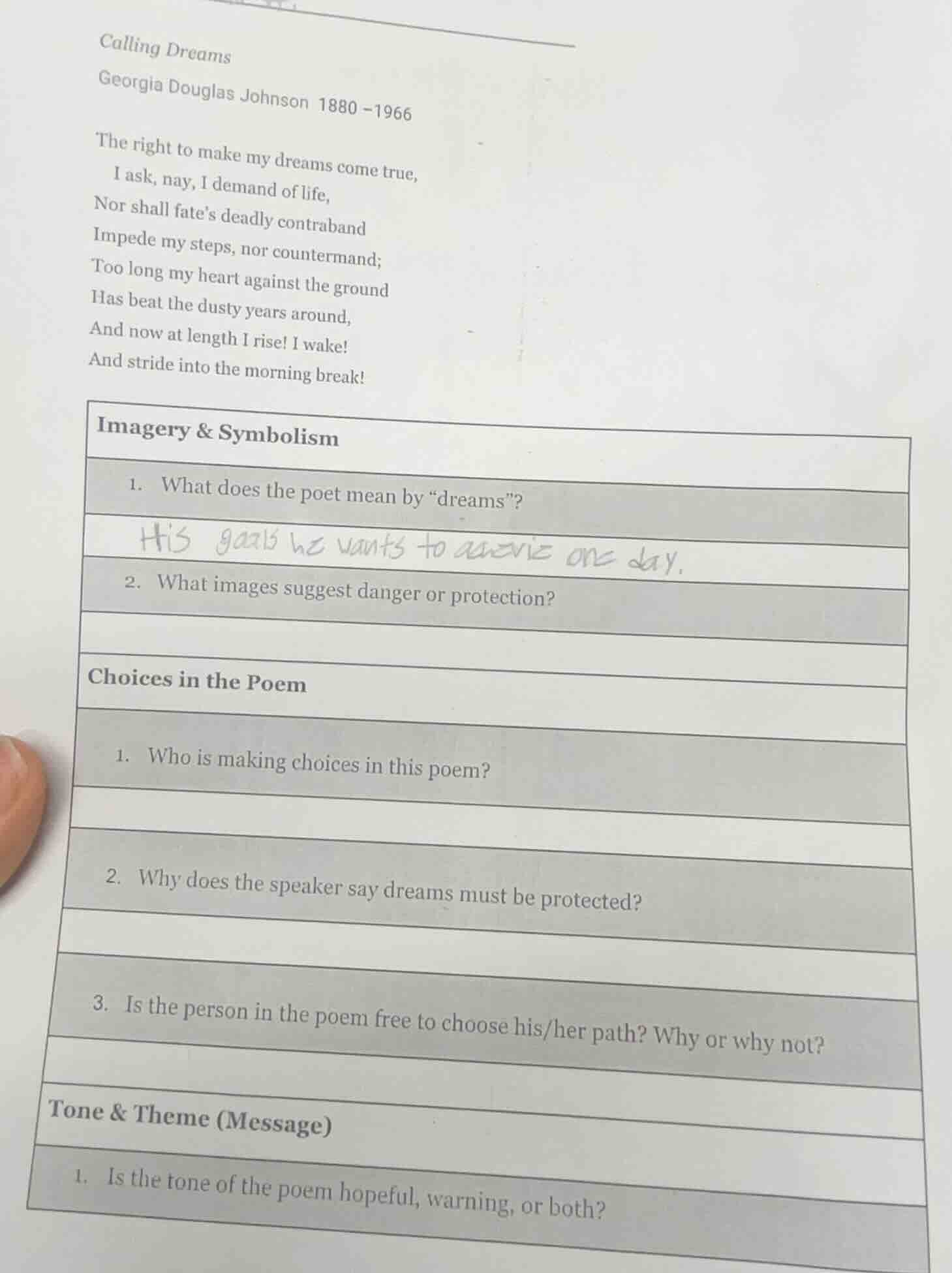
calling dreams
georgia douglas johnson 1880 - 1966
the right to make my dreams come true,
i ask, nay, i demand of life,
nor shall fate’s deadly contraband
impede my steps, nor countermand;
too long my heart against the ground
has beat the dusty years around,
and now at length i rise! i wake!
and stride into the morning break!
imagery & symbolism
- what does the poet mean by \dreams\?
his goals he wants to achieve one day.
- what images suggest danger or protection?
choices in the poem
- who is making choices in this poem?
- why does the speaker say dreams must be protected?
- is the person in the poem free to choose his/her path? why or why not?
tone & theme (message)
- is the tone of the poem hopeful, warning, or both?
Brief Explanations
- Imagery & Symbolism Q1: The handwritten answer correctly identifies "dreams" as the speaker's long-term goals and aspirations they wish to achieve.
- Imagery & Symbolism Q2: The phrase "fate's deadly contraband" suggests danger—"deadly" implies harm, and "contraband" (illegal, restricted goods) frames fate as a restrictive, threatening force that would block the speaker's progress.
- Choices in the Poem Q1: The speaker (the poem's first-person voice, representing Georgia Douglas Johnson's perspective of a marginalized person seeking fulfillment) is making choices. They choose to demand their right to achieve dreams and rise past obstacles.
- Choices in the Poem Q2: The speaker says dreams must be protected because "fate's deadly contraband" seeks to impede their progress; their dreams have been suppressed for "dusty years," so protecting them is necessary to finally claim their right to fulfillment.
- Choices in the Poem Q3: The speaker is now choosing their path, as they declare "I rise! I wake! And stride into the morning break!" They were previously constrained by unfulfilled years and fate's obstacles, but they are now asserting their freedom to pursue their dreams by rejecting those barriers.
- Tone & Theme Q1: The tone is both. It is warning in its acknowledgment of "fate's deadly contraband" as a barrier, and hopeful as the speaker declares they are rising, waking, and moving forward to claim their dreams.

Snap & solve any problem in the app
Get step-by-step solutions on Sovi AI
Photo-based solutions with guided steps
Explore more problems and detailed explanations
- Imagery & Symbolism Q1: His goals he wants to achieve one day.
- Imagery & Symbolism Q2: "Fate's deadly contraband" suggests danger, framing fate as a threatening, restrictive force.
- Choices in the Poem Q1: The poem's first-person speaker is making choices.
- Choices in the Poem Q2: Because fate and long-term suppression threaten to block the speaker from achieving their dreams, so protecting them is key to claiming their right to fulfillment.
- Choices in the Poem Q3: Yes, they are free to choose their path now. They are asserting their agency by rising past the "dusty years" and rejecting fate's obstacles to stride toward their dreams.
- Tone & Theme Q1: Both. The poem warns of fate's threatening barriers, while also carrying a hopeful tone as the speaker asserts their resolve to pursue their dreams.