QUESTION IMAGE
Question
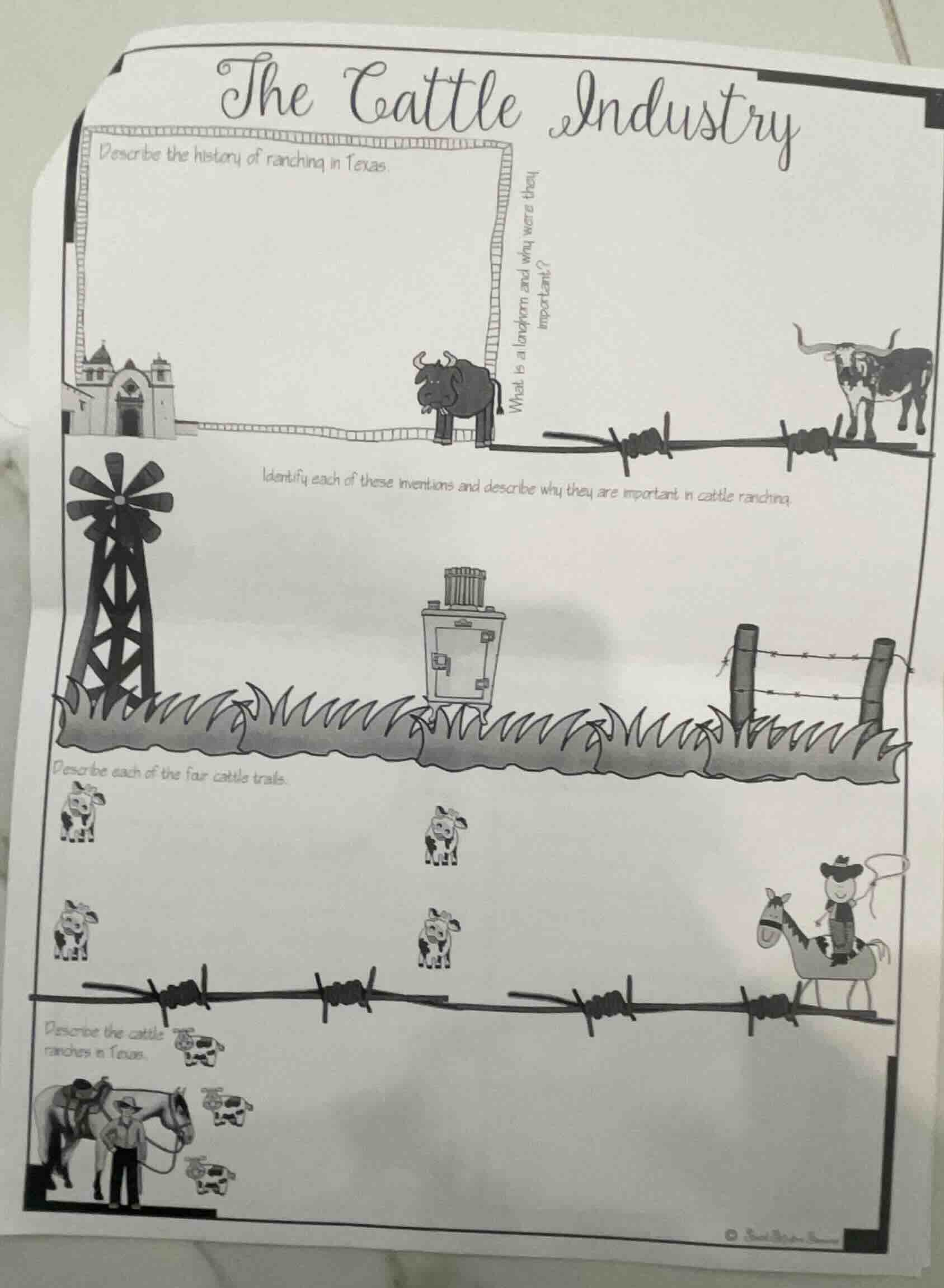
the cattle industry
describe the history of ranching in texas.
what is a landgrant and why were they important?
identify each of these inventions and describe why they are important in cattle ranching.
describe each of the four cattle trails.
describe the cattle ranches in texas.
Sub - question 1: Describe the history of ranching in Texas.
Ranching in Texas has a long history. Spanish settlers brought cattle to Texas in the 18th century. After the Mexican - American War, with the expansion of the United States, ranching grew. The Civil War led to a surplus of cattle in Texas. After the war, the demand for beef in the North increased, and the cattle drives era began. Later, with the invention of barbed wire, open - range ranching declined, and fenced ranches became more common.
A land grant is a transfer of land from a government (in Texas's case, Spanish, Mexican, or later U.S. governments) to individuals or groups. They were important for ranching as they provided land for settlers to establish ranches, grow the cattle industry, and promote settlement and economic development in Texas.
- Windmill: It is used to pump water from underground. Important for cattle ranching as it provides a reliable water source for cattle, especially in areas with limited surface water.
- Refrigerator (icebox): Allowed for the preservation of beef. Important because it enabled the storage and transport of beef over longer distances, expanding the market for Texas cattle.
- Barbed wire: Used to fence land. Important as it ended open - range ranching, allowed ranchers to control their cattle, protect their land, and manage their herds more efficiently.

Snap & solve any problem in the app
Get step-by-step solutions on Sovi AI
Photo-based solutions with guided steps
Explore more problems and detailed explanations
The history of ranching in Texas starts with Spanish settlers bringing cattle in the 18th century. Post - Mexican - American War, ranching expanded. The Civil War left Texas with a cattle surplus. Post - war, northern beef demand spurred cattle drives. Later, barbed wire led to fenced ranches replacing open - range ranching.