QUESTION IMAGE
Question
chapter 06: analyzing the audience
question 3 of 15
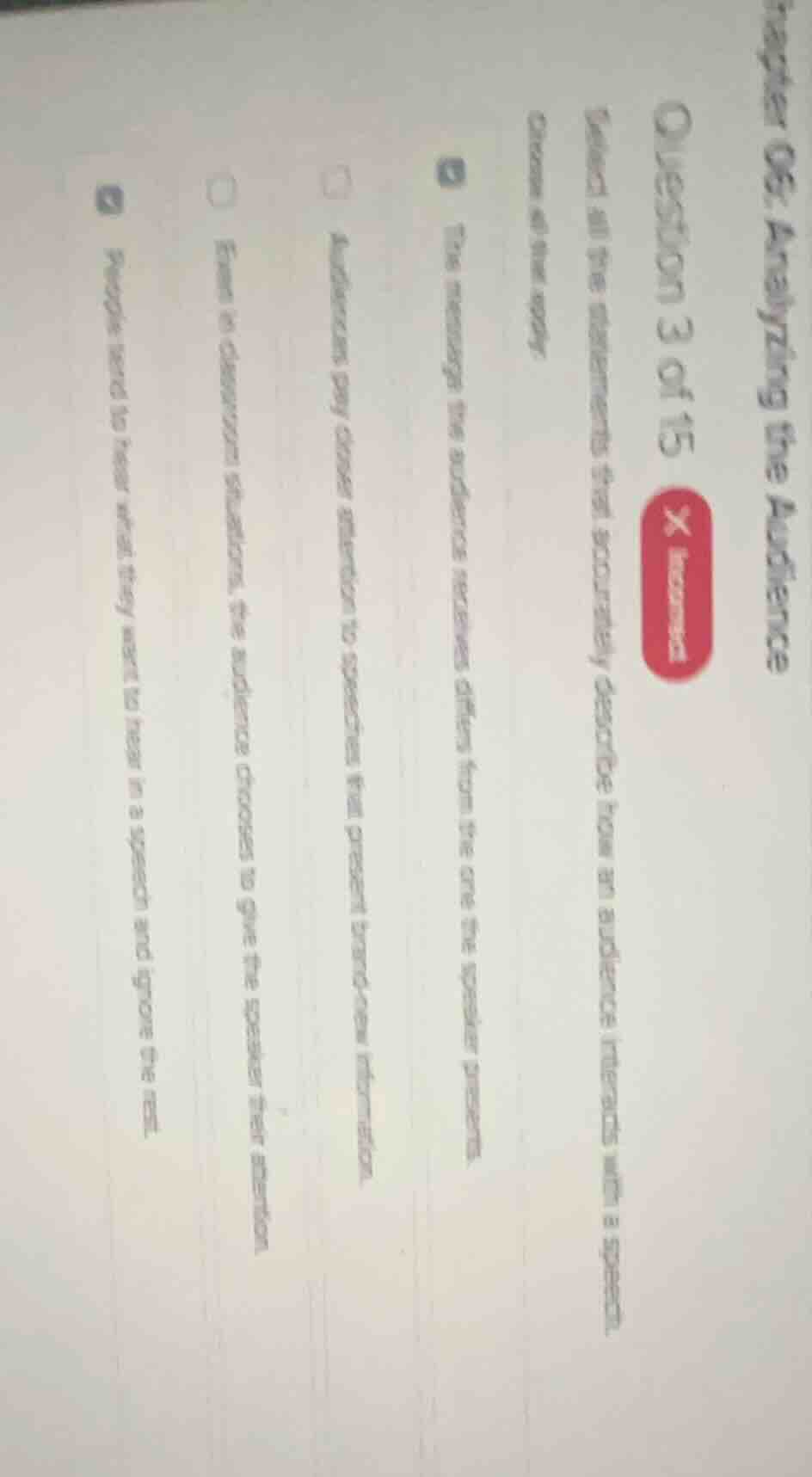
select all the statements that accurately describe how an audience interacts with a speech. choose all that apply.
- the message the audience receives differs from the one the speaker presents.
- audiences can only choose attention to aspects that present brand - new information.
- even in classroom situations, the audience chooses to give the speaker their attention.
- people tend to hear what they want to hear in a speech and ignore the rest.
Brief Explanations
To determine the correct statements about audience interaction with a speech, we analyze each option:
- "The message the audience receives differs from the one the speaker presents." - This is true because audience interpretation is influenced by their own perspectives, knowledge, and biases, so the received message can vary from the intended one.
- "Audiences can only choose attention to speeches that present brand - new information." - This is false. Audiences can pay attention to speeches for various reasons, including relevance to their interests, entertainment value, or reinforcement of existing knowledge, not just brand - new information.
- "Even in classroom situations, the audience chooses to give the speaker their attention." - This is true. In a classroom, students (the audience) make a choice to engage and give their attention to the teacher (the speaker), although there may be external factors like grades, but the act of paying attention is still a choice to some extent.
- "People tend to hear what they want to hear in a speech and ignore the rest." - This is true. This is related to selective perception, where people filter information based on their pre - existing beliefs, interests, and needs, focusing on what aligns with their wants and ignoring other parts of the speech.

Snap & solve any problem in the app
Get step-by-step solutions on Sovi AI
Photo-based solutions with guided steps
Explore more problems and detailed explanations
- The message the audience receives differs from the one the speaker presents.
- Even in classroom situations, the audience chooses to give the speaker their attention.
- People tend to hear what they want to hear in a speech and ignore the rest.