QUESTION IMAGE
Question
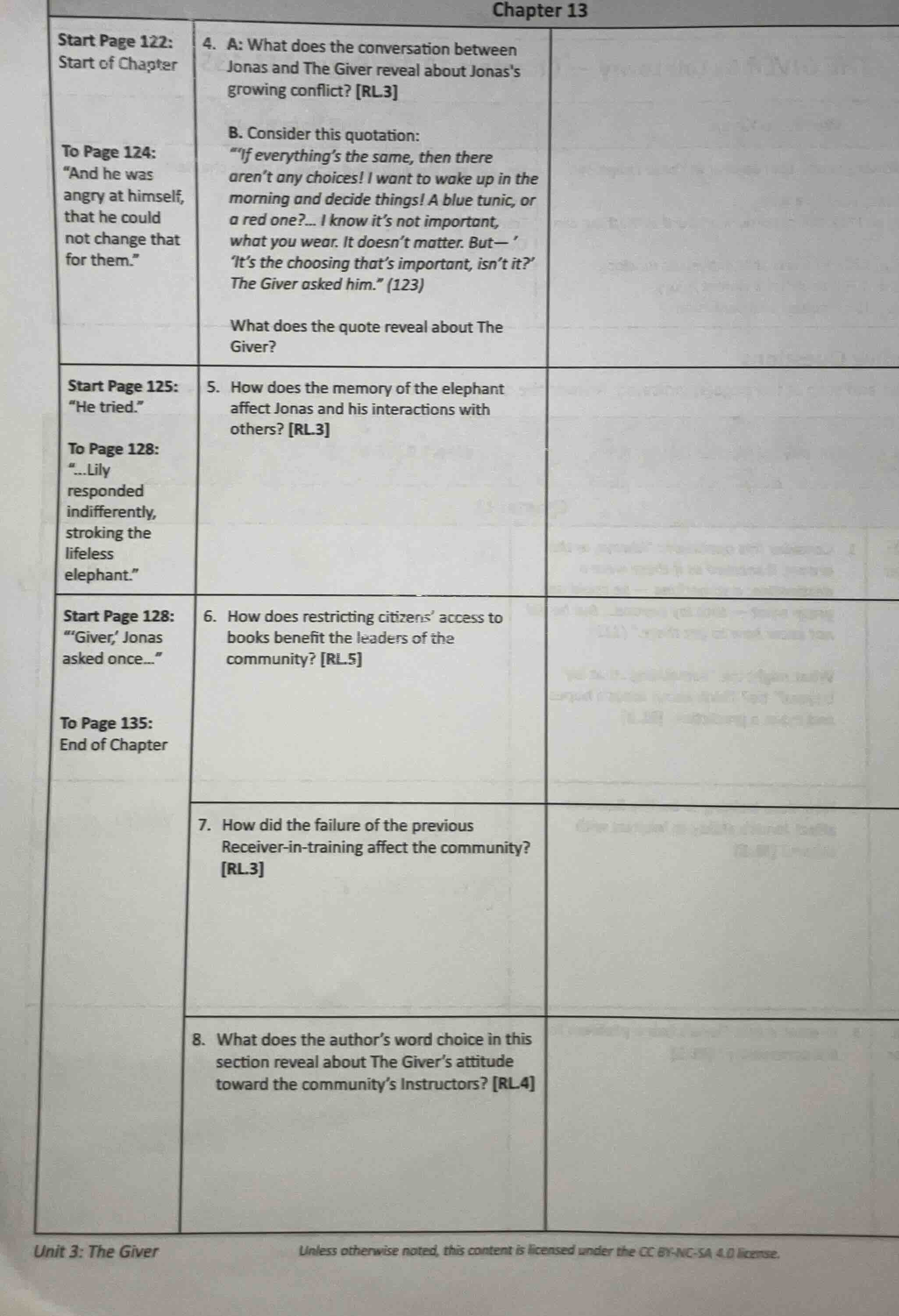
chapter 13
start page 122:
start of chapter
to page 124:
\and he was
angry at himself,
that he could
not change that
for them.\
- a: what does the conversation between
jonas and the giver reveal about jonass
growing conflict? rl.3
b. consider this quotation:
\if everythings the same, then there
arent any choices! i want to wake up in the
morning and decide things! a blue tunic, or
a red one?... i know its not important,
what you wear. it doesnt matter. but—
its the choosing thats important, isnt it?
the giver asked him.\ (123)
what does the quote reveal about the
giver?
start page 125:
\he tried.\
to page 128:
\...lily
responded
indifferently,
stroking the
lifeless
elephant.\
- how does the memory of the elephant
affect jonas and his interactions with
others? rl.3
start page 128:
\giver, jonas
asked once...\
to page 135:
end of chapter
- how does restricting citizens access to
books benefit the leaders of the
community? rl.5
- how did the failure of the previous
receiver-in-training affect the community?
rl.3
- what does the authors word choice in this
section reveal about the givers attitude
toward the communitys instructors? rl.4
unit 3: the giver
unless otherwise noted, this content is licensed under the cc by-nc-sa 4.0 license.
For Question 4A:
Jonas's conflict is between the rigid, choice-free community he lives in and his new desire for autonomy and individual decision-making, sparked by the memories he's received. He resents being unable to change the lack of choice for others, showing his growing disillusionment with the community's sameness.
For Question 4B:
The quote reveals The Giver understands that the ability to choose is a core, meaningful part of human experience. He validates Jonas's frustration, showing he shares the belief that sameness strips people of a fundamental, valuable part of life, and he has long been aware of this flaw in the community.
For Question 5:
The memory of the elephant (and its death) gives Jonas a deep understanding of suffering, loss, and empathy that no one else in the community has. This makes him feel isolated from others like Lily, who cannot comprehend the weight of the memory, as seen in her indifferent reaction to the elephant figurine. It also deepens his anger at the community's ignorance of real pain and emotion.
For Question 6:
Restricting access to books keeps community members ignorant of alternative ways of life, history, and the concept of choice. Without this knowledge, citizens cannot question the leaders' control or imagine a different society, so they remain compliant and easy to govern, preserving the leaders' power and the community's rigid "sameness."
For Question 7:
When the previous Receiver-in-Training (Rosemary) failed, the painful memories she held were released into the community, causing widespread confusion and suffering that the community had never experienced before. As a result, the leaders created stricter rules around the Receiver role, and the community became more fearful of any disruption to their controlled, pain-free existence.
For Question 8:
The Giver uses dismissive, critical language when referring to the Instructors, revealing he views them as narrow-minded and ignorant. He knows they only teach the limited, approved knowledge of the community and lack the wisdom of real history and emotion, so he holds a condescending, disdainful attitude toward their limited understanding.

Snap & solve any problem in the app
Get step-by-step solutions on Sovi AI
Photo-based solutions with guided steps
Explore more problems and detailed explanations
- 4A: Jonas's growing conflict is between his loyalty to the community's "sameness" and his new, urgent desire for individual choice and autonomy; he is angry that he can't free others from the lack of meaningful decision-making.
- 4B: The Giver reveals he deeply values the human right to choose, understands that choice is a core, meaningful part of existence, and has long been aware of the community's fundamental flaw in eliminating it.
- 5: The memory makes Jonas feel deeply isolated from others (who cannot grasp suffering or empathy), deepens his disillusionment with the community's ignorance of real emotion, and fuels his anger at their lack of understanding.
- 6: Restricting books keeps citizens ignorant of alternative societies, history, and choice, so they cannot question the leaders' control, ensuring compliance and preserving the leaders' power over the rigid, sameness-focused community.
- 7: The failure released painful, unknown memories into the community, causing widespread confusion and suffering; it led to stricter rules for the Receiver role and made the community more fearful of disrupting their controlled, pain-free life.
- 8: The Giver's word choice reveals a condescending, disdainful attitude—he sees the Instructors as narrow-minded, ignorant, and limited by their lack of access to real, full knowledge of human experience.