QUESTION IMAGE
Question
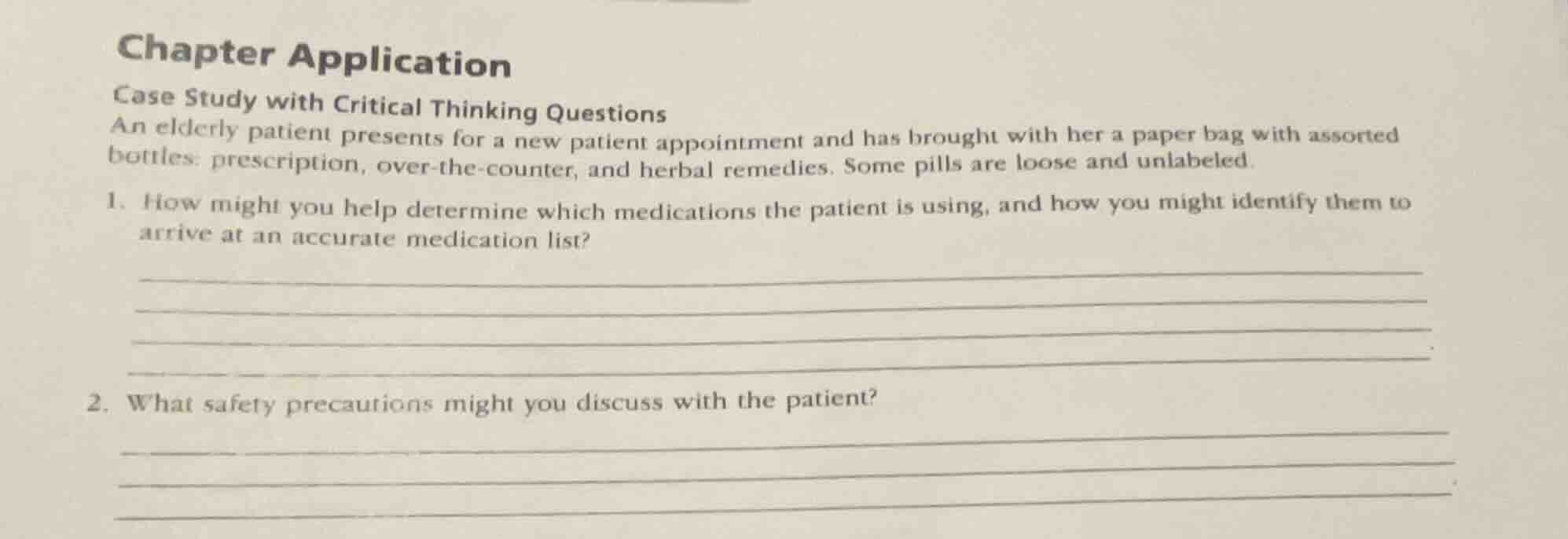
chapter application case study with critical thinking questions an elderly patient presents for a new patient appointment and has brought with her a paper bag with assorted bottles: prescription, over - the - counter, and herbal remedies. some pills are loose and unlabeled. 1. how might you help determine which medications the patient is using, and how you might identify them to arrive at an accurate medication list? 2. what safety precautions might you discuss with the patient?
Question 1
To determine the medications, first, interview the patient about each bottle/loose pill: ask about purpose, dosage, frequency, and when she started taking them. For labeled prescription/Otc bottles, note the name, strength, and directions. For unlabeled/loose pills, use physical characteristics (shape, color, markings) and consult drug databases or a pharmacist. Cross - reference with the patient's medical history (if available) to check for appropriateness. Document all findings to create the medication list.
For safety precautions, discuss proper storage (e.g., in labeled, child - resistant containers, away from heat/moisture). Advise against sharing medications. Emphasize the importance of taking medications as prescribed, not self - adjusting doses. Warn about drug interactions (between prescriptions, OTC, and herbal remedies) and to report any adverse effects. Also, suggest keeping an updated medication list and bringing it to all appointments.

Snap & solve any problem in the app
Get step-by-step solutions on Sovi AI
Photo-based solutions with guided steps
Explore more problems and detailed explanations
- Interview the patient about each medication (purpose, dosage, etc.). 2. Note details from labeled bottles. 3. Use physical traits of unlabeled/loose pills and consult drug resources. 4. Cross - reference with medical history. 5. Document to form the medication list.