QUESTION IMAGE
Question
chemical and physical weathering
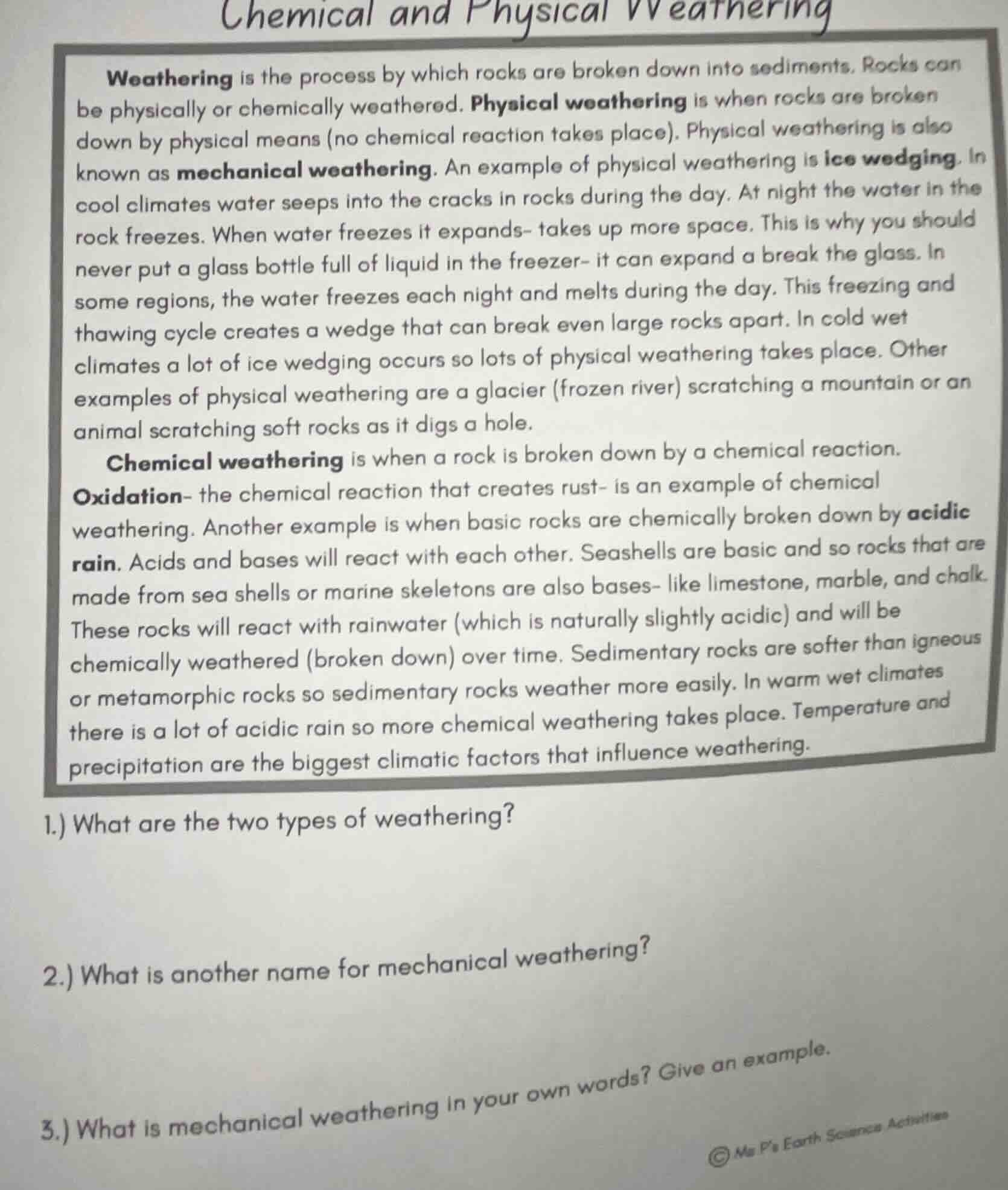
weathering is the process by which rocks are broken down into sediments. rocks can be physically or chemically weathered. physical weathering is when rocks are broken down by physical means (no chemical reaction takes place). physical weathering is also known as mechanical weathering. an example of physical weathering is ice wedging. in cool climates water seeps into the cracks in rocks during the day. at night the water in the rock freezes. when water freezes it expands - takes up more space. this is why you should never put a glass bottle full of liquid in the freezer - it can expand a break the glass. in some regions, the water freezes each night and melts during the day. this freezing and thawing cycle creates a wedge that can break even large rocks apart. in cold wet climates a lot of ice wedging occurs so lots of physical weathering takes place. other examples of physical weathering are a glacier (frozen river) scratching a mountain or an animal scratching soft rocks as it digs a hole.
chemical weathering is when a rock is broken down by a chemical reaction. oxidation - the chemical reaction that creates rust - is an example of chemical weathering. another example is when basic rocks are chemically broken down by acidic rain. acids and bases will react with each other. seashells are basic and so rocks that are made from sea shells or marine skeletons are also bases - like limestone, marble, and chalk. these rocks will react with rainwater (which is naturally slightly acidic) and will be chemically weathered (broken down) over time. sedimentary rocks are softer than igneous or metamorphic rocks so sedimentary rocks weather more easily. in warm wet climates there is a lot of acidic rain so more chemical weathering takes place. temperature and precipitation are the biggest climatic factors that influence weathering.
1.) what are the two types of weathering?
2.) what is another name for mechanical weathering?
3.) what is mechanical weathering in your own words? give an example.
1.
The text states "Rocks can be physically or chemically weathered" and then defines physical (mechanical) and chemical weathering. So we extract the two types from this information.
From the text: "Physical weathering is also known as mechanical weathering", so we can find the alternative name for mechanical weathering.
First, understand the definition from the text: physical weathering (mechanical) is breaking rocks by physical means (no chemical reaction). Then, use the example given (ice wedging, glacier scratching, animal digging) or explain in own words. For example, describe how ice wedging works (water in cracks freezes, expands, breaks rock) or another example.

Snap & solve any problem in the app
Get step-by-step solutions on Sovi AI
Photo-based solutions with guided steps
Explore more problems and detailed explanations
The two types of weathering are physical weathering (also known as mechanical weathering) and chemical weathering.