QUESTION IMAGE
Question
city of houston, department of neighborhoods
font size medium
facts
- while the cost of graffiti vandalism in the u.s. has not been definitively documented, many municipal governments, communities and property owners report that the cost is rising each year.
- based on figures from a variety of cities across the country, graffiti cleanup costs tax payers $1.3 per person per year. in smaller communities, the cost is less than $1 per person. nationally, this adds up to between 300 and 900 million dollars per year.
- immediate removal of graffiti — within 24 to 48 hours — is the key to successful prevention.
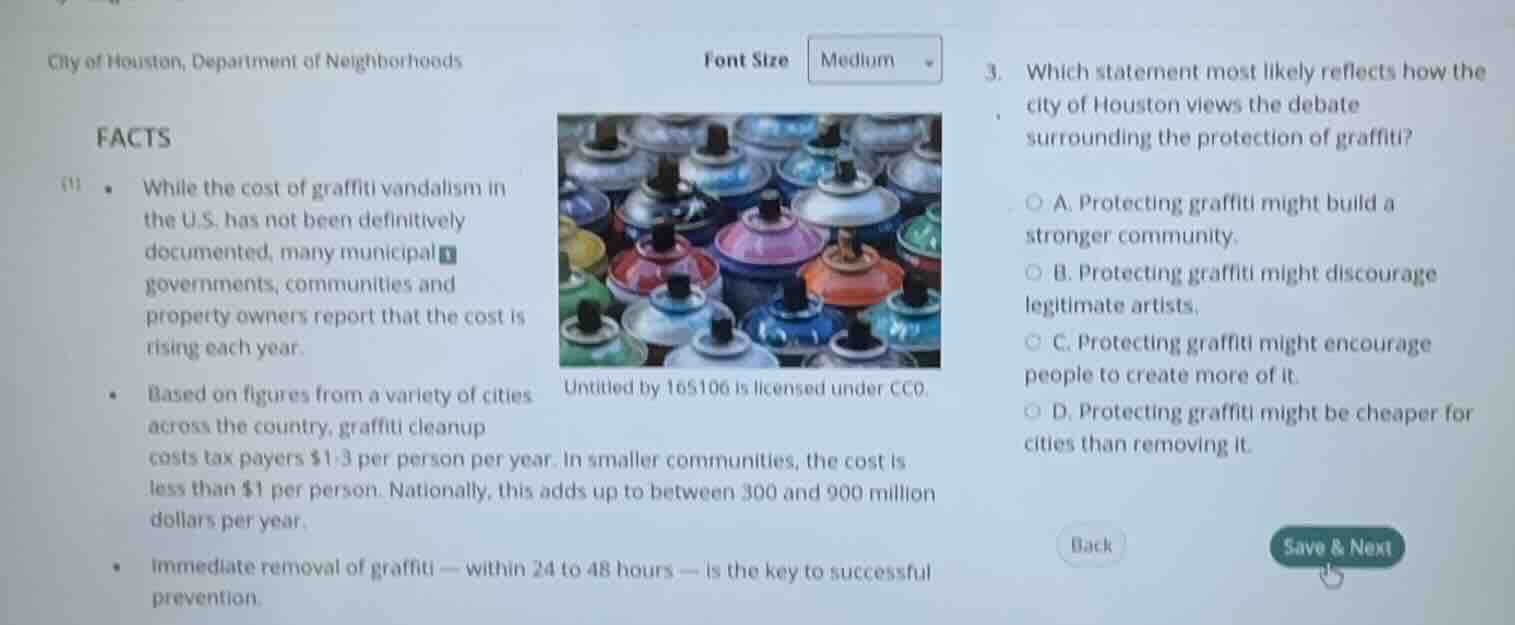
untitled by 165106 is licensed under cc0.
- which statement most likely reflects how the city of houston views the debate surrounding the protection of graffiti?
a. protecting graffiti might build a stronger community.
b. protecting graffiti might discourage legitimate artists.
c. protecting graffiti might encourage people to create more of it.
d. protecting graffiti might be cheaper for cities than removing it.
The provided facts focus on the rising costs of graffiti vandalism, taxpayer expenses for cleanup, and that quick removal is key to prevention. This shows the city frames graffiti as a costly problem to be stopped. Option C aligns with this: if graffiti were protected, the city's framing suggests it would lead to more of this costly, unwanted activity. The other options contradict the facts: A claims community benefit (not mentioned), B says it discourages artists (no link given), D claims it's cheaper than removal (directly opposed to cleanup cost details).

Snap & solve any problem in the app
Get step-by-step solutions on Sovi AI
Photo-based solutions with guided steps
Explore more problems and detailed explanations
C. Protecting graffiti might encourage people to create more of it.