QUESTION IMAGE
Question
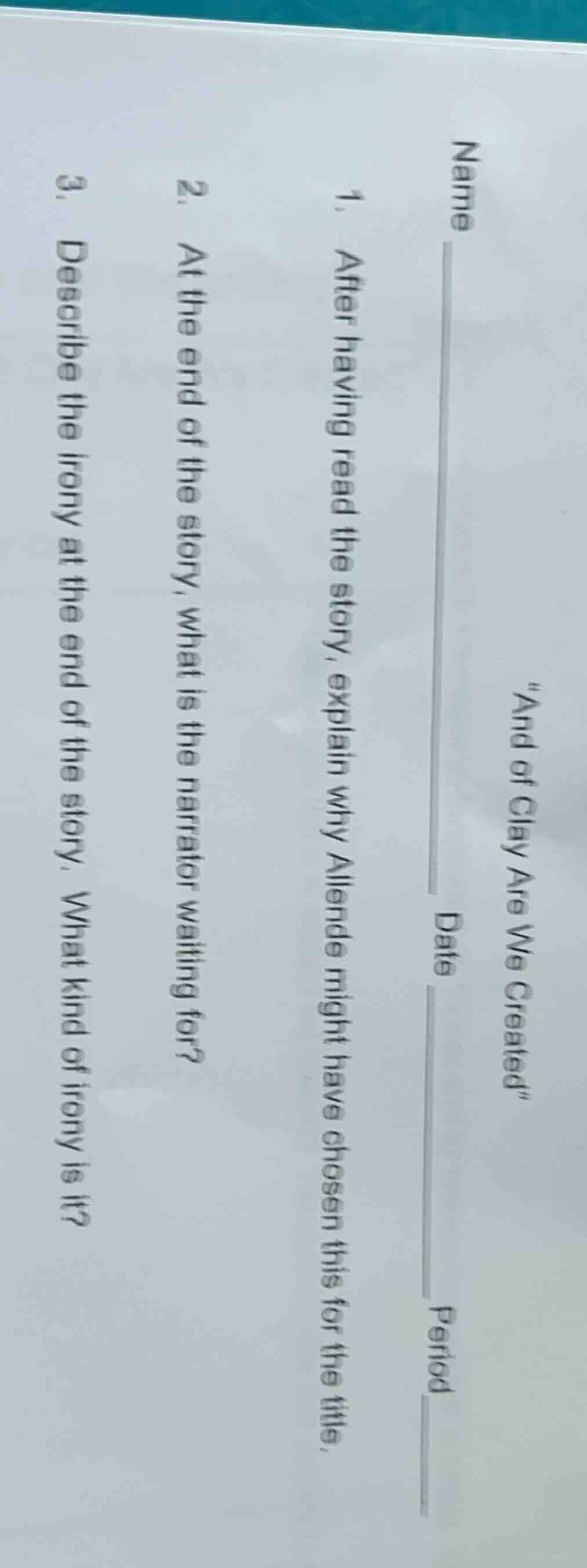
\and of clay are we created\
name _____________ date ___________ period______
- after having read the story, explain why allende might have chosen this for the title.
- at the end of the story, what is the narrator waiting for?
- describe the irony at the end of the story. what kind of irony is it?
Brief Explanations
- The title references the biblical creation of humans from clay, tying to the story's focus on human vulnerability against natural disaster. Allende uses it to frame the tragedy of the Armero mudslide, emphasizing that humans, made of fragile clay, are powerless against nature's forces; it also underscores the story's themes of mortality and humanity's fragile existence.
- At the end of the story, the narrator (Rolf Carle) is waiting for Azucena to be rescued, but more deeply, he is waiting for a resolution to the trauma of both her suffering and his own repressed past trauma that her situation has unearthed.
- The irony at the end is situational irony: the entire world watches and mobilizes resources to save Azucena, yet she dies anyway, and the rescue efforts fail to save the one they focused on. Additionally, Rolf confronts his past trauma through Azucena, but her death leaves him with unresolved pain, creating a bitter contrast between the hope of rescue and the reality of loss.

Snap & solve any problem in the app
Get step-by-step solutions on Sovi AI
Photo-based solutions with guided steps
Explore more problems and detailed explanations
- Allende chose the title to echo the biblical origin of humans from clay, highlighting humanity's fragility against natural disasters and the story's themes of mortality and powerlessness in the face of nature's wrath.
- The narrator is waiting for Azucena to be rescued, and also waiting to process the trauma of her suffering and his own repressed childhood trauma that her ordeal has brought to the surface.
- The irony is situational irony: despite global attention and rescue efforts to save Azucena, she still dies, and Rolf's confrontation with his trauma ends with unresolved pain, contrasting the hope of salvation with the reality of loss.