QUESTION IMAGE
Question
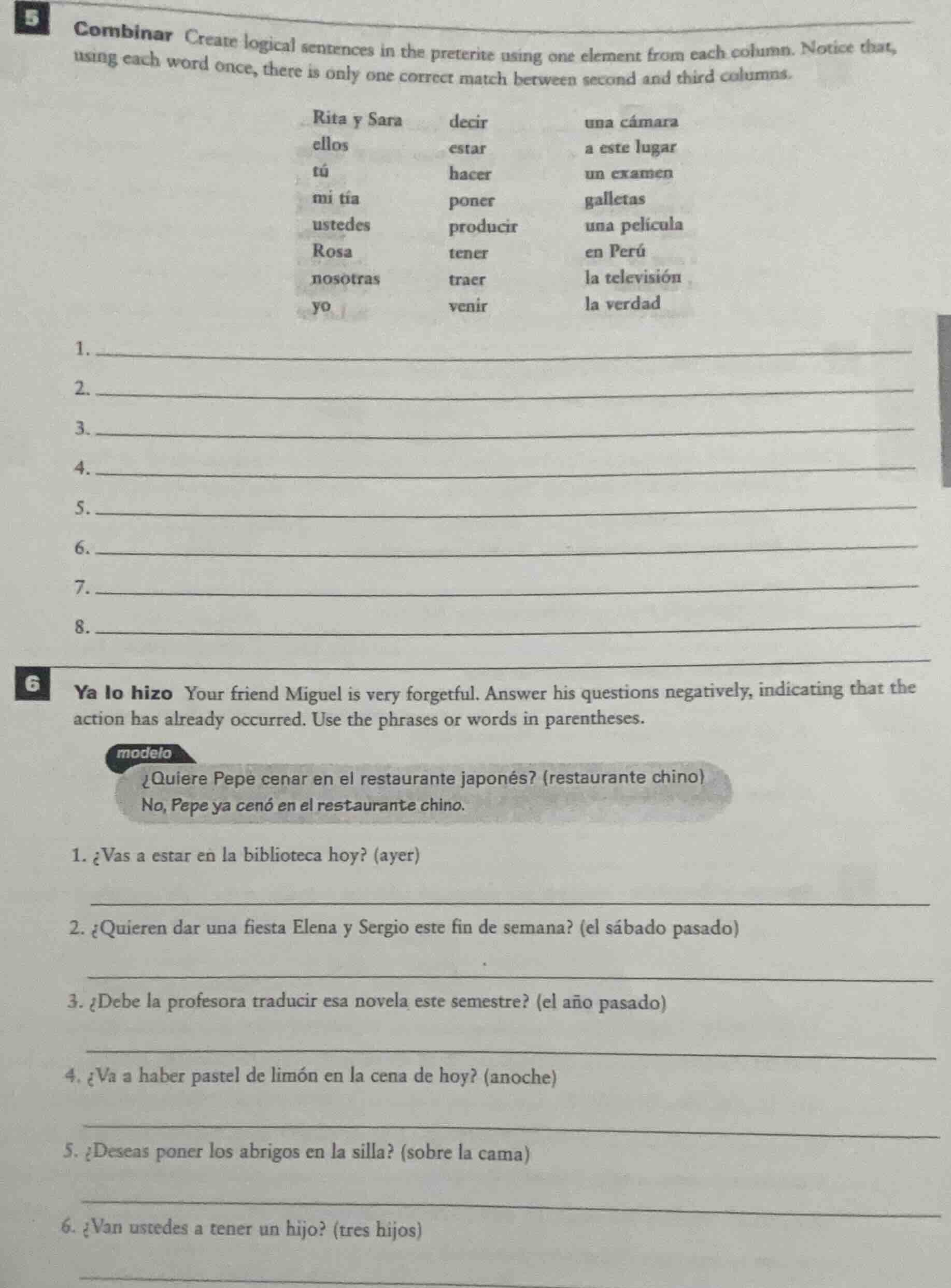
5 combinar create logical sentences in the preterite using one element from each column. notice that, using each word once, there is only one correct match between second and third columns.
rita y sara decir una cámara
ellos estar a este lugar
tú hacer un examen
mi tía poner galletas
ustedes producir una película
rosa tener en perú
nosotras traer la televisión
yo venir la verdad
1.
2.
3.
4.
5.
6.
7.
8.
6 ya lo hizo your friend miguel is very forgetful. answer his questions negatively, indicating that the action has already occurred. use the phrases or words in parentheses.
modelo
¿quiere pepe cenar en el restaurante japonés? (restaurante chino)
no, pepe ya cenó en el restaurante chino.
- ¿vas a estar en la biblioteca hoy? (ayer)
- ¿quieren dar una fiesta elena y sergio este fin de semana? (el sábado pasado)
- ¿debe la profesora traducir esa novela este semestre? (el año pasado)
- ¿va a haber pastel de limón en la cena de hoy? (anoche)
- ¿deseas poner los abrigos en la silla? (sobre la cama)
- ¿van ustedes a tener un hijo? (tres hijos)
Problem 5 (Combinar)
To solve this, we match each subject (first column) with the correct verb (second column) and object (third column) in the preterite tense, ensuring logical sense and one - to - one matching between verb and object.
- Rita y Sara (subject, plural) + decir (verb, preterite: dijeron) + la verdad (object, makes sense: tell the truth). So: Rita y Sara dijeron la verdad.
- ellos (subject, plural) + estar (verb, preterite: estuvieron) + en Perú (object, makes sense: be in Peru). So: Ellos estuvieron en Perú.
- tú (subject, singular) + hacer (verb, preterite: hiciste) + un examen (object, makes sense: take an exam). So: Tú hiciste un examen.
- mi tía (subject, singular) + poner (verb, preterite: puso) + la televisión (object, makes sense: put the TV). So: Mi tía puso la televisión.
- ustedes (subject, plural) + producir (verb, preterite: produjeron) + una película (object, makes sense: produce a movie). So: Ustedes produjeron una película.
- Rosa (subject, singular) + tener (verb, preterite: tuvo) + una cámara (object, makes sense: have a camera). So: Rosa tuvo una cámara.
- nosotras (subject, plural) + traer (verb, preterite: trajimos) + galletas (object, makes sense: bring cookies). So: Nosotras trajimos galletas.
- yo (subject, singular) + venir (verb, preterite: vine) + a este lugar (object, makes sense: come to this place). So: Yo vine a este lugar.
Problem 6 (Ya lo hizo)
We follow the model: negative answer, use preterite tense, and the phrase in parentheses.
- The question is about being in the library today. We use "ayer" (yesterday) and preterite of "estar" (estuve). So: No, ya estuve en la biblioteca ayer.
- The question is about having a party this weekend. We use "el sábado pasado" (last Saturday) and preterite of "dar" (dieron). So: No, Elena y Sergio ya dieron una fiesta el sábado pasado.
- The question is about translating a novel this semester. We use "el año pasado" (last year) and preterite of "traducir" (tradujo). So: No, la profesora ya tradujo esa novela el año pasado.
- The question is about having lemon pie at tonight's dinner. We use "anoche" (last night) and preterite of "haber" (hubo). So: No, ya hubo pastel de limón en la cena anoche.
- The question is about putting coats on the chair. We use "sobre la cama" (on the bed) and preterite of "poner" (pusiste). So: No, ya puse los abrigos sobre la cama.
- The question is about having a child. We use "tres hijos" (three children) and preterite of "tener" (tuvieron). So: No, ustedes ya tuvieron tres hijos.

Snap & solve any problem in the app
Get step-by-step solutions on Sovi AI
Photo-based solutions with guided steps
Explore more problems and detailed explanations
Problem 5 (Combinar)
To solve this, we match each subject (first column) with the correct verb (second column) and object (third column) in the preterite tense, ensuring logical sense and one - to - one matching between verb and object.
- Rita y Sara (subject, plural) + decir (verb, preterite: dijeron) + la verdad (object, makes sense: tell the truth). So: Rita y Sara dijeron la verdad.
- ellos (subject, plural) + estar (verb, preterite: estuvieron) + en Perú (object, makes sense: be in Peru). So: Ellos estuvieron en Perú.
- tú (subject, singular) + hacer (verb, preterite: hiciste) + un examen (object, makes sense: take an exam). So: Tú hiciste un examen.
- mi tía (subject, singular) + poner (verb, preterite: puso) + la televisión (object, makes sense: put the TV). So: Mi tía puso la televisión.
- ustedes (subject, plural) + producir (verb, preterite: produjeron) + una película (object, makes sense: produce a movie). So: Ustedes produjeron una película.
- Rosa (subject, singular) + tener (verb, preterite: tuvo) + una cámara (object, makes sense: have a camera). So: Rosa tuvo una cámara.
- nosotras (subject, plural) + traer (verb, preterite: trajimos) + galletas (object, makes sense: bring cookies). So: Nosotras trajimos galletas.
- yo (subject, singular) + venir (verb, preterite: vine) + a este lugar (object, makes sense: come to this place). So: Yo vine a este lugar.
Problem 6 (Ya lo hizo)
We follow the model: negative answer, use preterite tense, and the phrase in parentheses.
- The question is about being in the library today. We use "ayer" (yesterday) and preterite of "estar" (estuve). So: No, ya estuve en la biblioteca ayer.
- The question is about having a party this weekend. We use "el sábado pasado" (last Saturday) and preterite of "dar" (dieron). So: No, Elena y Sergio ya dieron una fiesta el sábado pasado.
- The question is about translating a novel this semester. We use "el año pasado" (last year) and preterite of "traducir" (tradujo). So: No, la profesora ya tradujo esa novela el año pasado.
- The question is about having lemon pie at tonight's dinner. We use "anoche" (last night) and preterite of "haber" (hubo). So: No, ya hubo pastel de limón en la cena anoche.
- The question is about putting coats on the chair. We use "sobre la cama" (on the bed) and preterite of "poner" (pusiste). So: No, ya puse los abrigos sobre la cama.
- The question is about having a child. We use "tres hijos" (three children) and preterite of "tener" (tuvieron). So: No, ustedes ya tuvieron tres hijos.