QUESTION IMAGE
Question
comparing fact with folktale
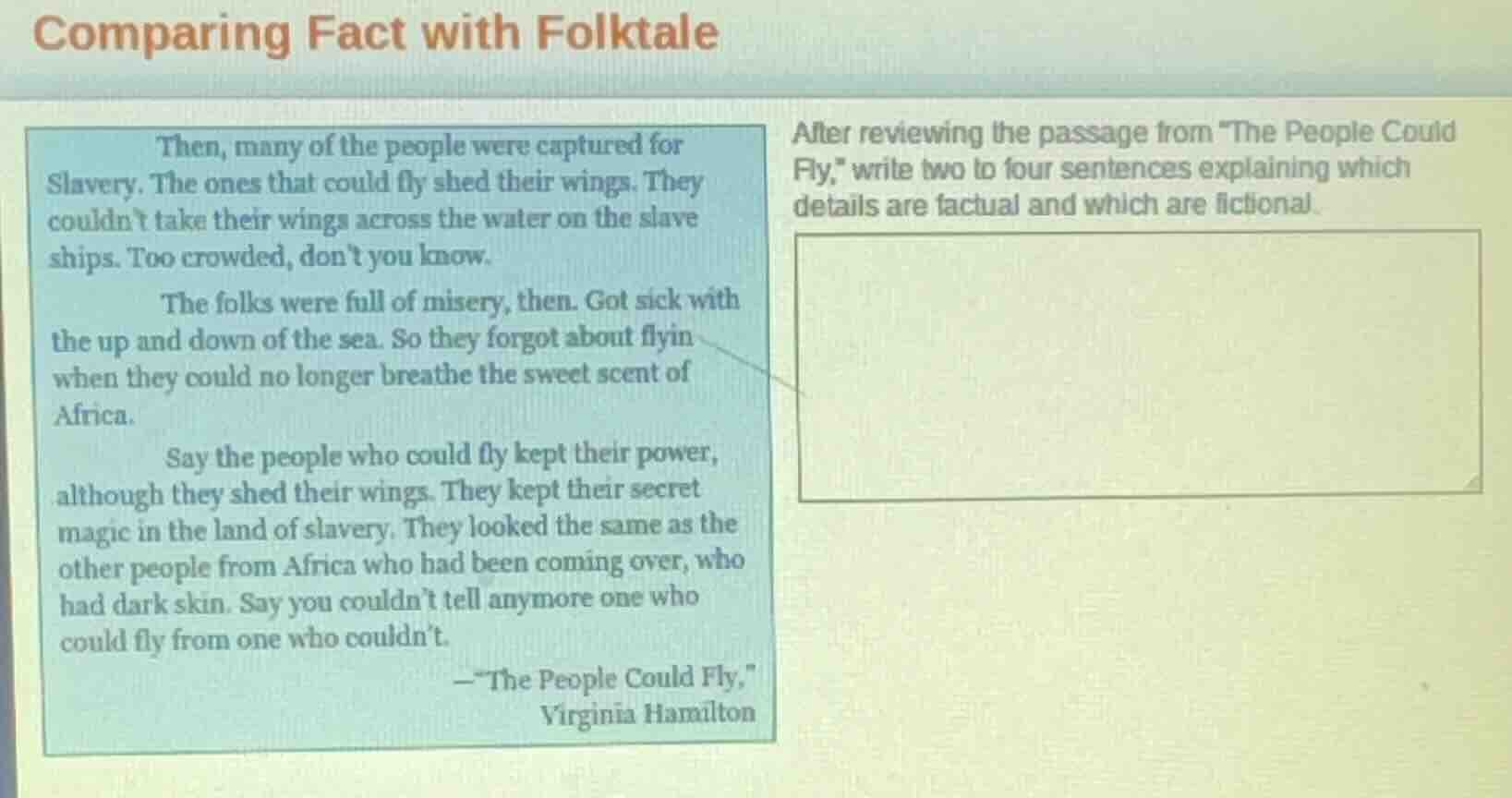
then, many of the people were captured for slavery. the ones that could fly shed their wings. they couldnt take their wings across the water on the slave ships. too crowded, dont you know.
the folks were full of misery, then. got sick with the up and down of the sea. so they forgot about flyin when they could no longer breathe the sweet scent of africa.
say the people who could fly kept their power, although they shed their wings. they kept their secret magic in the land of slavery. they looked the same as the other people from africa who had been coming over, who had dark skin. say you couldnt tell anymore one who could fly from one who couldnt.
—\the people could fly,\
virginia hamilton
after reviewing the passage from \the people could fly,\ write two to four sentences explaining which details are factual and which are fictional.
The factual details align with historical realities of the transatlantic slave trade: the capture of African people for slavery, the overcrowded, miserable conditions on slave ships that caused illness, and the forced displacement from Africa. The fictional, folktale elements are the magical ideas of people having wings, the ability to fly, and retaining secret flying magic while enslaved, which are symbolic, non-historical additions to the narrative.

Snap & solve any problem in the app
Get step-by-step solutions on Sovi AI
Photo-based solutions with guided steps
Explore more problems and detailed explanations
Factual details include the capture of African people for slavery, the overcrowded and sickening conditions on slave ships during the transatlantic crossing, and the forced separation from Africa. Fictional, folktale details are the concept of enslaved people having wings and the ability to fly, as well as the idea that they retained secret flying magic while living in slavery—these magical elements are symbolic additions not rooted in historical fact.