QUESTION IMAGE
Question
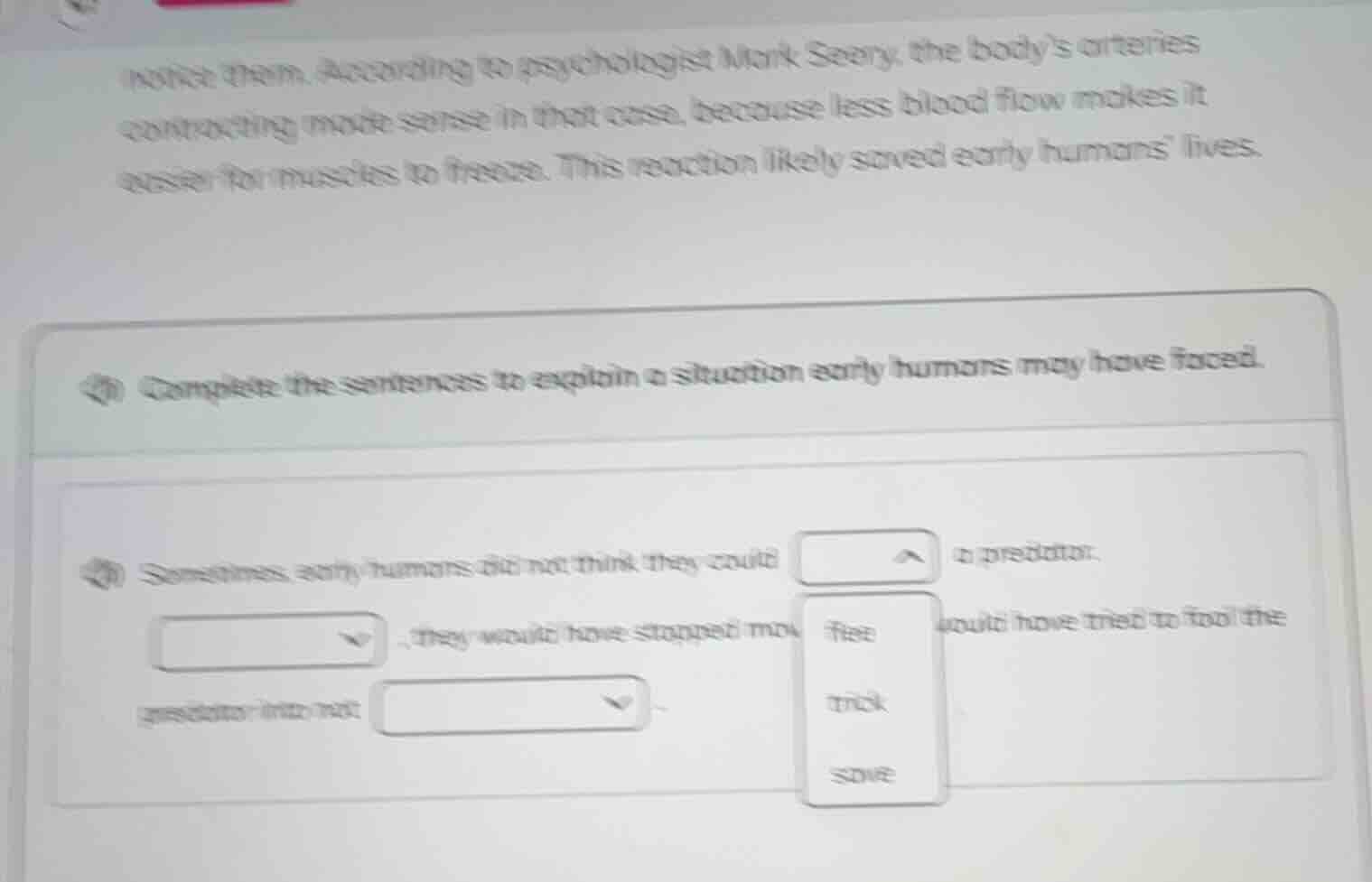
complete the sentences to explain a situation early humans may have faced.
sometimes, early humans did not think they could
they would have stopped mov
predator into not
options: flee, trick, save, a predator, would have tried to fool the
To solve this, we analyze the context of early humans and predators. The first blank: "flee" (run away from) fits as they might not think they could flee a predator. The second part: "trick" makes sense for trying to fool the predator, and the last blank would relate to the predator not noticing (but from the options, let's focus on the dropdown with "flee", "trick", "save"). For the first dropdown (after "could"), "flee" is correct (they didn't think they could flee). For the part about fooling, "trick" is correct. Let's assume the blanks: first action verb - flee (can't flee), then trick (fool the predator), and the last maybe "noticing" but from the options, let's structure the answers.

Snap & solve any problem in the app
Get step-by-step solutions on Sovi AI
Photo-based solutions with guided steps
Explore more problems and detailed explanations
First blank (after "could"): flee
Second action (fooling): trick
(Assuming the sentence structure: "Sometimes, early humans did not think they could \underline{flee} a predator. They would have stopped moving and would have tried to fool the predator into not... (maybe noticing, but from the options, the verbs are flee, trick, save. So the correct verbs are: flee (for the first blank, as in can't flee the predator), trick (for trying to fool the predator).)