QUESTION IMAGE
Question
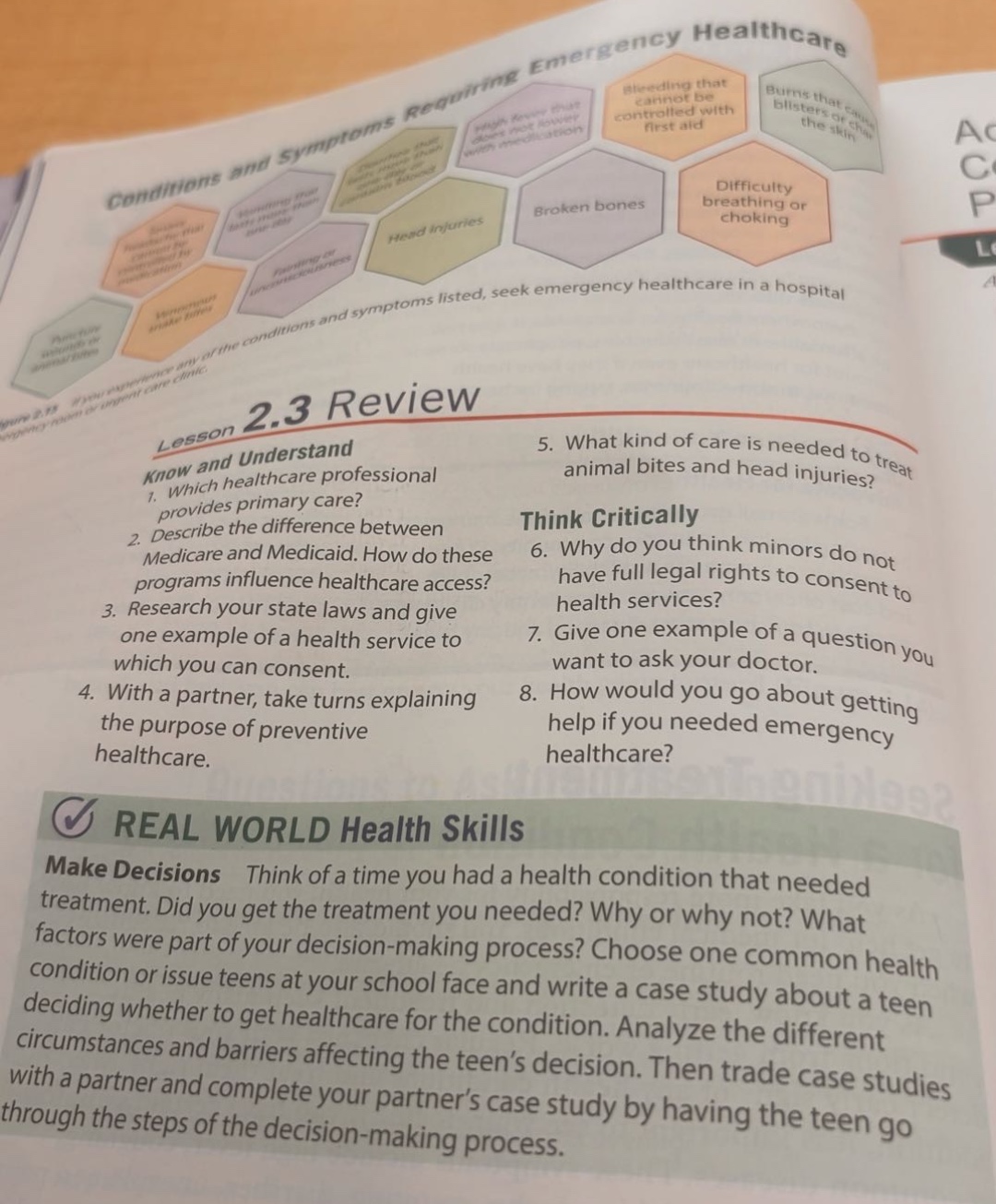
conditions and symptoms requiring emergency healthcare
if you experience any of the conditions and symptoms listed, seek emergency healthcare in a hospital emergency room or urgent care clinic.
lesson 2.3 review
know and understand
- which healthcare professional provides primary care?
- describe the difference between medicare and medicaid. how do these programs influence healthcare access?
- research your state laws and give one example of a health service to which you can consent.
- with a partner, take turns explaining the purpose of preventive healthcare.
- what kind of care is needed to treat animal bites and head injuries?
think critically
- why do you think minors do not have full legal rights to consent to health services?
- give one example of a question you want to ask your doctor.
- how would you go about getting help if you needed emergency healthcare?
real world health skills
make decisions think of a time you had a health condition that needed treatment. did you get the treatment you needed? why or why not? what factors were part of your decision-making process? choose one common health condition or issue teens at your school face and write a case study about a teen deciding whether to get healthcare for the condition. analyze the different circumstances and barriers affecting the teens decision. then trade case studies with a partner and complete your partners case study by having the teen go through the steps of the decision-making process.
- Identifies the provider of routine, first-contact care.
- Distinguishes the two government programs and their access impact.
- Relates state consent laws to specific health services.
- Defines preventive care's core goal.
- Specifies the care type for these injury cases.
- Explains legal/developmental reasons for minor consent limits.
- Offers a relevant patient-doctor question example.
- Outlines steps for emergency healthcare access.
- Guides personal reflection and case study creation for teen healthcare decisions.

Snap & solve any problem in the app
Get step-by-step solutions on Sovi AI
Photo-based solutions with guided steps
Explore more problems and detailed explanations
- A primary care physician (such as a family doctor, pediatrician, or general practitioner) provides primary care.
- Medicare is a federal health insurance program for people 65+, some younger people with disabilities, and those with end-stage renal disease. Medicaid is a joint federal-state program that provides health coverage for low-income individuals and families. These programs expand healthcare access by reducing or eliminating out-of-pocket costs for eligible groups who might otherwise be unable to afford care.
- (Example for the U.S. state of California): Minors can consent to mental health treatment services without parental permission, as per state law.
- The purpose of preventive healthcare is to prevent illness, detect health issues early (before symptoms appear), and reduce the risk of chronic disease or complications through screenings, vaccinations, and lifestyle guidance.
- Animal bites and head injuries require emergency or urgent medical care (including evaluation for infection risk, wound treatment, imaging for head trauma, and potential referral to specialists).
- Minors are not granted full legal consent rights because they are considered developmentally unable to fully understand the risks, benefits, and consequences of healthcare decisions under most legal frameworks. Laws prioritize parental/guardian oversight to protect minors' well-being.
- (Example): "What changes can I make to my daily routine to lower my risk of developing type 2 diabetes, given my family history?"
- (Example steps): 1. Call local emergency services (like 911 in the U.S.) immediately if the situation is life-threatening. 2. Have someone drive you to the nearest hospital emergency room if emergency services are not needed right away but care is urgent. 3. Share all details of your symptoms, injuries, and medical history with the emergency care team upon arrival.
- (Example personal reflection): I once had a persistent sinus infection and got treatment because my symptoms worsened and my parent helped me schedule a doctor's appointment; factors included symptom severity, parental support, and access to a provider. (Example case study): A 16-year-old teen with persistent acne is hesitant to see a dermatologist due to fear of stigma among peers and worry about cost, even though their acne is causing emotional distress. Barriers include social anxiety, lack of awareness about low-cost clinic options, and not wanting to ask their parents for help. When completing the partner's case study, the teen would: 1. Identify the problem (acne causing distress). 2. Research options (school health clinic, low-cost dermatologists). 3. Weigh pros/cons (reduced distress vs. temporary stigma). 4. Make a decision (schedule an appointment at the school clinic). 5. Evaluate the outcome (track acne improvement and emotional well-being).