QUESTION IMAGE
Question
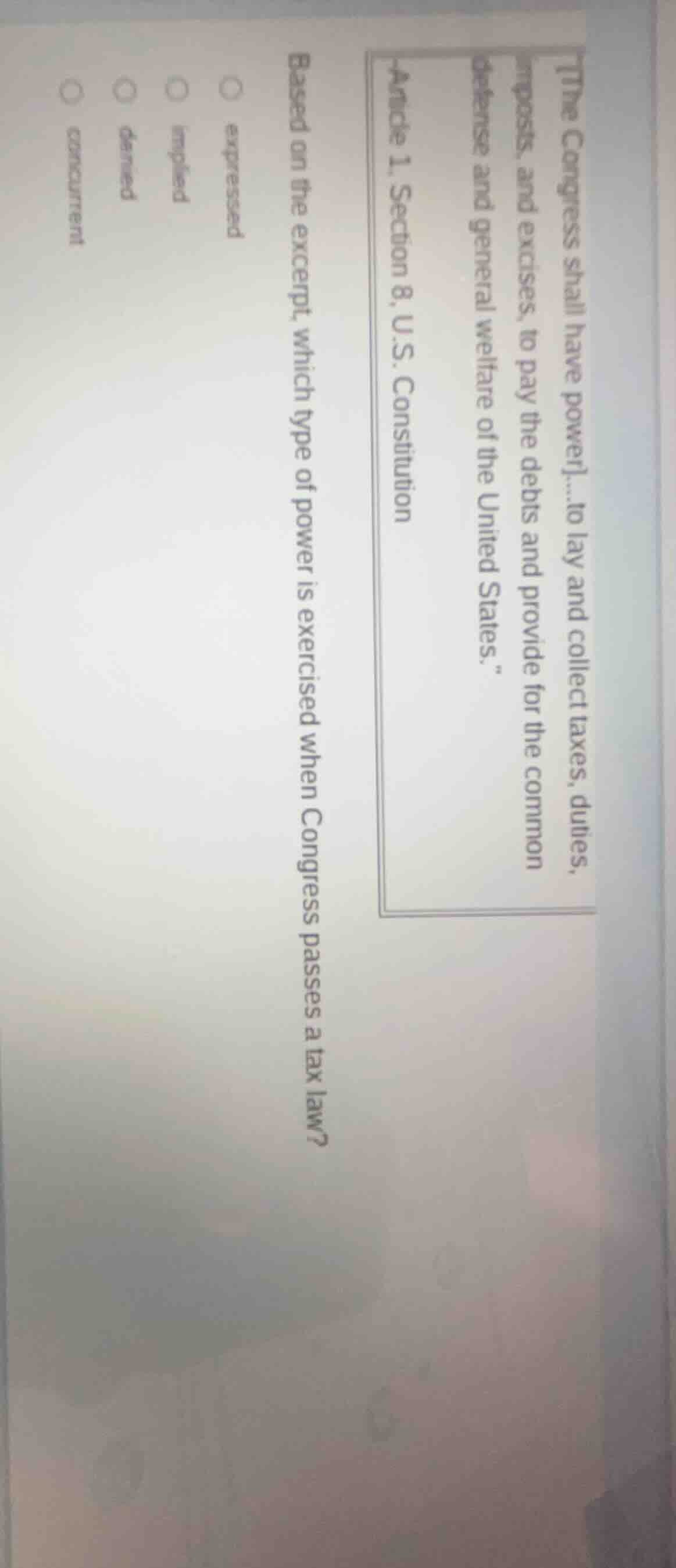
the congress shall have power....to lay and collect taxes, duties, imposts, and excises, to pay the debts and provide for the common defense and general welfare of the united states.\
article 1, section 8, u.s. constitution
based on the excerpt, which type of power is exercised when congress passes a tax law?
○ expressed
○ implied
○ denied
○ concurrent
The excerpt from Article 1, Section 8 of the U.S. Constitution explicitly states that Congress has the power "to lay and collect taxes...". When Congress passes a tax law, it is using a power that is directly stated (expressed) in the Constitution. "Implied" powers are not directly stated but inferred, "denied" would be a power not given, and "concurrent" refers to powers shared with states, which doesn't apply here as the tax - laying power for Congress is directly expressed.

Snap & solve any problem in the app
Get step-by-step solutions on Sovi AI
Photo-based solutions with guided steps
Explore more problems and detailed explanations
expressed