QUESTION IMAGE
Question
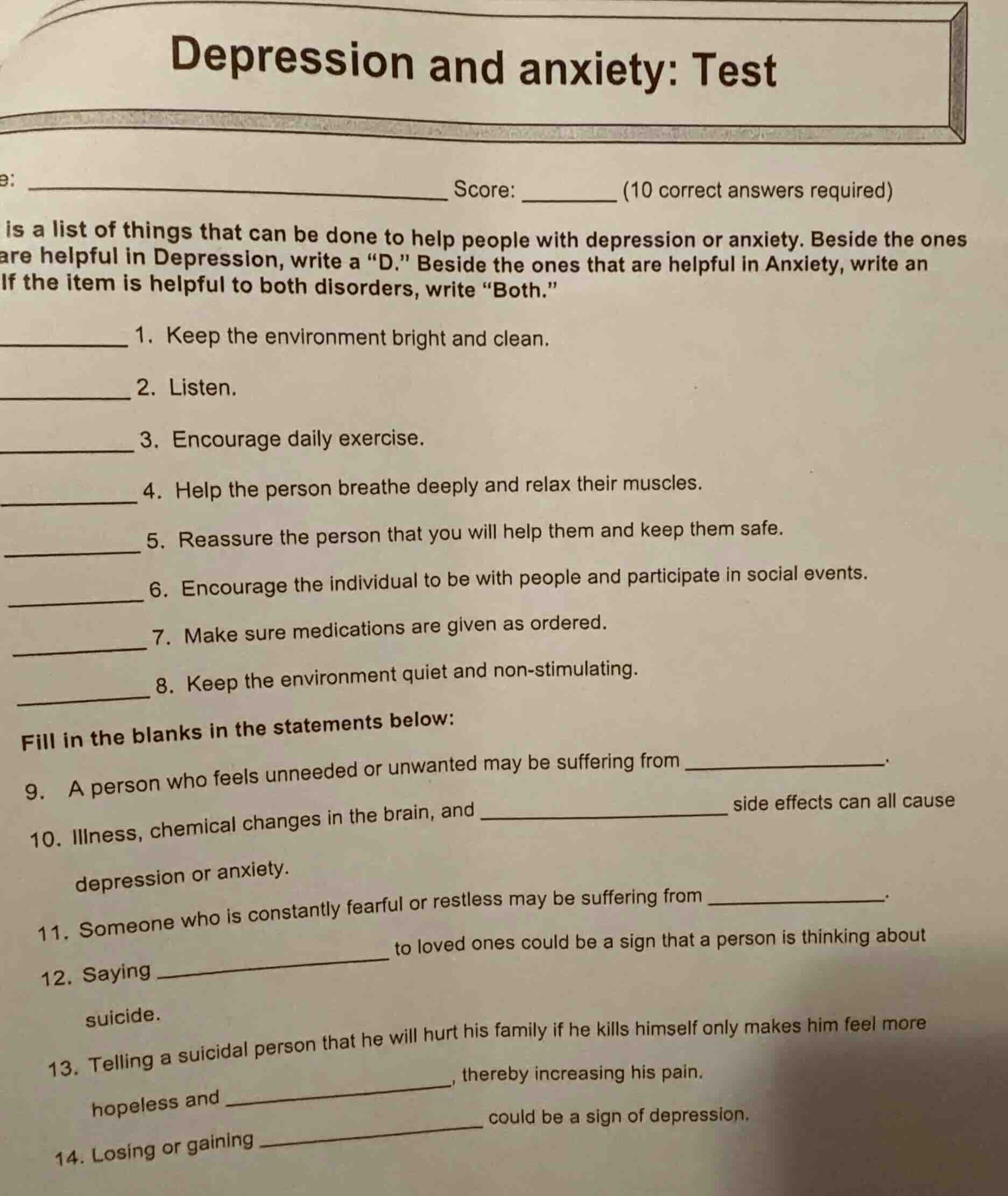
depression and anxiety: test
: _____________________________ score: _____ (10 correct answers required)
is a list of things that can be done to help people with depression or anxiety. beside the ones
are helpful in depression, write a “d.” beside the ones that are helpful in anxiety, write an
if the item is helpful to both disorders, write “both.”
______ 1. keep the environment bright and clean.
______ 2. listen.
______ 3. encourage daily exercise.
______ 4. help the person breathe deeply and relax their muscles.
______ 5. reassure the person that you will help them and keep them safe.
______ 6. encourage the individual to be with people and participate in social events.
______ 7. make sure medications are given as ordered.
______ 8. keep the environment quiet and non - stimulating.
fill in the blanks in the statements below:
- a person who feels unneeded or unwanted may be suffering from ______________.
- illness, chemical changes in the brain, and ____________________ side effects can all cause
depression or anxiety.
- someone who is constantly fearful or restless may be suffering from ______________.
- saying ____________________ to loved ones could be a sign that a person is thinking about
suicide.
- telling a suicidal person that he will hurt his family if he kills himself only makes him feel more
hopeless and ____________________, thereby increasing his pain.
- losing or gaining ____________________ could be a sign of depression.
Part 1: Classifying Helpful Actions (1 - 8)
To determine if an action helps Depression (D), Anxiety (A), or Both, we analyze each:
- Keep the environment bright and clean: A bright, clean space can uplift mood (depression) and reduce stress (anxiety) → Both
- Listen: Active listening supports emotional well - being for both conditions → Both
- Encourage daily exercise: Exercise improves mood (depression) and reduces anxiety → Both
- Help the person breathe deeply and relax their muscles: Relaxation techniques target anxiety, but also calm depression - related tension → Both (or “A” if stricter, but breathing/relaxation helps both)
- Reassure the person that you will help them and keep them safe: Reassurance reduces anxiety (fear of harm) and provides security for depression → Both
- Encourage the individual to be with people and participate in social events: Social interaction combats isolation in depression and eases anxiety - related withdrawal → Both
- Make sure medications are given as ordered: Medication treats both depression and anxiety → Both
- Keep the environment quiet and non - stimulating: A calm environment reduces anxiety (overstimulation) and soothes depression - related agitation → Both (or “A” if focusing on anxiety’s need for calm, but also helps depression)
Part 2: Filling in Blanks (9 - 14)
- A person who feels unneeded or unwanted may be suffering from depression (low self - worth is a depression symptom).
- Illness, chemical changes in the brain, and medication side effects can all cause depression or anxiety (medications can trigger mood disorders).
- Someone who is constantly fearful or restless may be suffering from anxiety (fear/restlessness are core anxiety symptoms).
- Saying goodbye to loved ones could be a sign that a person is thinking about suicide (pre - suicide gestures often include farewells).
- Telling a suicidal person that he will hurt his family if he kills himself only makes him feel more hopeless and guilty, thereby increasing his pain (guilt is a common depression/anxiety emotion, and this tactic worsens it).
- Losing or gaining weight could be a sign of depression (appetite changes are a key depression symptom).

Snap & solve any problem in the app
Get step-by-step solutions on Sovi AI
Photo-based solutions with guided steps
Explore more problems and detailed explanations
s (Part 1 - Classifications, Part 2 - Blanks)
- Both
- Both
- Both
- Both (or A)
- Both
- Both
- Both
- Both (or A)
- depression
- medication
- anxiety
- goodbye
- guilty
- weight
(Note: For Part 1, some answers may vary slightly based on interpretation, but “Both” is a strong candidate for most items as both disorders benefit from support, structure, and calm.)