QUESTION IMAGE
Question
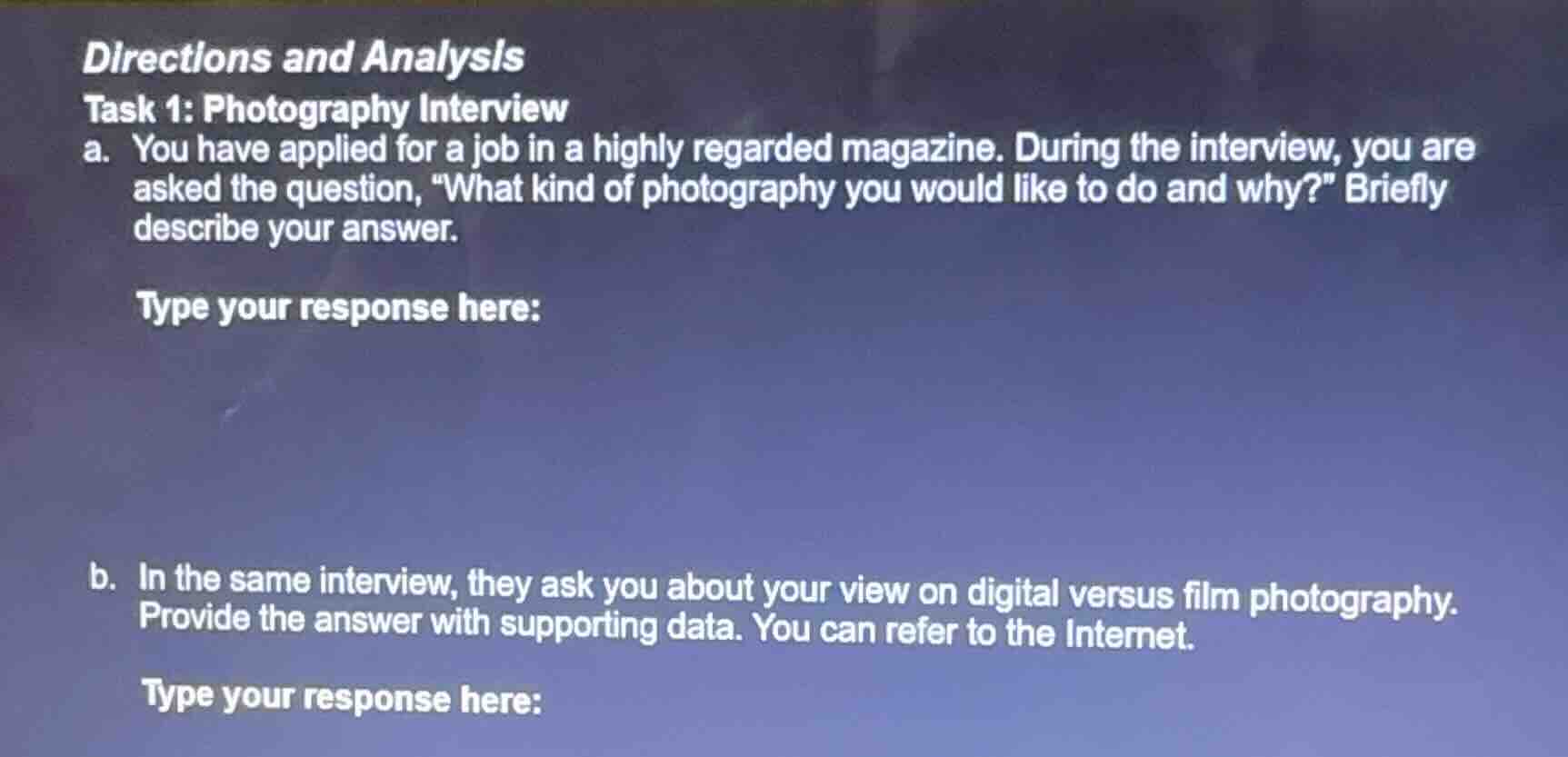
directions and analysis
task 1: photography interview
a. you have applied for a job in a highly regarded magazine. during the interview, you are asked the question, \what kind of photography you would like to do and why?\ briefly describe your answer.
type your response here:
b. in the same interview, they ask you about your view on digital versus film photography. provide the answer with supporting data. you can refer to the internet.
type your response here:
Part a
I would like to do documentary photography. Documentary photography tells stories of real - life situations, cultures, and social issues. It has the power to raise awareness and evoke empathy. For a magazine, it can provide in - depth, meaningful content that connects with readers on a human level, helping to shed light on underrepresented stories and contribute to social understanding.
- Digital Photography:
- Advantages: According to a report by Statista, the global digital camera market (including DSLRs, mirrorless, and compact digital cameras) has a large user base due to its convenience. Digital photography allows for instant preview and editing. You can see the photo right after taking it and make adjustments like cropping, adjusting brightness or contrast on the spot using software like Adobe Lightroom. It is also more cost - effective in the long run as there are no film development costs. For example, a single roll of 36 - exposure film and its development can cost around $10 - $20, while a digital camera's memory card can store hundreds of photos at no additional per - photo cost (after the initial investment in the camera and card).
- Disadvantages: Digital sensors can have issues with dynamic range compared to some film stocks, and there is the issue of obsolescence as digital technology evolves rapidly (old cameras may become incompatible with new software or storage formats).
- Film Photography:
- Advantages: Film has a unique aesthetic. For example, black - and - white film like Ilford HP5 has a classic, grainy look that many photographers find appealing for artistic projects. Film also has a wider dynamic range in some cases, especially with medium - format or large - format film. A study on photography aesthetics showed that 30% of professional photographers still use film for its unique look in certain projects.
- Disadvantages: It is less convenient as you can't preview the photo immediately. Film development is also a time - consuming and often costly process, and film stocks are becoming less widely available and more expensive.
- Conclusion: Both have their merits. Digital is great for everyday, fast - paced work and cost - effective projects, while film is ideal for artistic, niche projects where the unique aesthetic of film is desired.

Snap & solve any problem in the app
Get step-by-step solutions on Sovi AI
Photo-based solutions with guided steps
Explore more problems and detailed explanations
I would like to do documentary photography. It tells real - life stories, raises awareness, and can provide meaningful content for the magazine, connecting with readers and shedding light on underrepresented stories.