QUESTION IMAGE
Question
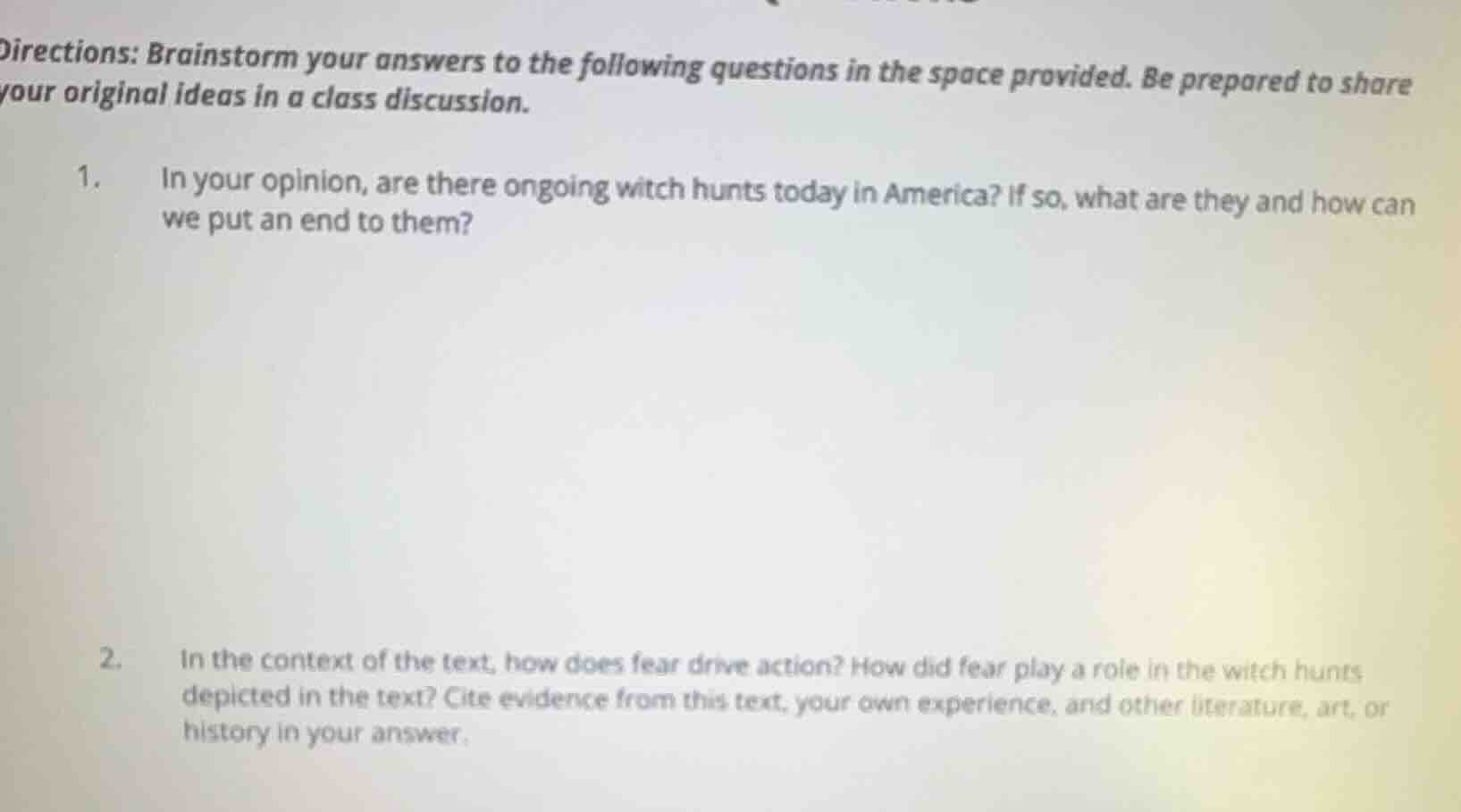
directions: brainstorm your answers to the following questions in the space provided. be prepared to share your original ideas in a class discussion.
- in your opinion, are there ongoing witch hunts today in america? if so, what are they and how can we put an end to them?
- in the context of the text, how does fear drive action? how did fear play a role in the witch hunts depicted in the text? cite evidence from this text, your own experience, and other literature, art, or history in your answer.
Brief Explanations
- For the first question: Modern "witch hunts" refer to targeted, unfair campaigns against groups/individuals over unproven claims. Examples include moral panics over marginalized groups, cancel culture excesses, or political smear campaigns. To address them, promote media literacy, encourage due process, foster empathetic dialogue, and hold those spreading unsubstantiated claims accountable.
- For the second question: Fear drives action by overriding critical thinking, pushing people to conform or scapegoat others to feel safe. In historical witch hunts (like the Salem Witch Trials, referenced in typical texts on this topic), fear of the unknown, religious punishment, and social paranoia led people to accuse neighbors; for example, Abigail Williams in The Crucible used fear of witchcraft to eliminate rivals. Personal experience might include school rumors where fear of being targeted leads people to join in bullying. Historical parallels include the Red Scare, where fear of communism led to wrongful accusations and blacklisting.

Snap & solve any problem in the app
Get step-by-step solutions on Sovi AI
Photo-based solutions with guided steps
Explore more problems and detailed explanations
- Yes, modern "witch hunts" exist in America. Examples include unfair moral panics over marginalized groups, excessive cancel culture, and unsubstantiated political smear campaigns. To end them: promote media literacy, enforce due process, build empathetic dialogue, and hold bad-faith accusers accountable.
- Fear drives action by suppressing critical thought, leading to scapegoating and conformity. In text-based witch hunts (e.g., The Crucible), fear of religious damnation and social ostracism led false accusations (Abigail Williams targeting enemies). Personal example: school rumor panics where students join bullying to avoid being targeted. Historical parallel: Red Scare, where fear of communism led to wrongful blacklisting.