QUESTION IMAGE
Question
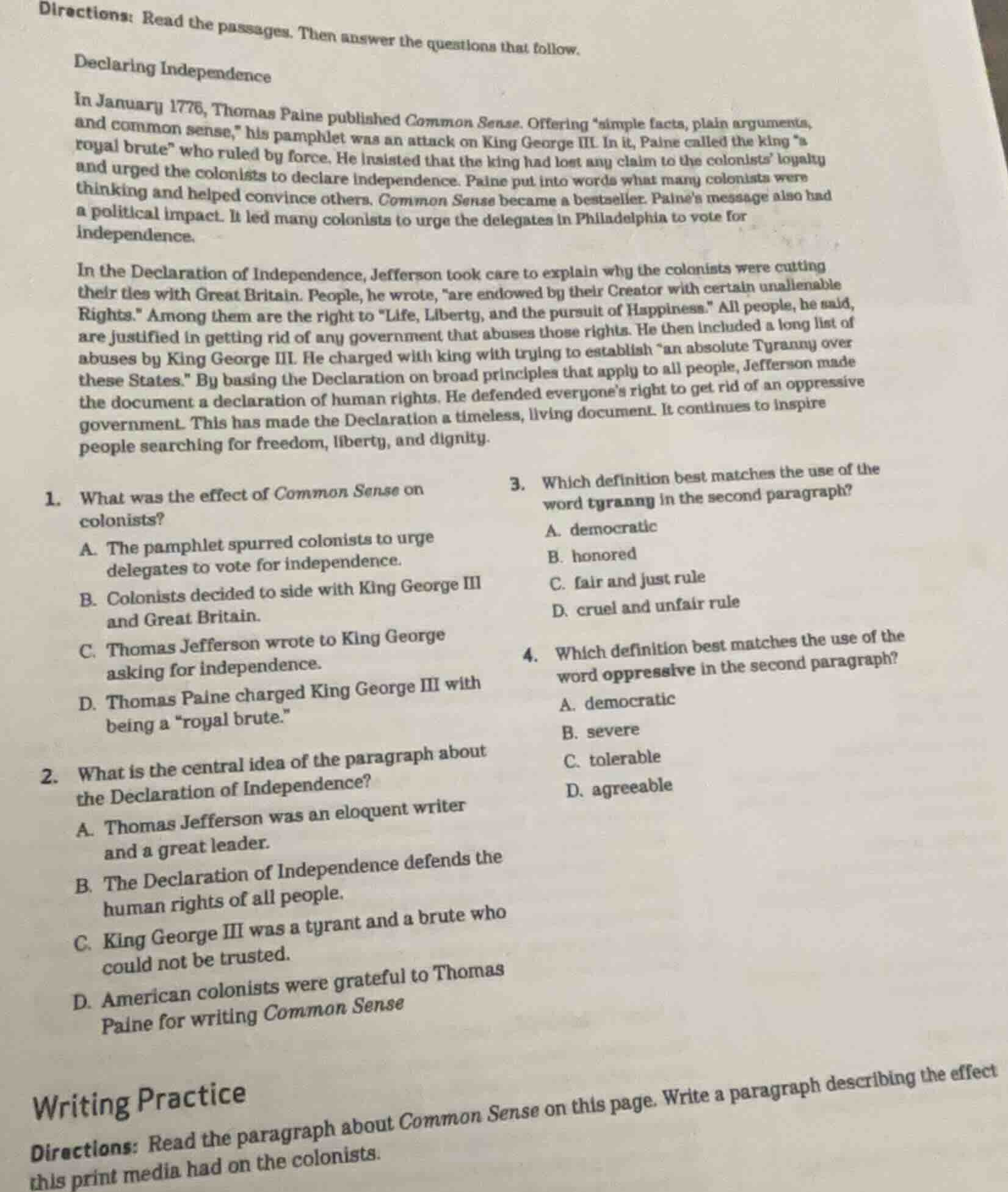
directions: read the passages. then answer the questions that follow.declaring independencein january 1776, thomas paine published common sense. offering \simple facts, plain arguments, and common sense,\ his pamphlet was an attack on king george iii. in it, paine called the king \a royal brute\ who ruled by force. he insisted that the king had lost any claim to the colonists loyalty and urged the colonists to declare independence. paine put into words what many colonists were thinking and helped convince others. common sense became a bestseller. paines message also had a political impact. it led many colonists to urge the delegates in philadelphia to vote for independence.in the declaration of independence, jefferson took care to explain why the colonists were cutting their ties with great britain. people, he wrote, \are endowed by their creator with certain unalienable rights.\ among them are the right to \life, liberty, and the pursuit of happiness.\ all people, he said, are justified in getting rid of any government that abuses those rights. he then included a long list of abuses by king george iii. he charged with king with trying to establish \an absolute tyranny over these states.\ by basing the declaration on broad principles that apply to all people, jefferson made the document a declaration of human rights. he defended everyones right to get rid of an oppressive government. this has made the declaration a timeless, living document. it continues to inspire people searching for freedom, liberty, and dignity.1. what was the effect of common sense on colonists?a. the pamphlet spurred colonists to urge delegates to vote for independence.b. colonists decided to side with king george iii and great britain.c. thomas jefferson wrote to king george asking for independence.d. thomas paine charged king george iii with being a
oyal brute.\2. what is the central idea of the paragraph about the declaration of independence?a. thomas jefferson was an eloquent writer and a great leader.b. the declaration of independence defends the human rights of all people.c. king george iii was a tyrant and a brute who could not be trusted.d. american colonists were grateful to thomas paine for writing common sense3. which definition best matches the use of the word tyranny in the second paragraph?a. democraticb. honoredc. fair and just ruled. cruel and unfair rule4. which definition best matches the use of the word oppressive in the second paragraph?a. democraticb. severec. tolerabled. agreeablewriting practicedirections: read the paragraph about common sense on this page. write a paragraph describing the effect this print media had on the colonists.
- For question 1: The passage states Common Sense led colonists to urge delegates to vote for independence.
- For question 2: The passage notes Jefferson framed the Declaration as a defense of universal human rights, making it a timeless document about these rights.
- For question 3: The passage links "tyranny" to King George III's abuses, so it means cruel, unfair rule.
- For question 4: "Oppressive" describes a government people have the right to reject, so it means severe.
- For the writing practice: The paragraph is based on the text's details about Common Sense's impact on colonists.

Snap & solve any problem in the app
Get step-by-step solutions on Sovi AI
Photo-based solutions with guided steps
Explore more problems and detailed explanations
- A. The pamphlet spurred colonists to urge delegates to vote for independence.
- B. The Declaration of Independence defends the human rights of all people.
- D. cruel and unfair rule
- B. severe
Writing Practice Paragraph:
Thomas Paine's Common Sense had a profound impact on American colonists in 1776. By articulating the growing frustration with King George III in accessible, plain language, the pamphlet gave voice to colonists' unspoken doubts about British rule, convincing many who had been undecided to support independence. As a bestseller, its message spread widely, shifting public opinion and motivating colonists to pressure their delegates in Philadelphia to vote for cutting ties with Great Britain, laying critical groundwork for the push toward formal independence.