QUESTION IMAGE
Question
the dirty thirties and the filthy fifties
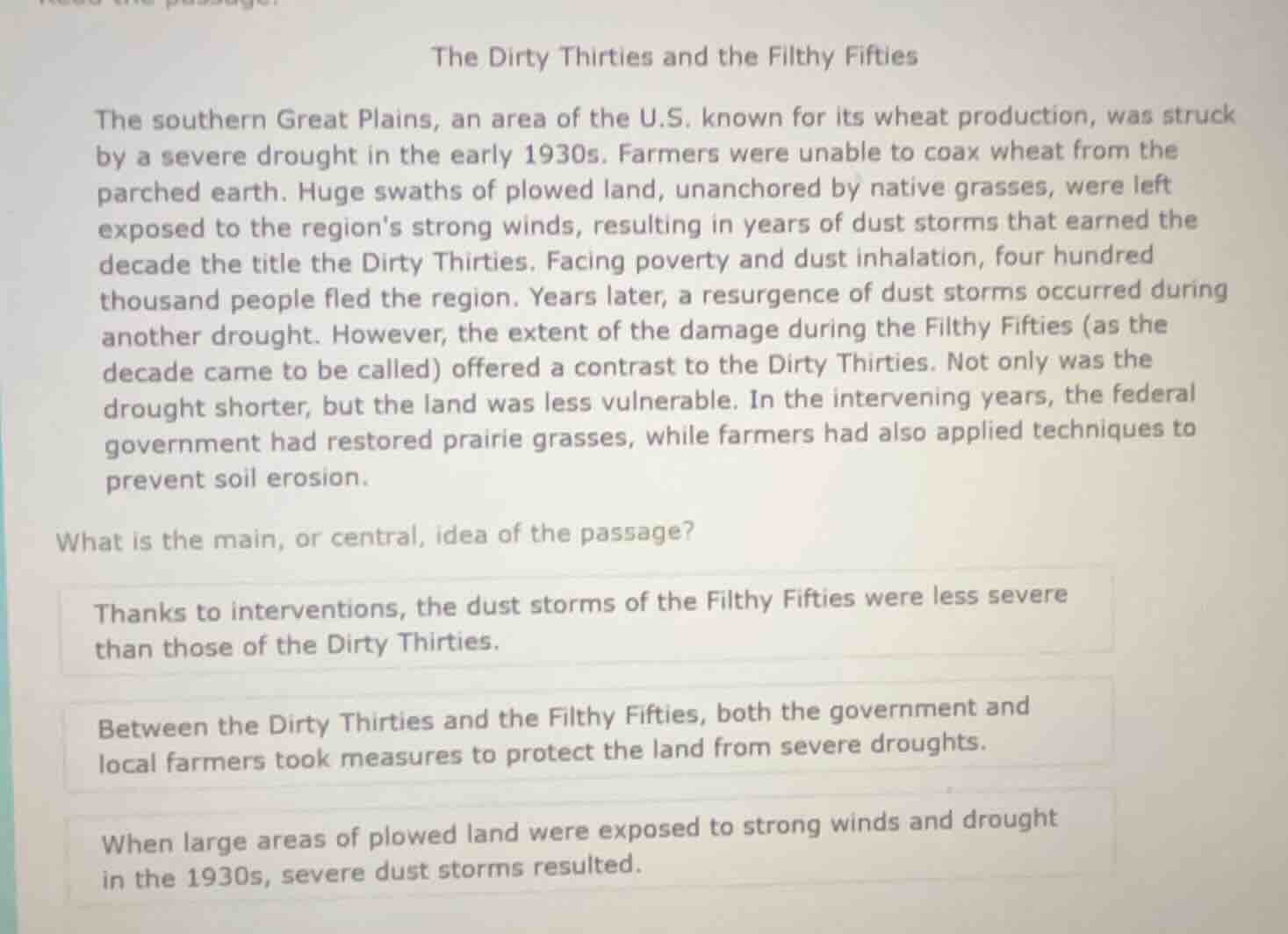
the southern great plains, an area of the u.s. known for its wheat production, was struck by a severe drought in the early 1930s. farmers were unable to coax wheat from the parched earth. huge swaths of plowed land, unanchored by native grasses, were left exposed to the regions strong winds, resulting in years of dust storms that earned the decade the title the dirty thirties. facing poverty and dust inhalation, four hundred thousand people fled the region. years later, a resurgence of dust storms occurred during another drought. however, the extent of the damage during the filthy fifties (as the decade came to be called) offered a contrast to the dirty thirties. not only was the drought shorter, but the land was less vulnerable. in the intervening years, the federal government had restored prairie grasses, while farmers had also applied techniques to prevent soil erosion.
what is the main, or central, idea of the passage?
thanks to interventions, the dust storms of the filthy fifties were less severe than those of the dirty thirties.
between the dirty thirties and the filthy fifties, both the government and local farmers took measures to protect the land from severe droughts.
when large areas of plowed land were exposed to strong winds and drought in the 1930s, severe dust storms resulted.
The passage first describes the severe dust storms and damage of the Dirty Thirties in the U.S. southern Great Plains, then contrasts this with the less damaging Filthy Fifties, attributing the difference to government and farmer interventions to protect the land. The first option captures this overarching comparison and the core reason for the contrast, which is the central focus of the passage. The other options only cover partial details (either just the 1930s events or just the interventions, not the full contrast).

Snap & solve any problem in the app
Get step-by-step solutions on Sovi AI
Photo-based solutions with guided steps
Explore more problems and detailed explanations
Thanks to interventions, the dust storms of the Filthy Fifties were less severe than those of the Dirty Thirties.