QUESTION IMAGE
Question
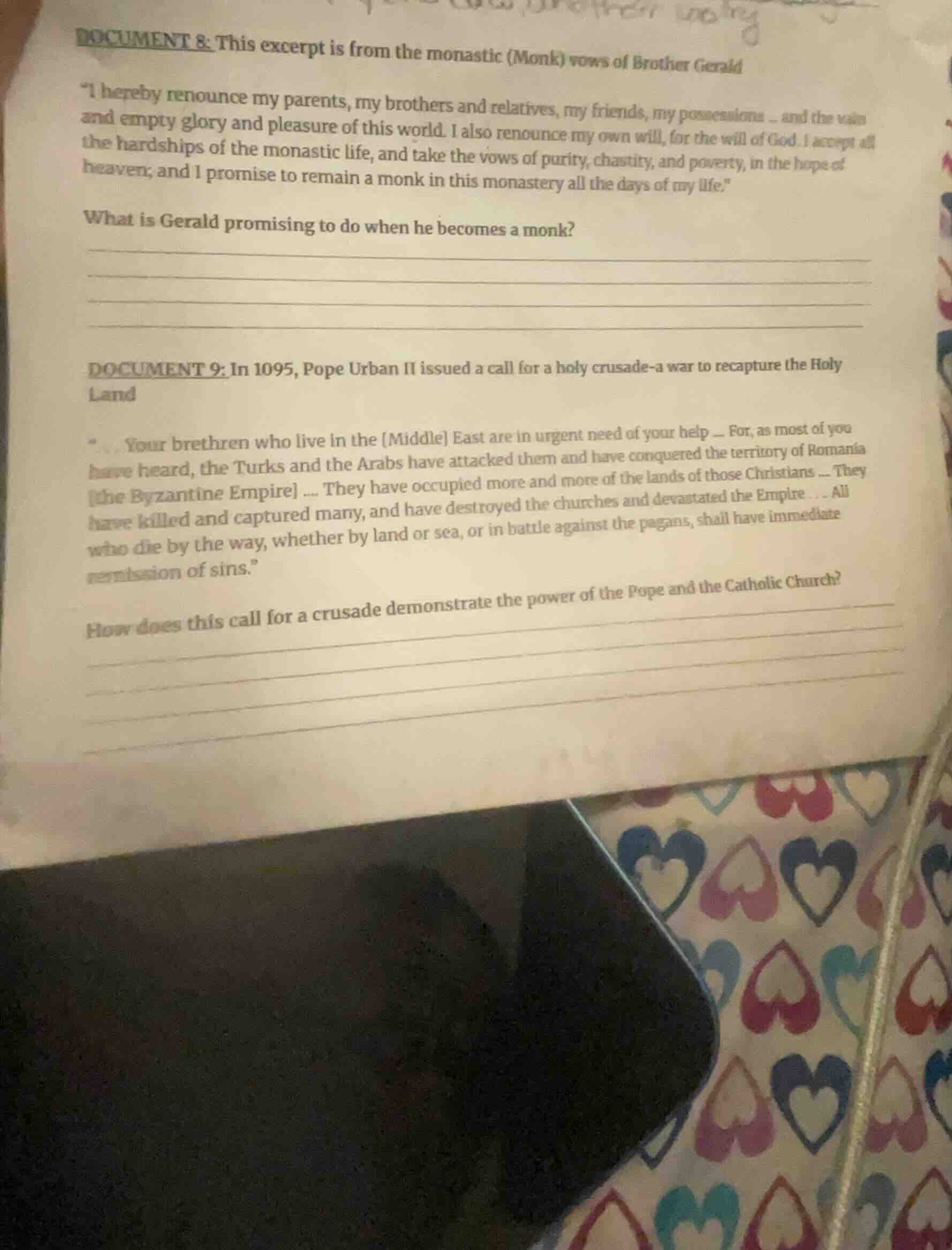
document 8: this excerpt is from the monastic (monk) vows of brother gerald
\i hereby renounce my parents, my brothers and relatives, my friends, my possessions... and the vain and empty glory and pleasure of this world. i also renounce my own will, for the will of god. i accept all the hardships of the monastic life, and take the vows of purity, chastity, and poverty, in the hope of heaven; and i promise to remain a monk in this monastery all the days of my life.\
what is gerald promising to do when he becomes a monk?
document 9: in 1095, pope urban ii issued a call for a holy crusade-a war to recapture the holy land
\...your brethren who live in the middle east are in urgent need of your help... for, as most of you have heard, the turks and the arabs have attacked them and have conquered the territory of romania the byzantine empire.... they have occupied more and more of the lands of those christians... they have killed and captured many, and have destroyed the churches and devastated the empire... all who die by the way, whether by land or sea, or in battle against the pagans, shall have immediate remission of sins.\
how does this call for a crusade demonstrate the power of the pope and the catholic church?
- For Brother Gerald's promise: The vow text lists the specific commitments he makes, including renouncing worldly ties and taking monastic vows, plus lifelong residence in the monastery.
- For the Pope's power: The Pope could rally people to a military campaign and offered a spiritual reward (sin remission) that only the Church had authority to grant, showing his spiritual and political influence.

Snap & solve any problem in the app
Get step-by-step solutions on Sovi AI
Photo-based solutions with guided steps
Explore more problems and detailed explanations
- Gerald is promising to renounce his family, friends, possessions, worldly glory/pleasures, and his own will; embrace monastic life hardships; take vows of purity, chastity, and poverty; and remain a monk in the monastery for his entire life.
- This call demonstrates the Pope's power because he could command a large-scale military/religious campaign, and he claimed the authority to grant immediate remission of sins to those who died in the crusade—this spiritual reward was a unique, influential power of the Catholic Church that motivated many to follow his call, showing his ability to shape both religious and secular actions.