QUESTION IMAGE
Question
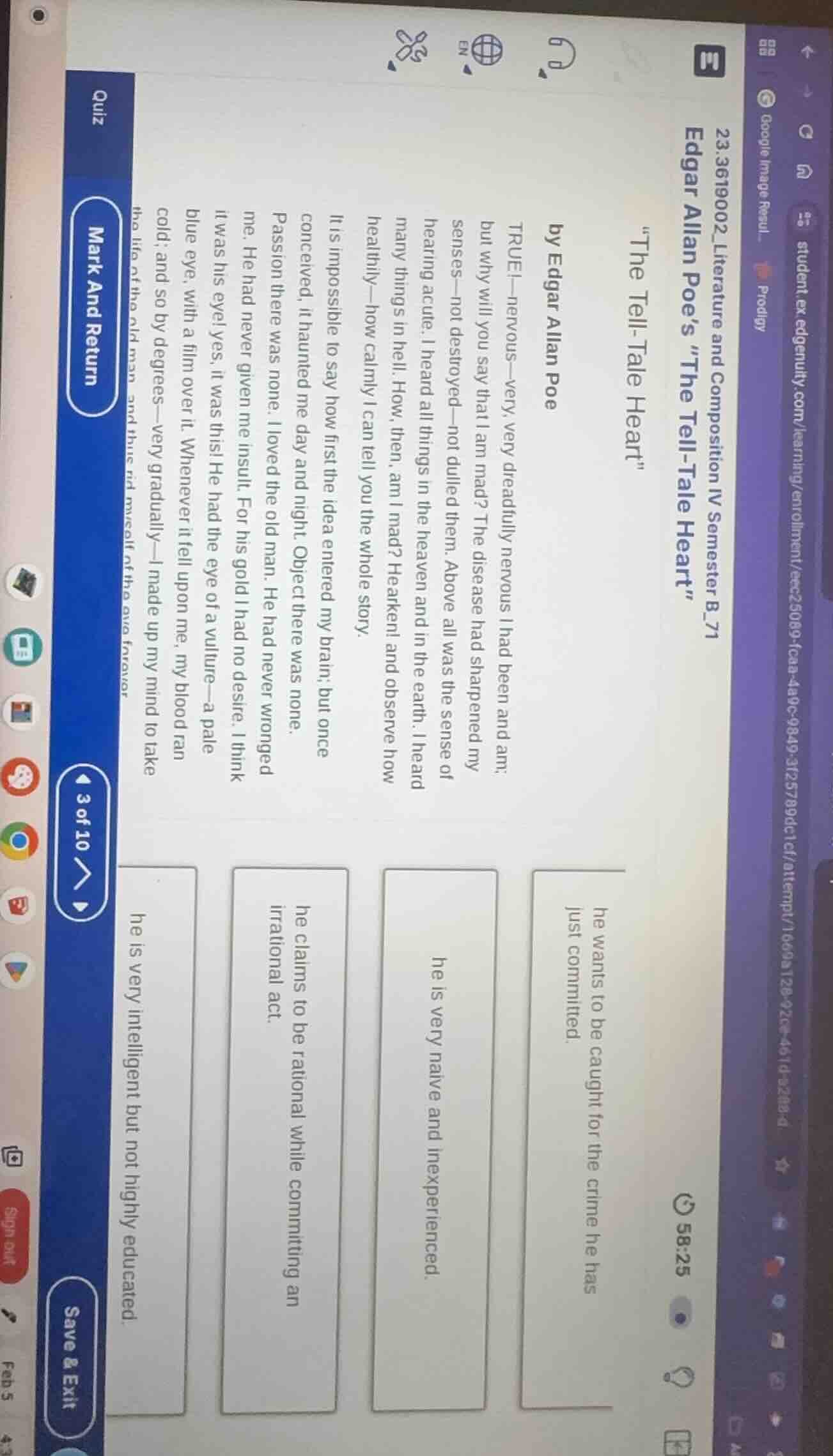
edgar allan poe’s “the tell - tale heart”
the tell - tale heart
by edgar allan poe
true!—nervous—very, very dreadfully nervous i had been and am;
but why will you say that i am mad? the disease had sharpened my
senses—not destroyed—not dulled them. above all was the sense of
hearing acute. i heard all things in the heaven and in the earth. i heard
many things in hell. how, then, am i mad? hearken! and observe how
healthily—how calmly i can tell you the whole story.
it is impossible to say how first the idea entered my brain; but once
conceived, it haunted me day and night. object there was none.
passion there was none. i loved the old man. he had never wronged
me. he had never given me insult. for his gold i had no desire. i think
it was his eye! yes, it was this! he had the eye of a vulture—a pale
blue eye, with a film over it. whenever it fell upon me, my blood ran
cold; and so by degrees—very gradually—i made up my mind to take
the life of the old man, and thus rid myself of the eye forever.
he wants to be caught for the crime he has
just committed.
he is very naive and inexperienced.
he claims to be rational while committing an
irrational act.
he is very intelligent but not highly educated.
The narrator insists he is calm and rational, but his motivation to kill an old man solely over his "vulture eye" (a trivial, irrational reason) reveals a contradiction: he claims rationality while acting on an unhinged, illogical impulse. The other options do not fit: he shows no desire to be caught, demonstrates cunning (not naivety), and his intelligence is not framed as limited by education.

Snap & solve any problem in the app
Get step-by-step solutions on Sovi AI
Photo-based solutions with guided steps
Explore more problems and detailed explanations
he claims to be rational while committing an irrational act.