QUESTION IMAGE
Question
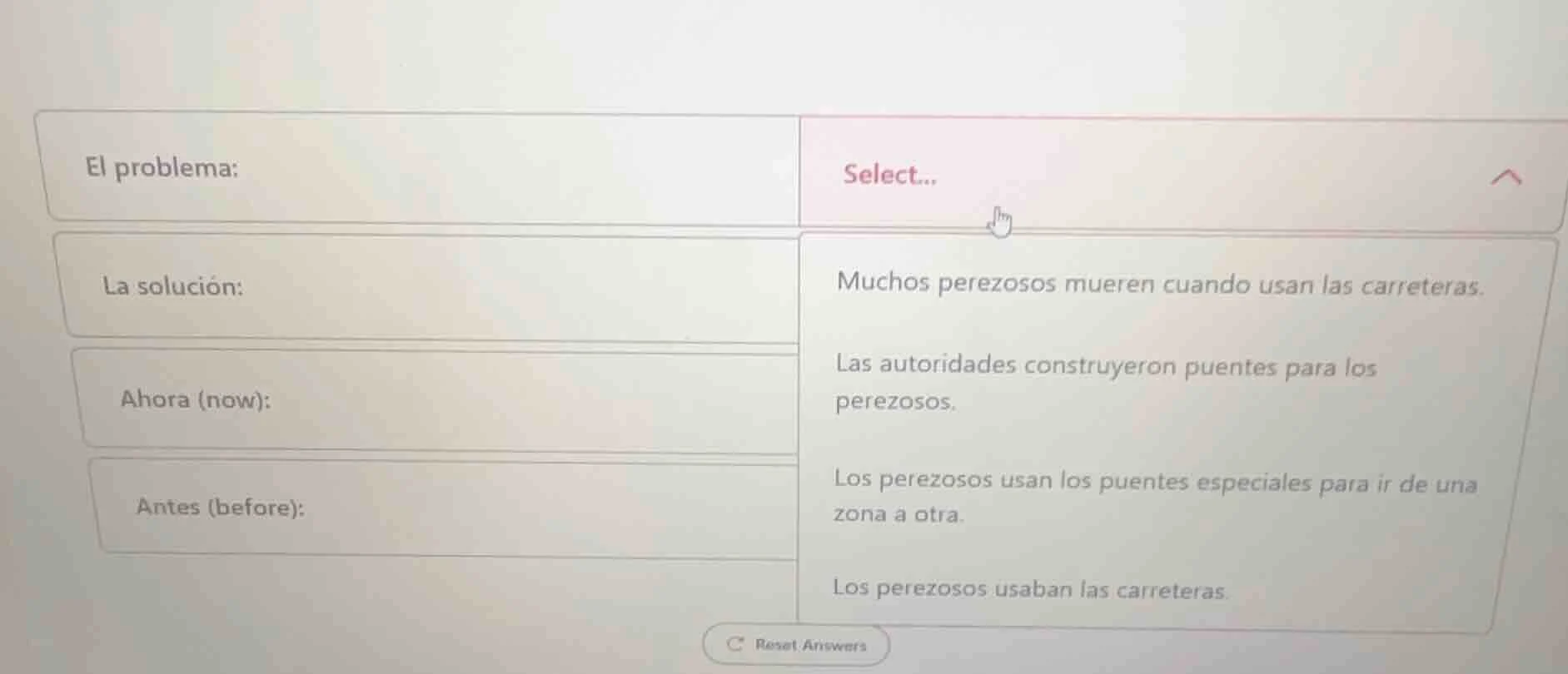
el problema:
la solución:
ahora (now):
antes (before):
select...
muchos perezosos mueren cuando usan las carreteras.
las autoridades construyeron puentes para los perezosos.
los perezosos usan los puentes especiales para ir de una zona a otra.
los perezosos usaban las carreteras.
To solve this problem, we need to match each section ("El problema", "La solución", "Ahora (now)", "Antes (before)") with the appropriate statement based on the context of sloths and roads/bridges:
1. El problema (The problem)
The problem is the issue that needs to be addressed. The statement "Muchos perezos muertos cuando usan las carreteras." (Many sloths die when they use the roads) describes the problem.
2. La solución (The solution)
The solution is the action taken to fix the problem. The statement "Las autoridades construyeron puentes para los perezos." (The authorities built bridges for the sloths) describes the solution.
3. Ahora (now)
This describes the current situation after the solution. The statement "Los perezos usan los puentes especiales para ir de una zona a otra." (The sloths use the special bridges to go from one area to another) describes the current state.
4. Antes (before)
This describes the situation before the solution. The statement "Los perezos usaban las carreteras." (The sloths used to use the roads) describes the past situation.
Final Matches:
- El problema: Muchos perezos muertos cuando usan las carreteras.
- La solución: Las autoridades construyeron puentes para los perezos.
- Ahora (now): Los perezos usan los puentes especiales para ir de una zona a otra.
- Antes (before): Los perezos usaban las carreteras.

Snap & solve any problem in the app
Get step-by-step solutions on Sovi AI
Photo-based solutions with guided steps
Explore more problems and detailed explanations
To solve this problem, we need to match each section ("El problema", "La solución", "Ahora (now)", "Antes (before)") with the appropriate statement based on the context of sloths and roads/bridges:
1. El problema (The problem)
The problem is the issue that needs to be addressed. The statement "Muchos perezos muertos cuando usan las carreteras." (Many sloths die when they use the roads) describes the problem.
2. La solución (The solution)
The solution is the action taken to fix the problem. The statement "Las autoridades construyeron puentes para los perezos." (The authorities built bridges for the sloths) describes the solution.
3. Ahora (now)
This describes the current situation after the solution. The statement "Los perezos usan los puentes especiales para ir de una zona a otra." (The sloths use the special bridges to go from one area to another) describes the current state.
4. Antes (before)
This describes the situation before the solution. The statement "Los perezos usaban las carreteras." (The sloths used to use the roads) describes the past situation.
Final Matches:
- El problema: Muchos perezos muertos cuando usan las carreteras.
- La solución: Las autoridades construyeron puentes para los perezos.
- Ahora (now): Los perezos usan los puentes especiales para ir de una zona a otra.
- Antes (before): Los perezos usaban las carreteras.