QUESTION IMAGE
Question
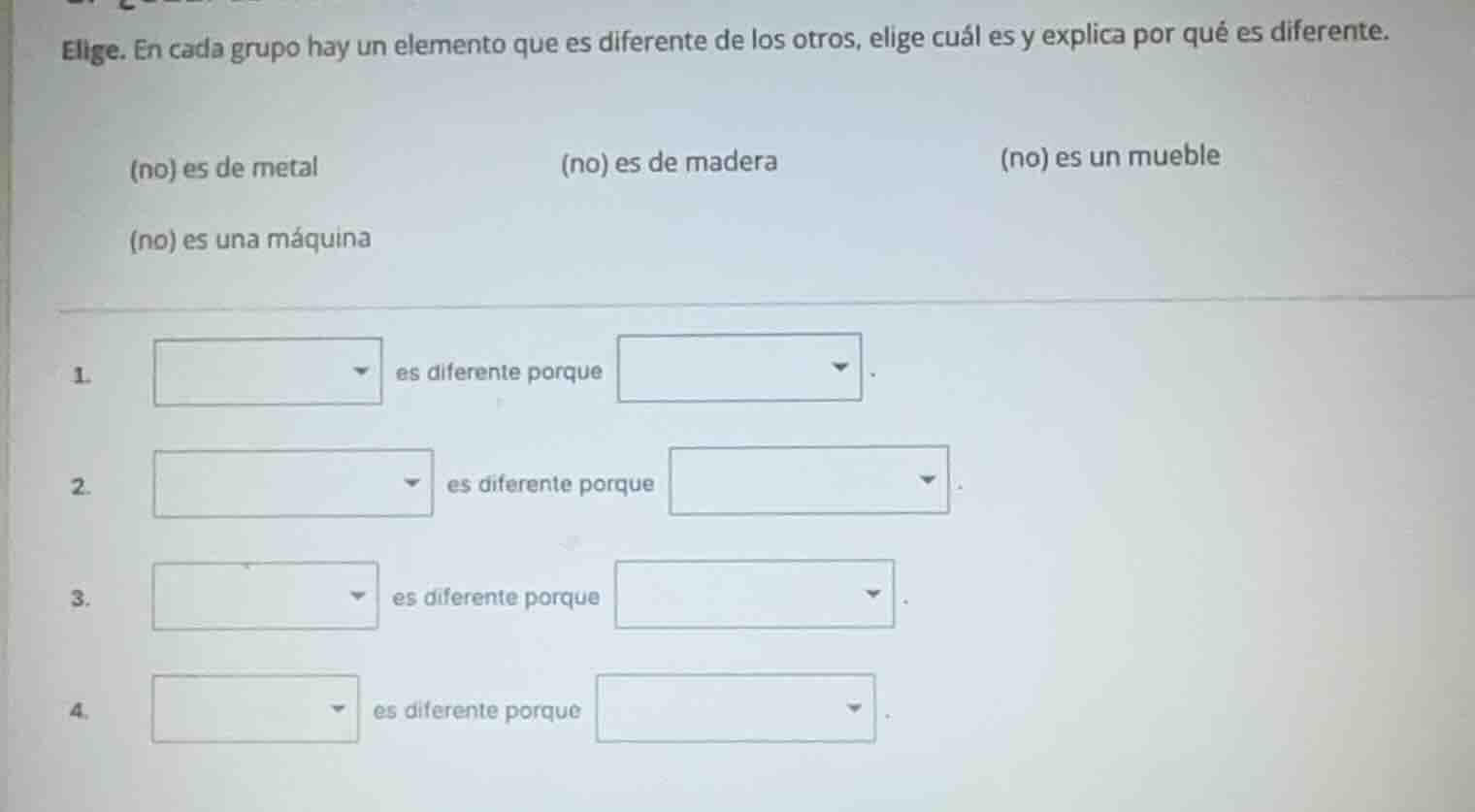
elige. en cada grupo hay un elemento que es diferente de los otros, elige cuál es y explica por qué es diferente.
(no) es de metal \t\t\t(no) es de madera \t\t\t(no) es un mueble
(no) es una máquina
- \t□ es diferente porque □.
- \t□ es diferente porque □.
- \t□ es diferente porque □.
- \t□ es diferente porque □.
To solve this problem, we need to identify the element that is different in each group based on the given criteria (material, type: furniture or machine). However, since the specific elements in the dropdowns are not visible, we can provide a general approach:
Step 1: Analyze the Criteria
- (no) es de metal: Checks if the item is made of metal.
- (no) es de madera: Checks if the item is made of wood.
- (no) es un mueble: Checks if the item is furniture.
- (no) es una máquina: Checks if the item is a machine.
Step 2: Compare Elements
For each group, compare the items against these criteria. For example:
- If most items are made of metal, the one made of wood is different (because no es de metal or es de madera).
- If most items are furniture, the machine is different (because no es un mueble or es una máquina).
Example Application (Assuming a Typical Group):
Suppose the group has: silla (chair, furniture, wood), mesa (table, furniture, wood), martillo (hammer, tool, metal), impresora (printer, machine, metal).
- For “es de madera”: martillo and impresora are different (they are metal). But if we focus on “es un mueble”, impresora is different (it is a machine, not furniture).
Since the dropdown content is missing, here’s how to proceed with the visible structure:
- Select the item from the first dropdown.
- Select the reason from the second dropdown (matching the criterion that makes it unique).
For instance, if the first dropdown has “impresora” and the second has “no es un mueble”, the answer would be:
- impresora es diferente porque no es un mueble.
(Adjust based on the actual dropdown options provided in the exercise.)

Snap & solve any problem in the app
Get step-by-step solutions on Sovi AI
Photo-based solutions with guided steps
Explore more problems and detailed explanations
To solve this problem, we need to identify the element that is different in each group based on the given criteria (material, type: furniture or machine). However, since the specific elements in the dropdowns are not visible, we can provide a general approach:
Step 1: Analyze the Criteria
- (no) es de metal: Checks if the item is made of metal.
- (no) es de madera: Checks if the item is made of wood.
- (no) es un mueble: Checks if the item is furniture.
- (no) es una máquina: Checks if the item is a machine.
Step 2: Compare Elements
For each group, compare the items against these criteria. For example:
- If most items are made of metal, the one made of wood is different (because no es de metal or es de madera).
- If most items are furniture, the machine is different (because no es un mueble or es una máquina).
Example Application (Assuming a Typical Group):
Suppose the group has: silla (chair, furniture, wood), mesa (table, furniture, wood), martillo (hammer, tool, metal), impresora (printer, machine, metal).
- For “es de madera”: martillo and impresora are different (they are metal). But if we focus on “es un mueble”, impresora is different (it is a machine, not furniture).
Since the dropdown content is missing, here’s how to proceed with the visible structure:
- Select the item from the first dropdown.
- Select the reason from the second dropdown (matching the criterion that makes it unique).
For instance, if the first dropdown has “impresora” and the second has “no es un mueble”, the answer would be:
- impresora es diferente porque no es un mueble.
(Adjust based on the actual dropdown options provided in the exercise.)