QUESTION IMAGE
Question
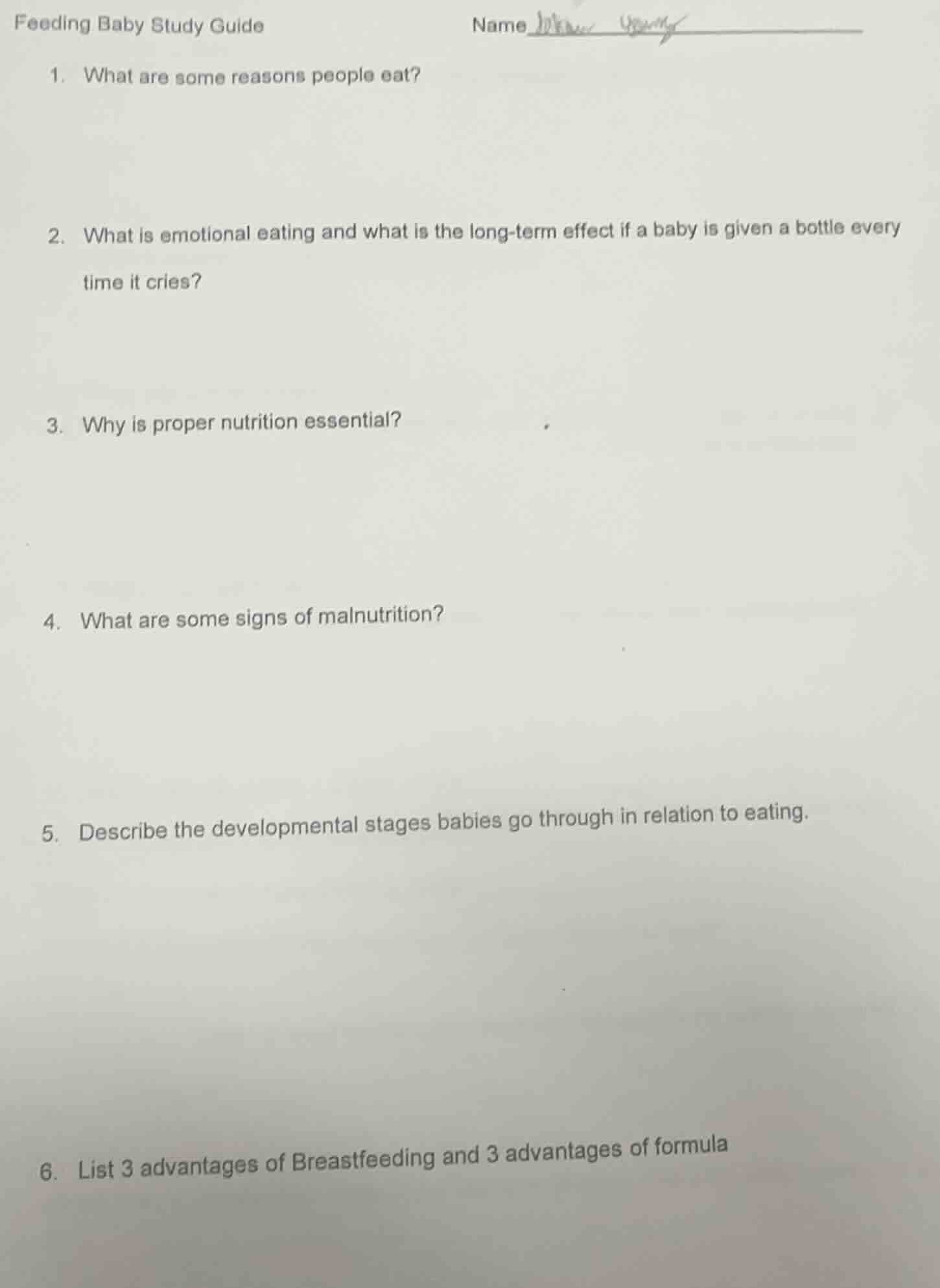
feeding baby study guide
name
- what are some reasons people eat?
- what is emotional eating and what is the long - term effect if a baby is given a bottle every time it cries?
- why is proper nutrition essential?
- what are some signs of malnutrition?
- describe the developmental stages babies go through in relation to eating.
- list 3 advantages of breastfeeding and 3 advantages of formula
Brief Explanations
- People eat for physical needs (fueling the body, meeting nutritional requirements), emotional needs (comfort, stress relief, celebration), and social reasons (gatherings, cultural traditions).
- Emotional eating is consuming food to cope with feelings rather than physical hunger. If a baby is given a bottle every time it cries, it may learn to associate food with soothing emotions, leading to a lifelong pattern of emotional overeating and difficulty recognizing actual hunger cues.
- Proper nutrition supports physical growth, brain development, immune system function, and overall healthy bodily processes, especially critical for babies' rapid development.
- Signs of malnutrition include slow weight gain or weight loss, delayed growth/development, fatigue, frequent infections, dry or discolored skin, and poor appetite.
- - Newborn stage: Relies entirely on milk (breast or formula), feeds on demand, has a sucking reflex.
- 4-6 months: Starts showing interest in solid foods, can sit with support, uses tongue-thrust reflex less.
- 7-9 months: Can chew soft solids, uses fingers to pick up food, drinks from a cup.
- 10-12 months: Eats a variety of soft table foods, develops pincer grasp, begins self-feeding more independently.
- Breastfeeding advantages: Provides antibodies to boost baby's immunity; is always available, sterile, and at the right temperature; supports bonding between parent and baby.
Formula advantages: Allows other caregivers to feed the baby; parents can easily track how much the baby is consuming; can be used if the parent has medical conditions or medications that prevent breastfeeding.

Snap & solve any problem in the app
Get step-by-step solutions on Sovi AI
Photo-based solutions with guided steps
Explore more problems and detailed explanations
- Physical fuel, emotional comfort, social/cultural reasons
- Emotional eating: eating for feelings, not hunger. Long-term effect: learned emotional overeating, poor hunger cue recognition.
- Supports growth, brain development, immune function.
- Slow weight gain, delayed development, frequent infections, dry skin.
- Newborn: milk-only, demand feeding; 4-6 months: solid food interest; 7-9 months: soft solids, cup use; 10-12 months: table foods, self-feeding.
- Breastfeeding advantages: 1. Boosts baby immunity; 2. Ready, sterile, proper temp; 3. Fosters parent-baby bonding.
Formula advantages: 1. Enables caregiver feeding; 2. Easy intake tracking; 3. Safe for restricted parents.