QUESTION IMAGE
Question
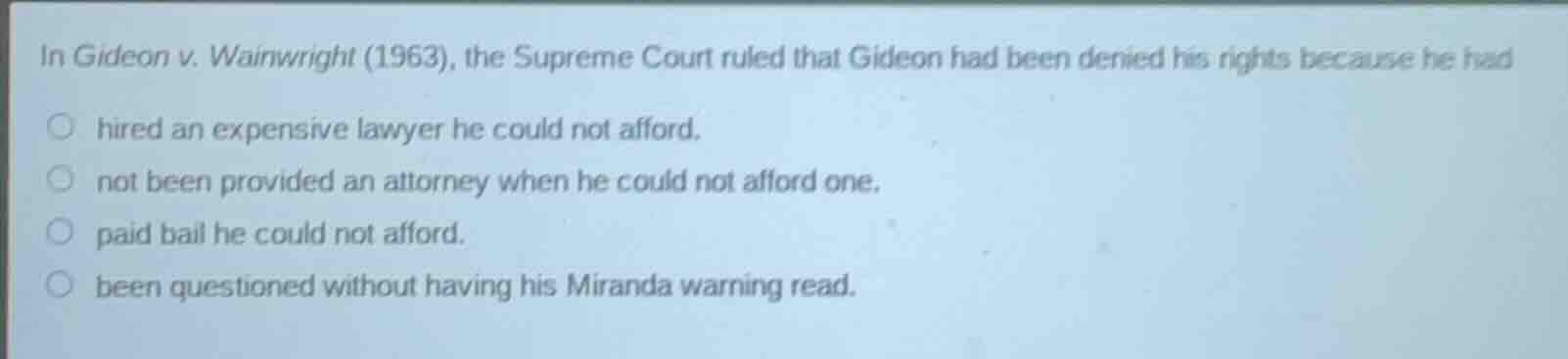
in gideon v. wainwright (1963), the supreme court ruled that gideon had been denied his rights because he had
hired an expensive lawyer he could not afford.
not been provided an attorney when he could not afford one.
paid bail he could not afford.
been questioned without having his miranda warning read.
In the Gideon v. Wainwright (1963) case, the key ruling was about the right to counsel for indigent defendants. Gideon was not provided an attorney when he couldn't afford one, leading to the Supreme Court establishing that states must provide counsel to indigent defendants in felony cases. The other options are incorrect: hiring an expensive lawyer he couldn't afford is not the issue, paying bail he couldn't afford is unrelated, and Miranda warnings are about custodial interrogation (not this case).

Snap & solve any problem in the app
Get step-by-step solutions on Sovi AI
Photo-based solutions with guided steps
Explore more problems and detailed explanations
B. not been provided an attorney when he could not afford one.