QUESTION IMAGE
Question
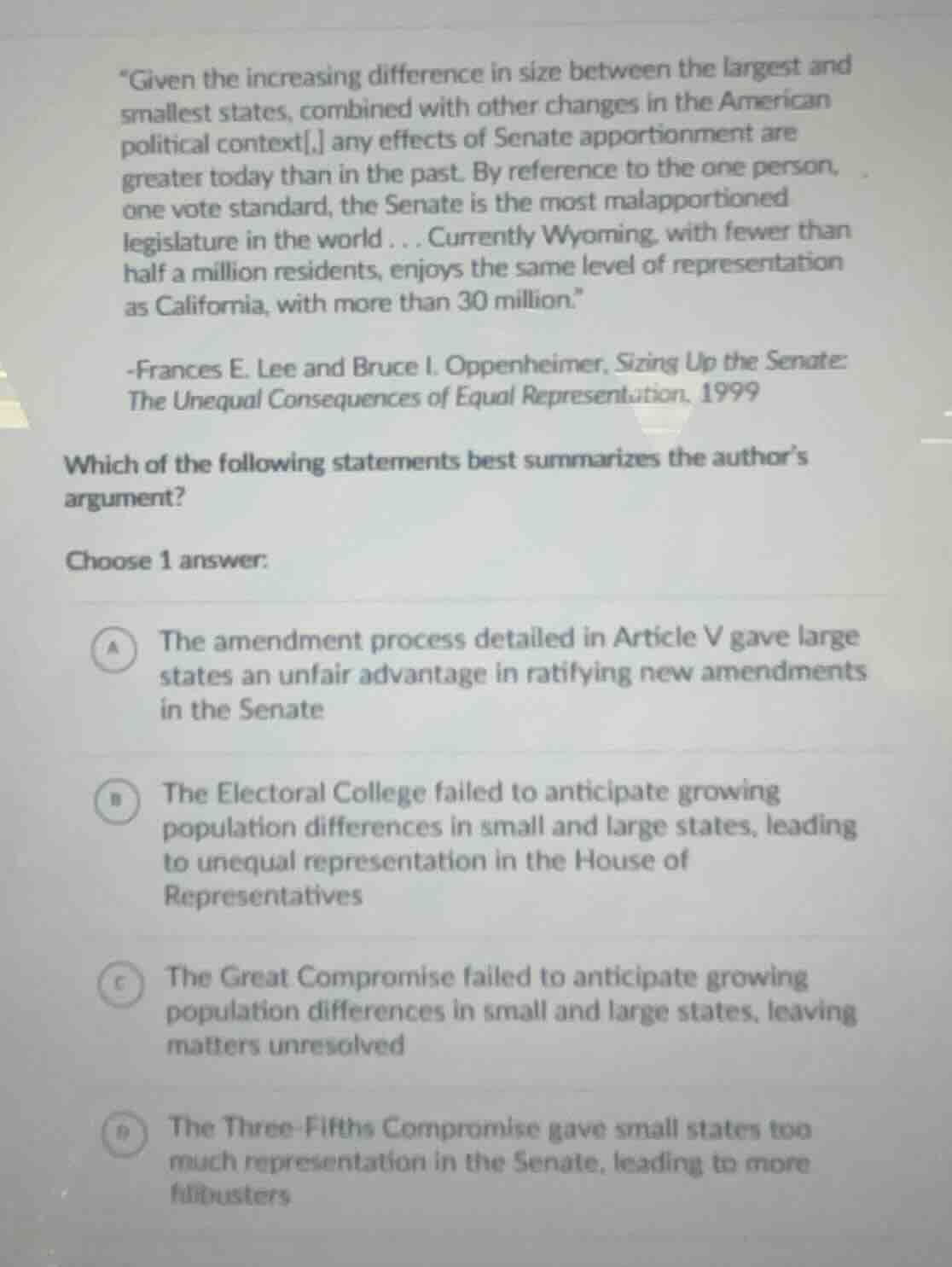
“given the increasing difference in size between the largest and smallest states, combined with other changes in the american political context, any effects of senate apportionment are greater today than in the past. by reference to the one person, one vote standard, the senate is the most malapportioned legislature in the world... currently wyoming, with fewer than half a million residents, enjoys the same level of representation as california, with more than 30 million.”
-frances e. lee and bruce i. oppenheimer, sizing up the senate: the unequal consequences of equal representation, 1999
which of the following statements best summarizes the author’s argument?
choose 1 answer:
a the amendment process detailed in article v gave large states an unfair advantage in ratifying new amendments in the senate
b the electoral college failed to anticipate growing population differences in small and large states, leading to unequal representation in the house of representatives
c the great compromise failed to anticipate growing population differences in small and large states, leaving matters unresolved
d the three - fifths compromise gave small states too much representation in the senate, leading to more filibusters
The author argues that the Senate's equal representation per state creates extreme malapportionment now, as population gaps between large and small states have grown. The Great Compromise established the Senate with equal state representation, which did not account for future large population disparities between states, leading to the current unequal representation issue described. Option A is incorrect as the text does not mention Article V or amendment ratification advantages. Option B is wrong because it references the House of Representatives and Electoral College, not the Senate. Option D is incorrect since the Three-Fifths Compromise related to enslaved people's counting, not Senate representation structure.

Snap & solve any problem in the app
Get step-by-step solutions on Sovi AI
Photo-based solutions with guided steps
Explore more problems and detailed explanations
C. The Great Compromise failed to anticipate growing population differences in small and large states, leaving matters unresolved