QUESTION IMAGE
Question
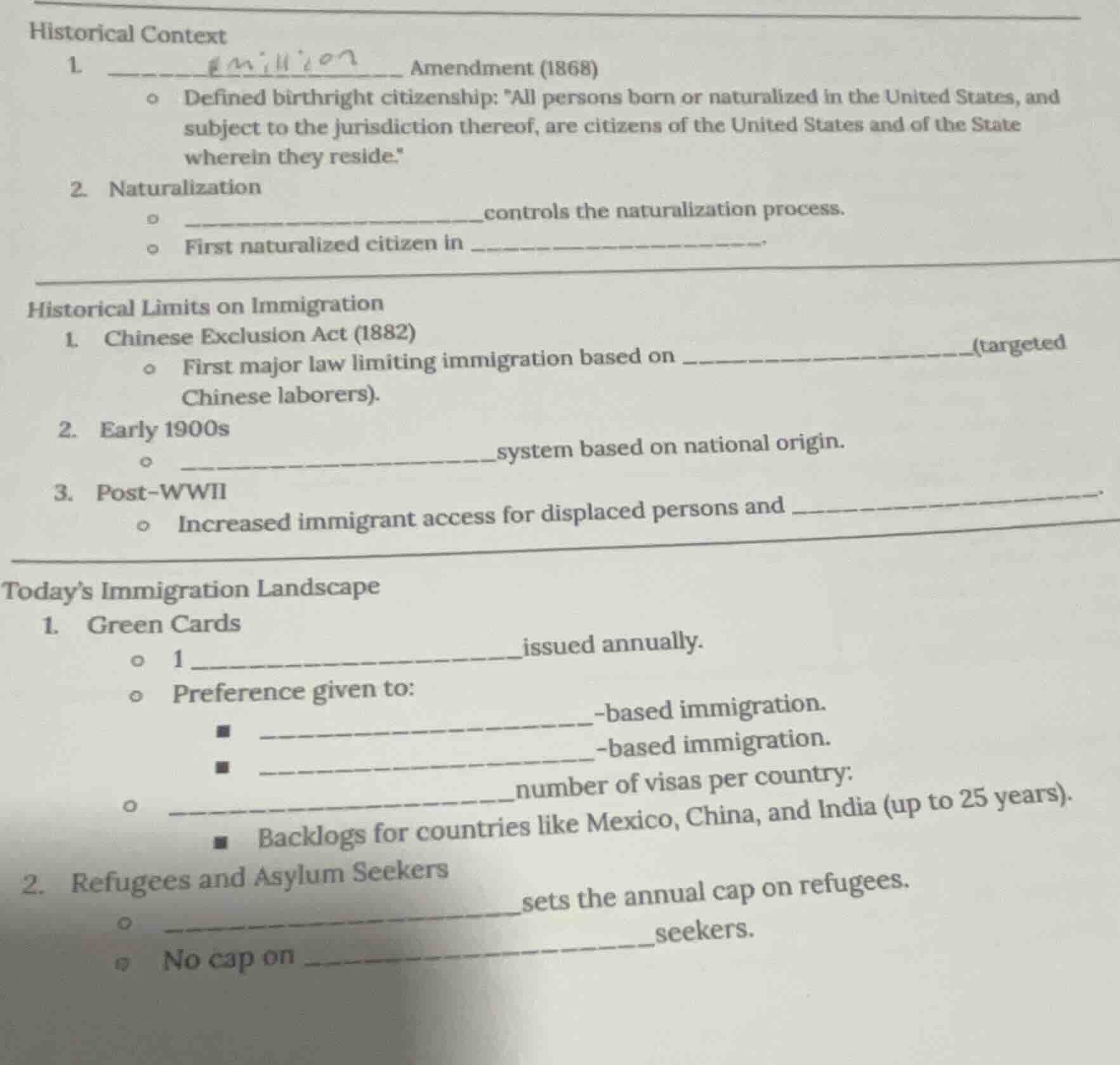
historical context1. ____ amendment (1868)○ defined birthright citizenship: \all persons born or naturalized in the united states, and subject to the jurisdiction thereof, are citizens of the united states and of the state wherein they reside.\2. naturalization○ ________________controls the naturalization process.○ first naturalized citizen in ________________.historical limits on immigration1. chinese exclusion act (1882)○ first major law limiting immigration based on ________________(targeted chinese laborers).2. early 1900s○ ________________system based on national origin.3. post-wwii○ increased immigrant access for displaced persons and ________________.todays immigration landscape1. green cards○ 1 ________________issued annually.○ preference given to:■ ________________-based immigration.■ ________________-based immigration.○ ________________number of visas per country:■ backlogs for countries like mexico, china, and india (up to 25 years).2. refugees and asylum seekers○ ________________sets the annual cap on refugees.○ no cap on __________________seekers.
Fills in blanks using U.S. immigration/citizenship history facts.
- 14th Amendment defines birthright citizenship (1868).
- U.S. Congress controls naturalization; the first naturalized citizen was in 1790.
- Chinese Exclusion Act targeted race/ethnicity.
- Early 1900s used a quota system for national origin.
- Post-WWII opened immigration for family reunification.
- ~1 million green cards are issued yearly, prioritizing employment and family-based immigration, with a per-country visa cap.
- The U.S. President sets refugee caps; asylum seekers have no cap.

Snap & solve any problem in the app
Get step-by-step solutions on Sovi AI
Photo-based solutions with guided steps
Explore more problems and detailed explanations
Historical Context
- 14th Amendment (1868)
- Defined birthright citizenship: "All persons born or naturalized in the United States, and subject to the jurisdiction thereof, are citizens of the United States and of the State wherein they reside."
- Naturalization
- U.S. Congress controls the naturalization process.
- First naturalized citizen in 1790
Historical Limits on Immigration
- Chinese Exclusion Act (1882)
- First major law limiting immigration based on race/ethnicity (targeted Chinese laborers).
- Early 1900s
- Quota system based on national origin.
- Post-WWII
- Increased immigrant access for displaced persons and family members
Today's Immigration Landscape
- Green Cards
- 1 million issued annually.
- Preference given to:
- Employment-based immigration.
- Family-based immigration.
- Fixed number of visas per country:
- Backlogs for countries like Mexico, China, and India (up to 25 years).
- Refugees and Asylum Seekers
- The U.S. President sets the annual cap on refugees.
- No cap on asylum seekers.