QUESTION IMAGE
Question
Question was provided via image upload.
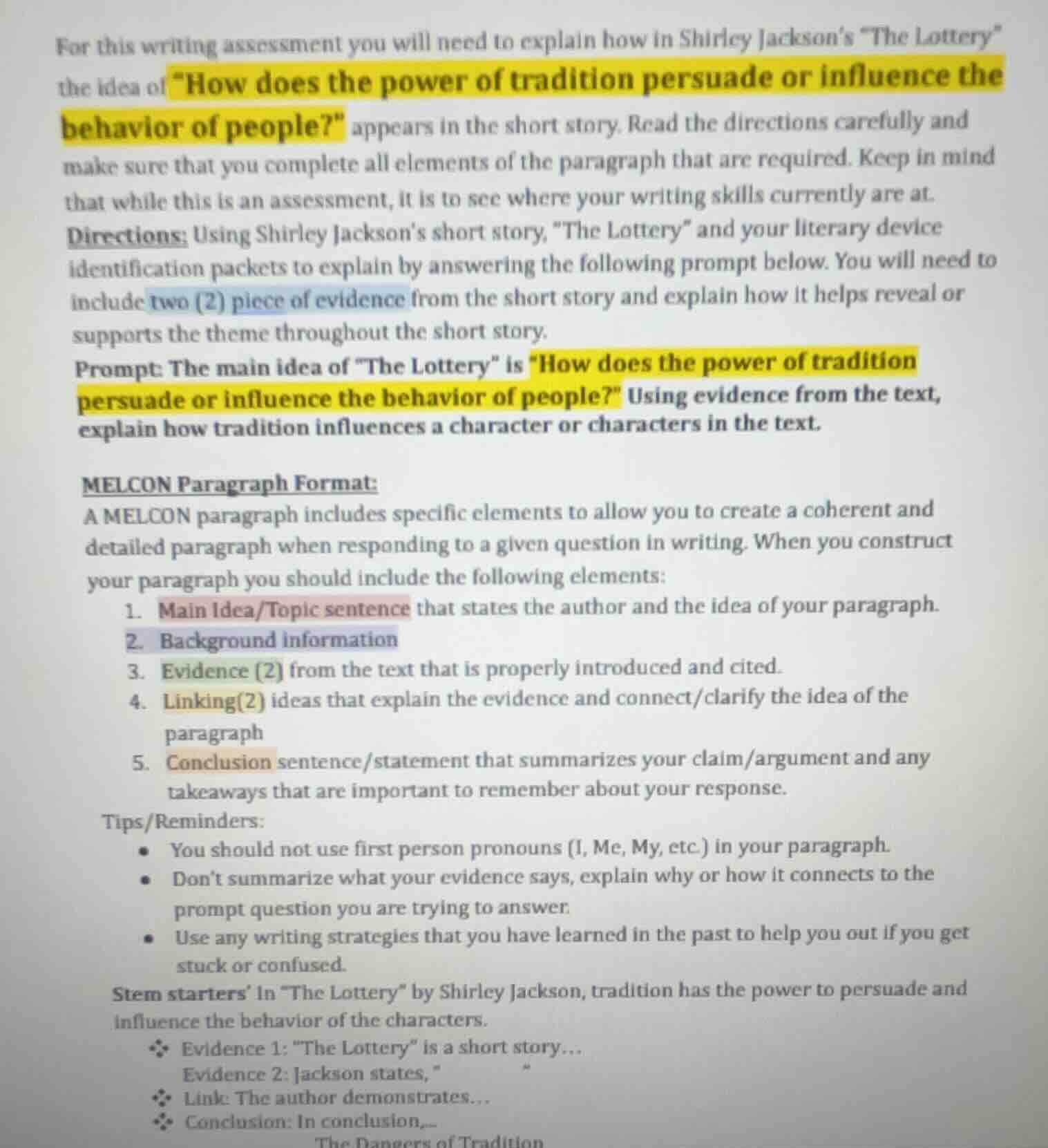
The response follows the MELCON structure to analyze how tradition influences characters in Shirley Jackson’s The Lottery. It opens with a clear main idea, provides context about the annual lottery, includes two text-based evidence examples, links each to the theme of traditional coercion, and closes with a concluding takeaway. No first-person pronouns are used, and each element connects directly to the prompt about tradition’s power over behavior.

Snap & solve any problem in the app
Get step-by-step solutions on Sovi AI
Photo-based solutions with guided steps
Explore more problems and detailed explanations
- Main Idea/Topic Sentence: In Shirley Jackson’s The Lottery, tradition exerts overwhelming power to coerce characters into participating in a violent, unjust ritual.
- Background Information: The small village holds an annual lottery where one resident is stoned to death, a practice passed down for generations without critical examination.
- Evidence 1: Jackson writes, "The original paraphernalia for the lottery had been lost long ago, and the black box now resting on the stool had been put into use even before Old Man Warner, the oldest man in town, was born."
Link 1: This shows the village clings to the ritual’s physical symbol despite forgetting its origins, prioritizing tradition over logic or empathy. The box’s longevity reinforces that tradition’s weight, not purpose, drives compliance.
- Evidence 2: When a villager suggests other towns are ending the lottery, Old Man Warner scoffs, "Pack of crazy fools. Listening to the young folks, nothing’s good enough for them. Next thing you know, they’ll be wanting to go back to living in caves, nobody work any more, live that way for a while. Used to be a saying about ‘Lottery in June, corn be heavy soon.’ First thing you know, we’d all be eating stewed chickweed and acorns. There’s always been a lottery."
Link 2: Old Man Warner’s hostility to change frames tradition as a necessary safeguard for survival, pressuring younger villagers to conform. His rhetoric paints questioning the lottery as a threat to the community, silencing dissent and forcing participation.
- Conclusion Sentence: Through unthinking loyalty to outdated symbols and fear-mongering about abandoning tradition, Jackson reveals how long-held rituals can compel people to act against their humanity.