QUESTION IMAGE
Question
inferences about informational text — quiz — level e
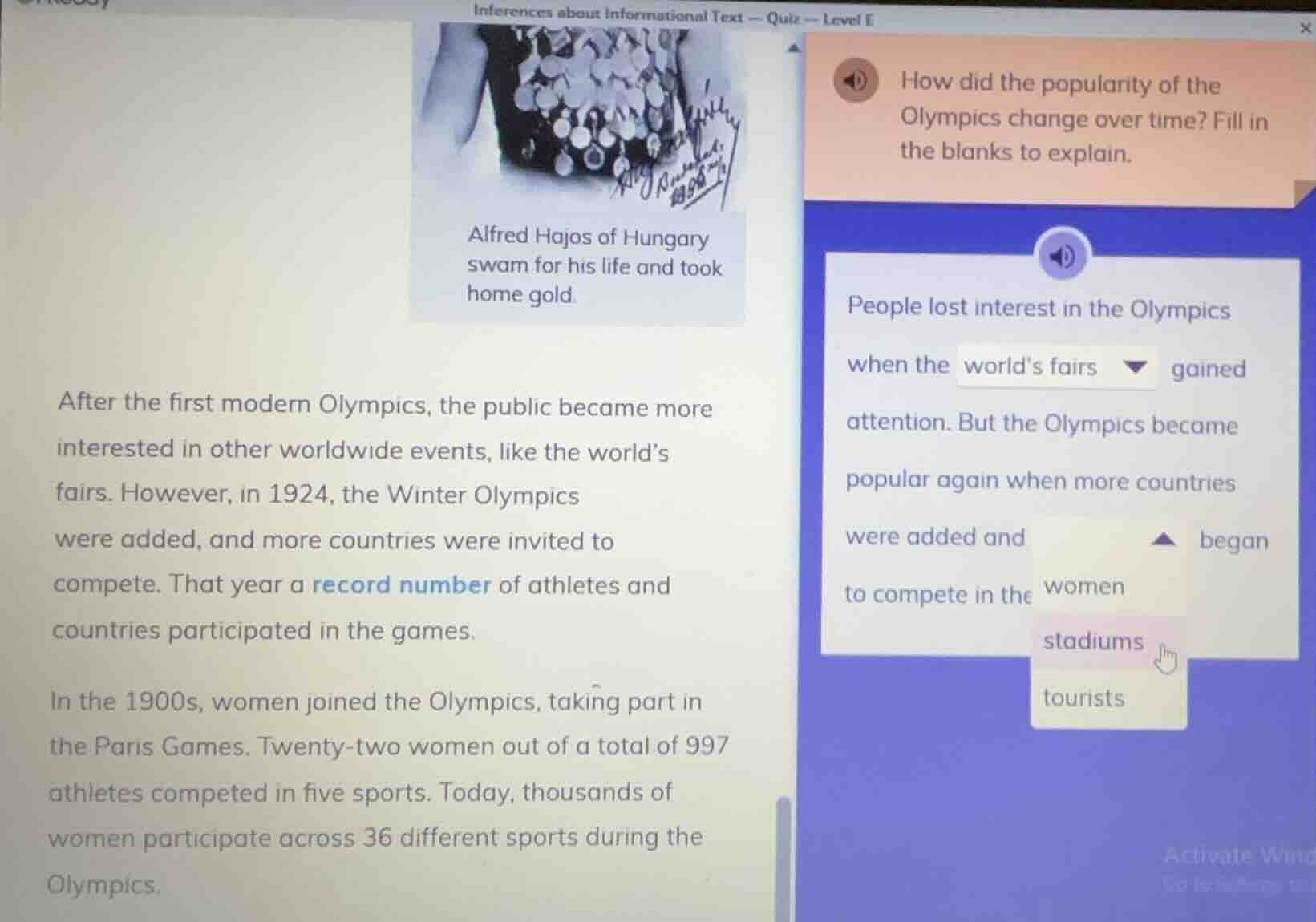
alfred hajos of hungary
swam for his life and took
home gold.
after the first modern olympics, the public became more
interested in other worldwide events, like the worlds
fairs. however, in 1924, the winter olympics
were added, and more countries were invited to
compete. that year a record number of athletes and
countries participated in the games.
in the 1900s, women joined the olympics, taking part in
the paris games. twenty-two women out of a total of 997
athletes competed in five sports. today, thousands of
women participate across 36 different sports during the
olympics.
how did the popularity of the
olympics change over time? fill in
the blanks to explain.
people lost interest in the olympics
when the worlds fairs gained
attention. but the olympics became
popular again when more countries
were added and began
to compete in the
dropdown options: women, stadiums, tourists
The text states that after the first modern Olympics, the public shifted interest to world's fairs, reducing Olympic popularity. Then, the Olympics regained popularity when more countries joined, and over time, women began competing (starting in the 1900s Paris Games) which is part of their growth in participation. The blank requires a group that began competing to boost popularity, and the text highlights women's entry into the Olympics as a key change over time.

Snap & solve any problem in the app
Get step-by-step solutions on Sovi AI
Photo-based solutions with guided steps
Explore more problems and detailed explanations
People lost interest in the Olympics when the world's fairs gained attention. But the Olympics became popular again when more countries were added and women began to compete in the games.