QUESTION IMAGE
Question
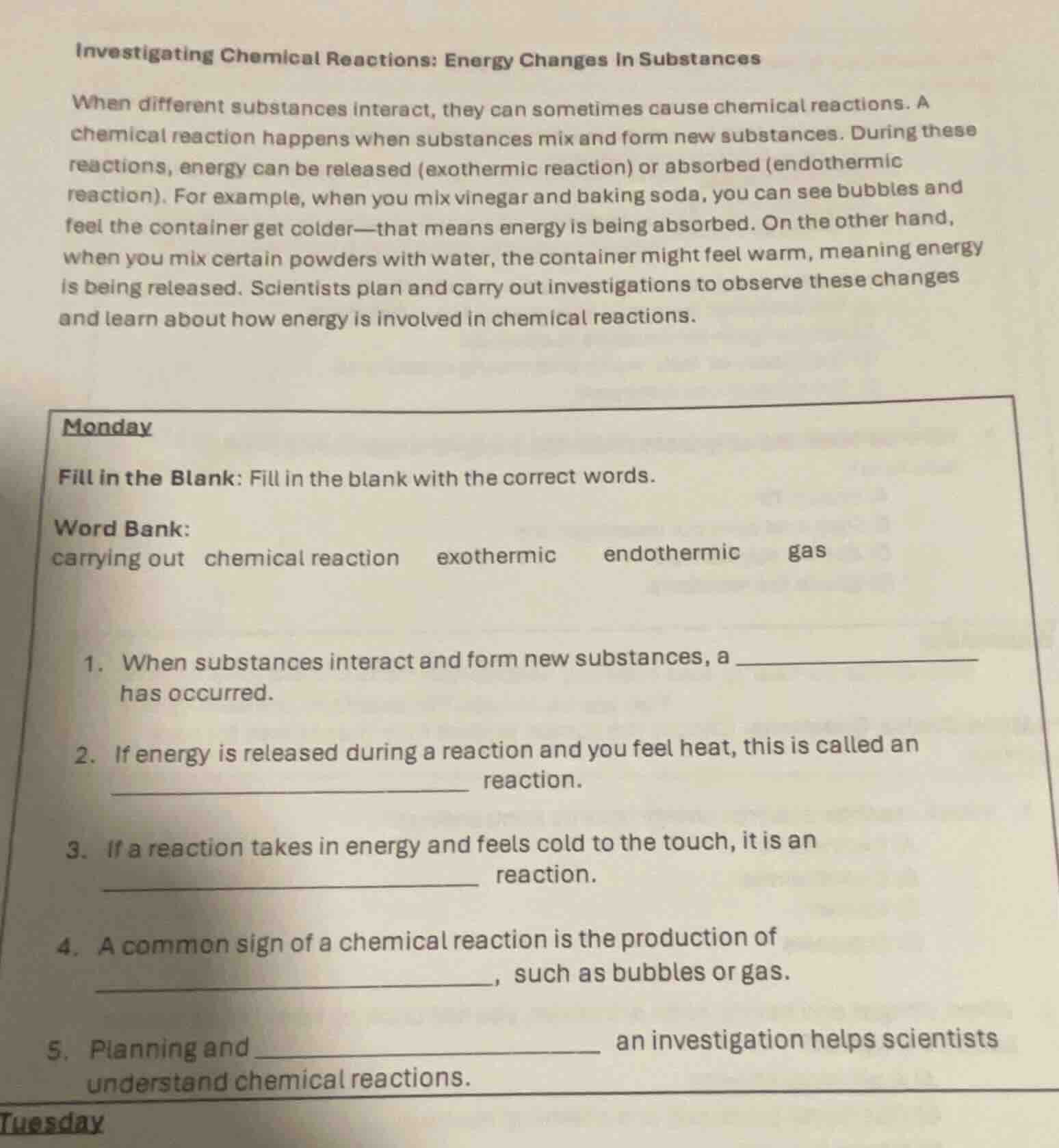
investigating chemical reactions: energy changes in substances
when different substances interact, they can sometimes cause chemical reactions. a
chemical reaction happens when substances mix and form new substances. during these
reactions, energy can be released (exothermic reaction) or absorbed (endothermic
reaction). for example, when you mix vinegar and baking soda, you can see bubbles and
feel the container get colder—that means energy is being absorbed. on the other hand,
when you mix certain powders with water, the container might feel warm, meaning energy
is being released. scientists plan and carry out investigations to observe these changes
and learn about how energy is involved in chemical reactions.
monday
fill in the blank: fill in the blank with the correct words.
word bank:
carrying out chemical reaction exothermic endothermic gas
- when substances interact and form new substances, a ______________
has occurred.
- if energy is released during a reaction and you feel heat, this is called an
______________ reaction.
- if a reaction takes in energy and feels cold to the touch, it is an
______________ reaction.
- a common sign of a chemical reaction is the production of
______________, such as bubbles or gas.
- planning and ______________ an investigation helps scientists
understand chemical reactions.
tuesday
Question 1
The text states "A chemical reaction happens when substances mix and form new substances." So when substances interact and form new substances, a chemical reaction has occurred.
The text says "energy can be released (exothermic reaction)". If energy is released and heat is felt, it's an exothermic reaction.
From the text, "energy can be absorbed (endothermic reaction)" and if a reaction takes in energy and feels cold, it's endothermic.

Snap & solve any problem in the app
Get step-by-step solutions on Sovi AI
Photo-based solutions with guided steps
Explore more problems and detailed explanations
chemical reaction