QUESTION IMAGE
Question
jan 23 9:02pm
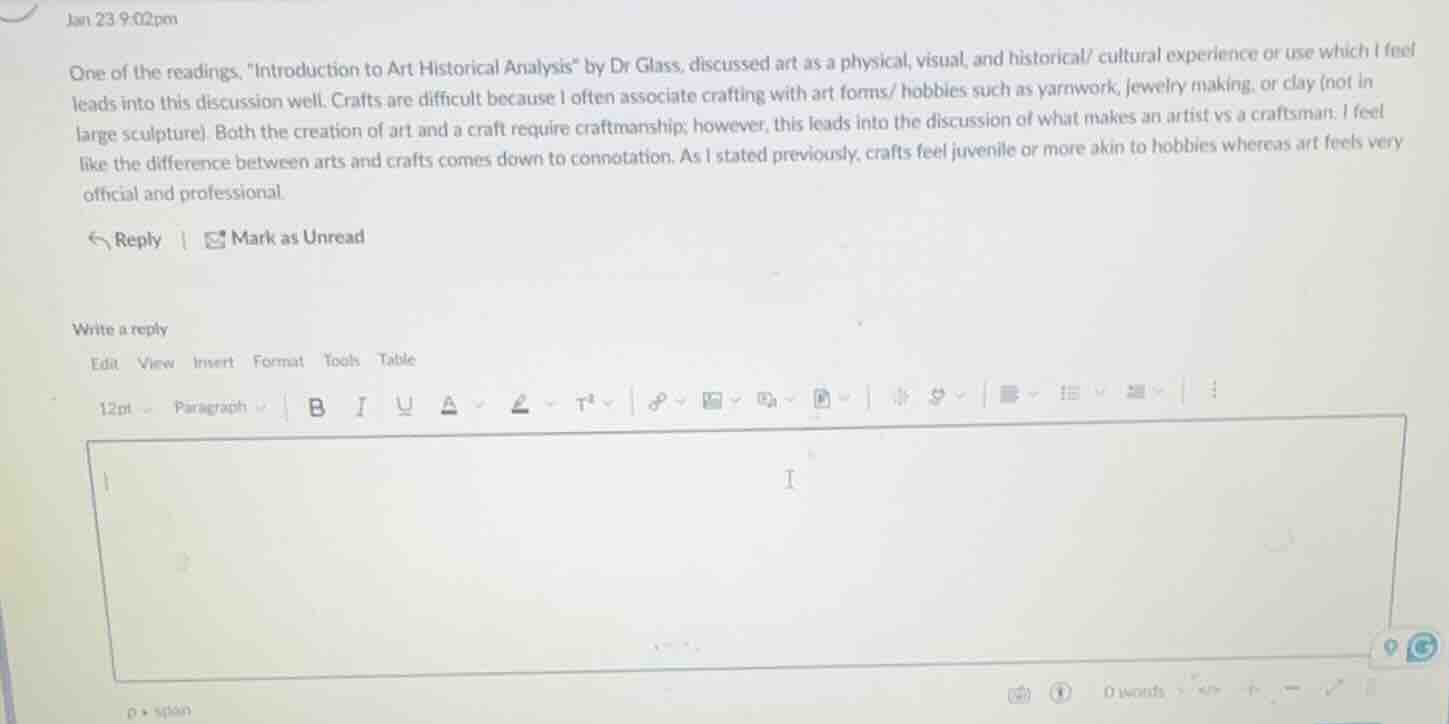
one of the readings, \introduction to art historical analysis\ by dr glass, discussed art as a physical, visual, and historical/ cultural experience or use which i feel leads into this discussion well. crafts are difficult because i often associate crafting with art forms/ hobbies such as yarnwork, jewelry making, or clay (not in large sculpture). both the creation of art and a craft require craftmanship; however, this leads into the discussion of what makes an artist vs a craftsman: i feel like the difference between arts and crafts comes down to connotation. as i stated previously, crafts feel juvenile or more akin to hobbies whereas art feels very official and professional.
reply | mark as unread
write a reply
edit view insert format tools table
12pt paragraph | b i u a | 2 t² | | | | | |
(text box for reply with cursor, 0 words, some icons at bottom)
This response acknowledges the original poster's point about connotation, expands on the historical overlap between art and crafts, notes how institutional validation shapes perceptions, and affirms the skill in both practices to foster discussion.

Snap & solve any problem in the app
Get step-by-step solutions on Sovi AI
Photo-based solutions with guided steps
Explore more problems and detailed explanations
Great point about connotation shaping how we view art vs. crafts! I totally agree that the line feels tied to how we frame these practices culturally. Historically, many forms now considered "fine art" (like pottery or textile work) started as functional crafts, and the split often came down to which practices were elevated by institutions like museums and art schools. It's interesting how that institutional validation has made us see some skill-based work as "professional" art and others as "hobbyist" crafts, even though the craftsmanship and creative intent can be identical. I think what matters most is the care and vision the maker brings, regardless of the label!