QUESTION IMAGE
Question
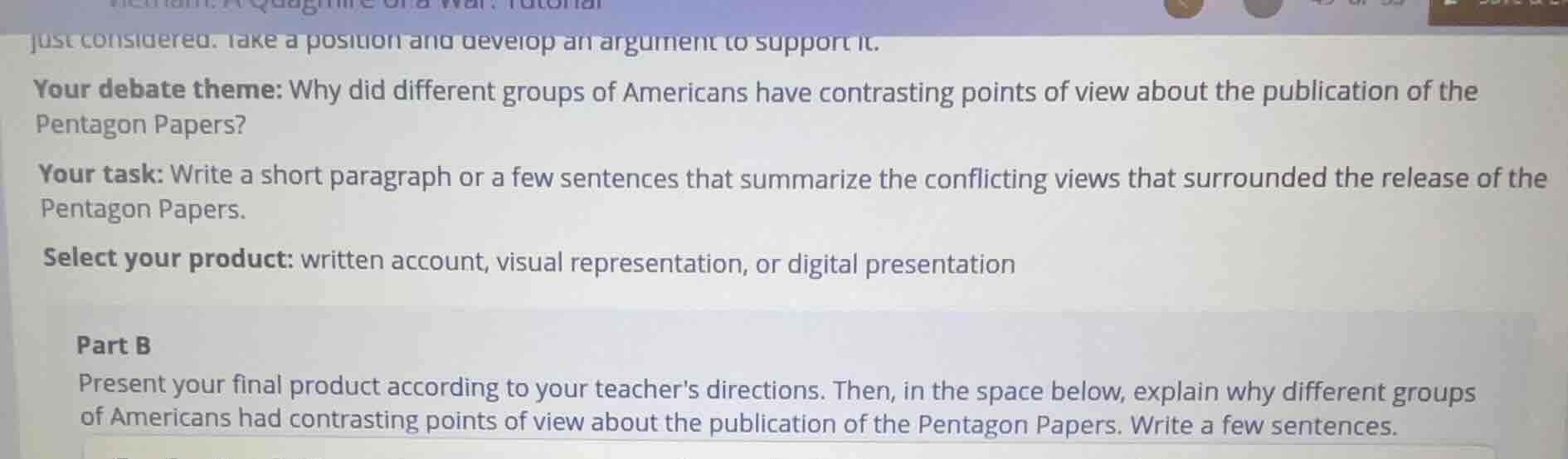
just considered. take a position and develop an argument to support it.
your debate theme: why did different groups of americans have contrasting points of view about the publication of the pentagon papers?
your task: write a short paragraph or a few sentences that summarize the conflicting views that surrounded the release of the pentagon papers.
select your product: written account, visual representation, or digital presentation
part b
present your final product according to your teachers directions. then, in the space below, explain why different groups of americans had contrasting points of view about the publication of the pentagon papers. write a few sentences.
Supporters of the Pentagon Papers' publication argued that the public had a right to know the government's secret, misleading actions and lies about the Vietnam War, framing the release as a defense of free speech and democratic transparency. Opponents, including many government officials and pro-war Americans, claimed the publication violated national security, would undermine ongoing military efforts, and set a dangerous precedent for leaking classified information that could harm U.S. foreign policy interests. These contrasting views stemmed from differing priorities: one centered on government accountability and public access to information, the other on national security and executive authority in wartime.

Snap & solve any problem in the app
Get step-by-step solutions on Sovi AI
Photo-based solutions with guided steps
Explore more problems and detailed explanations
Supporters of the Pentagon Papers' release emphasized the public's right to transparency, arguing the documents exposed government deception about the Vietnam War and that free speech and democratic accountability justified their publication. In contrast, opponents—including U.S. government officials and pro-war citizens—contended the leak threatened national security, would damage ongoing military operations, and violated the need for classified information to protect U.S. foreign policy goals. The divide came down to competing values: prioritizing government oversight versus prioritizing national security and executive wartime authority.