QUESTION IMAGE
Question
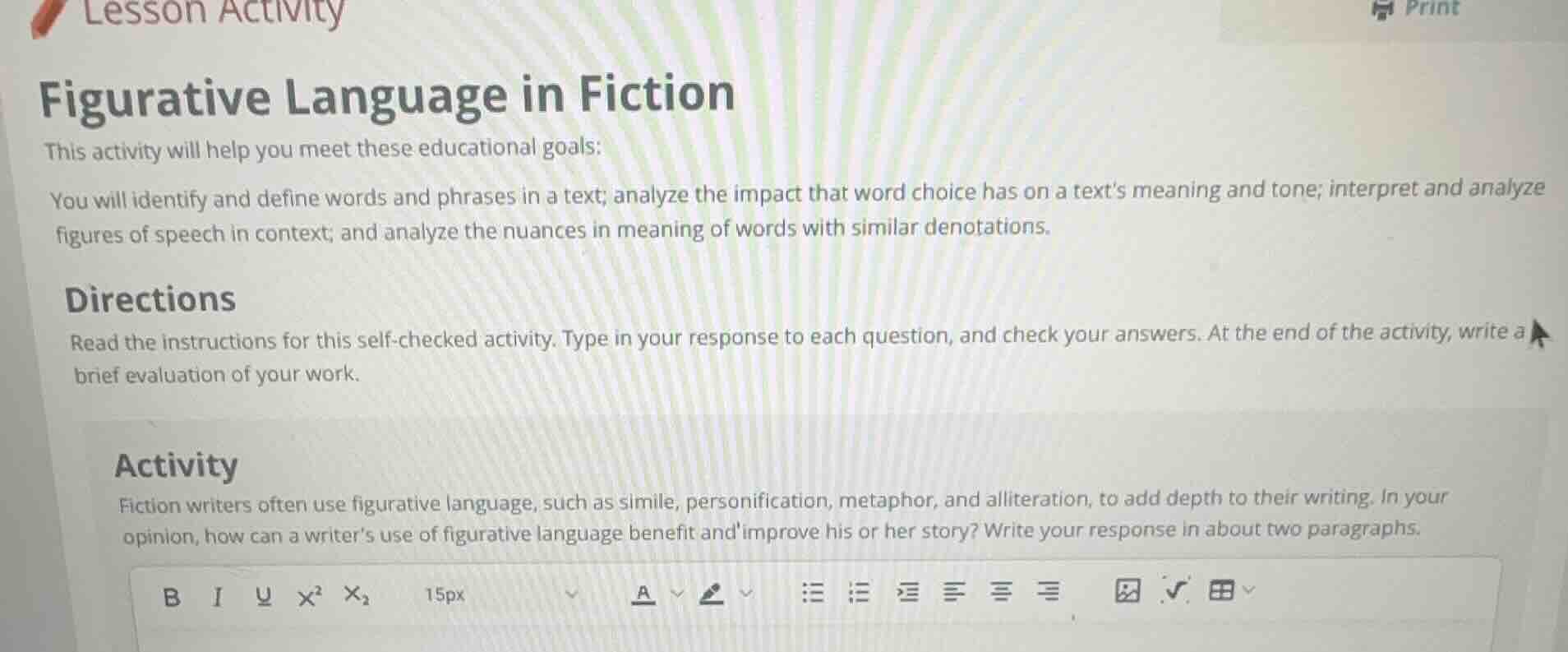
lesson activityprintfigurative language in fictionthis activity will help you meet these educational goals:you will identify and define words and phrases in a text; analyze the impact that word choice has on a texts meaning and tone; interpret and analyze figures of speech in context; and analyze the nuances in meaning of words with similar denotations.directionsread the instructions for this self-checked activity. type in your response to each question, and check your answers. at the end of the activity, write a brief evaluation of your work.activityfiction writers often use figurative language, such as simile, personification, metaphor, and alliteration, to add depth to their writing. in your opinion, how can a writers use of figurative language benefit and improve his or her story? write your response in about two paragraphs.
Figurative language elevates fiction by moving beyond literal description to create vivid, immersive experiences for readers. Similes and metaphors make abstract ideas tangible—for example, comparing a character's grief to "a heavy coat they can’t take off" lets readers feel the weight of that emotion directly, rather than just being told the character is sad. Personification, like giving a storm "angry, howling winds," adds emotional tone and makes settings feel dynamic and alive, drawing readers deeper into the story's world. Alliteration and other sound-based figurative language also enhance rhythm, making prose more engaging and memorable, which helps hold a reader's attention.
Beyond immersion, figurative language adds layers of meaning and nuance that strengthen character and theme. A writer might use a recurring metaphor, such as a wilting flower to represent a character's lost hope, to subtly develop their arc without explicit exposition. This allows readers to interpret themes on their own, creating a more personal, impactful connection to the story. It also showcases a writer's creativity, making the prose feel unique and intentional, which can set a story apart and leave a lasting impression on audiences.

Snap & solve any problem in the app
Get step-by-step solutions on Sovi AI
Photo-based solutions with guided steps
Explore more problems and detailed explanations
Figurative language is a powerful tool for fiction writers, as it deepens reader immersion and adds layered meaning to a story. By using devices like similes, metaphors, and personification, writers can translate abstract emotions, complex ideas, or vivid sensory details into tangible, relatable imagery. For instance, describing a character's nervousness as "a swarm of bees buzzing in their chest" lets readers feel the physical, overwhelming nature of that anxiety, rather than just being told the character is nervous. Personification, such as framing an old house as "whispering secrets," also transforms settings into active, atmospheric elements that draw readers into the story’s world, making the narrative feel more dynamic and immersive.
Additionally, figurative language strengthens thematic depth and character development while making prose memorable. Recurring metaphors or symbols can subtly reinforce a story’s core ideas—for example, a writer might use a cracked mirror to mirror a character’s fractured sense of self, letting readers track their emotional arc through this consistent image without explicit exposition. Sound-based devices like alliteration also enhance the rhythm of prose, making dialogue or descriptive passages feel more lyrical and engaging. By avoiding flat, literal language, writers create a unique, intentional voice that resonates with readers, turning a simple plot into a rich, thought-provoking experience that lingers long after the final page.