QUESTION IMAGE
Question
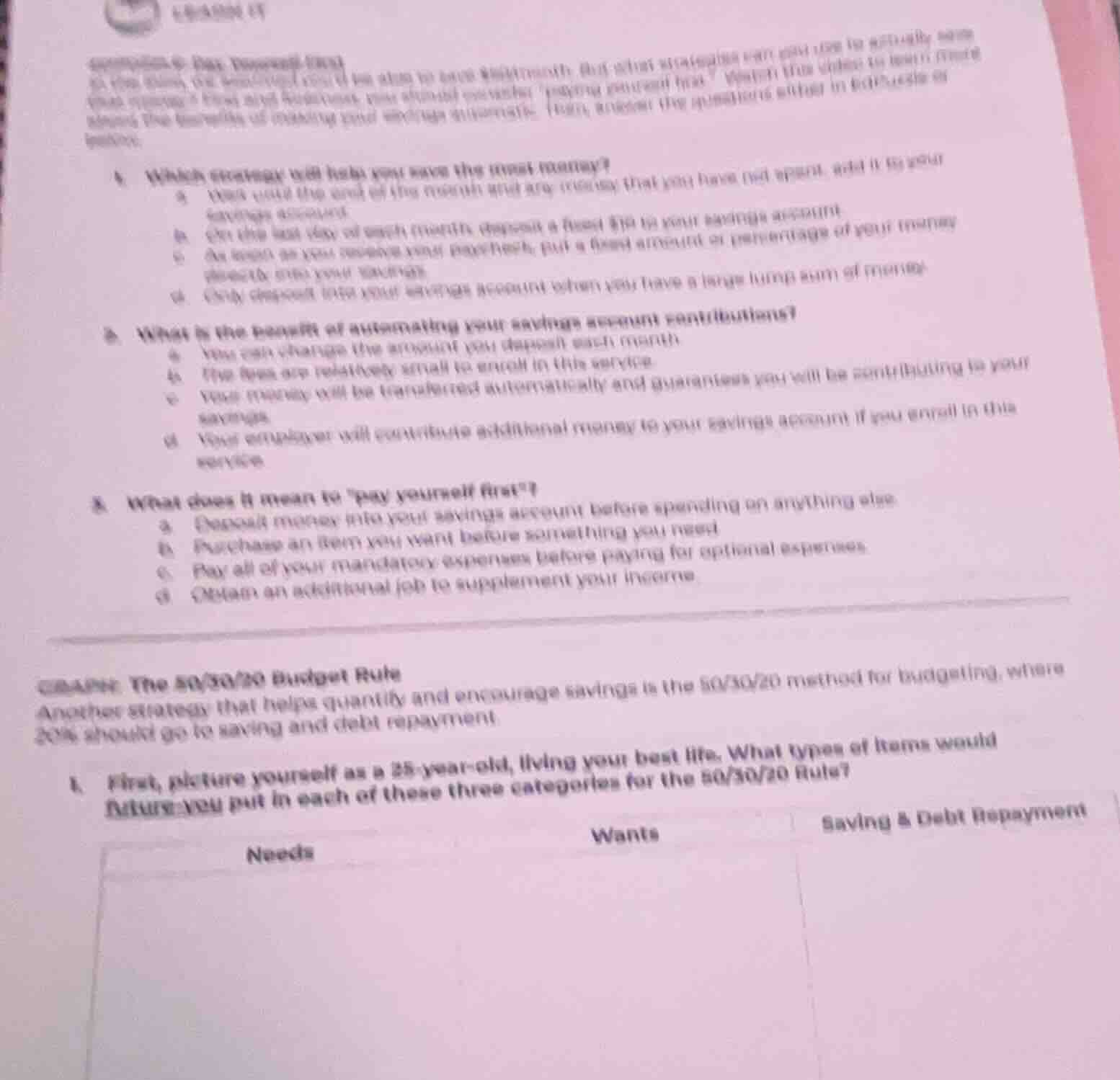
lesson itlesson 6: pay yourself firstin this class, we learned youd be able to save $100/month. but what strategies can you use to actually save that money? first and foremost, you should consider paying yourself first. watch this video to learn more about the benefits of making your savings automatic. then, answer the questions either in edpuzzle or below.1. which strategy will help you save the most money?a. wait until the end of the month and any money that you have not spent, add it to your savings accountb. on the last day of each month, deposit a fixed $10 to your savings accountc. as soon as you receive your paycheck, put a fixed amount or percentage of your money directly into your savingsd. only deposit into your savings account when you have a large lump sum of money2. what is the benefit of automating your savings account contributions?a. you can change the amount you deposit each monthb. the fees are relatively small to enroll in this servicec. your money will be transferred automatically and guarantees you will be contributing to your savingsd. your employer will contribute additional money to your savings account if you enroll in this service3. what does it mean to pay yourself first?a. deposit money into your savings account before spending on anything elseb. purchase an item you want before something you needc. pay all of your mandatory expenses before paying for optional expensesd. obtain an additional job to supplement your incomecash 101: the 50/30/20 budget ruleanother strategy that helps quantify and encourage savings is the 50/30/20 method for budgeting, where 20% should go to saving and debt repayment.1. first, picture yourself as a 25-year-old, living your best life. what types of items would future you put in each of these three categories for the 50/30/20 rule?needs wants saving & debt repayment
- For the first question, the "pay yourself first" method (setting aside money immediately upon income) is the most consistent and effective way to build savings, as it prioritizes saving over discretionary spending.
- For the second question, automating savings ensures consistent contributions without relying on manual action, guaranteeing regular deposits to savings.
- For the third question, "pay yourself first" is the core principle of prioritizing saving money before using income for other expenses.
- For the 50/30/20 rule: Needs are essential, non-negotiable living costs; Wants are non-essential, discretionary purchases; Savings & Debt Repayment includes building savings and paying down debts.

Snap & solve any problem in the app
Get step-by-step solutions on Sovi AI
Photo-based solutions with guided steps
Explore more problems and detailed explanations
- c. As soon as you receive your paycheck, put a fixed amount or percentage of your money directly into your savings
- c. Your money will be transferred automatically and guarantees you will be contributing to your savings
- a. Deposit money into your savings account before spending on anything else
4.
- Needs: Rent/mortgage payments, groceries, utility bills (electricity, water), health insurance premiums, prescription medications, basic transportation costs (gas, public transit fares, car insurance)
- Wants: Streaming service subscriptions, dining out at restaurants, luxury clothing, vacation travel, concert tickets, premium coffee drinks
- Saving & Debt Repayment: Monthly contributions to an emergency fund, extra payments on a credit card balance, contributions to a retirement account (401k, IRA), payments toward a personal loan