QUESTION IMAGE
Question
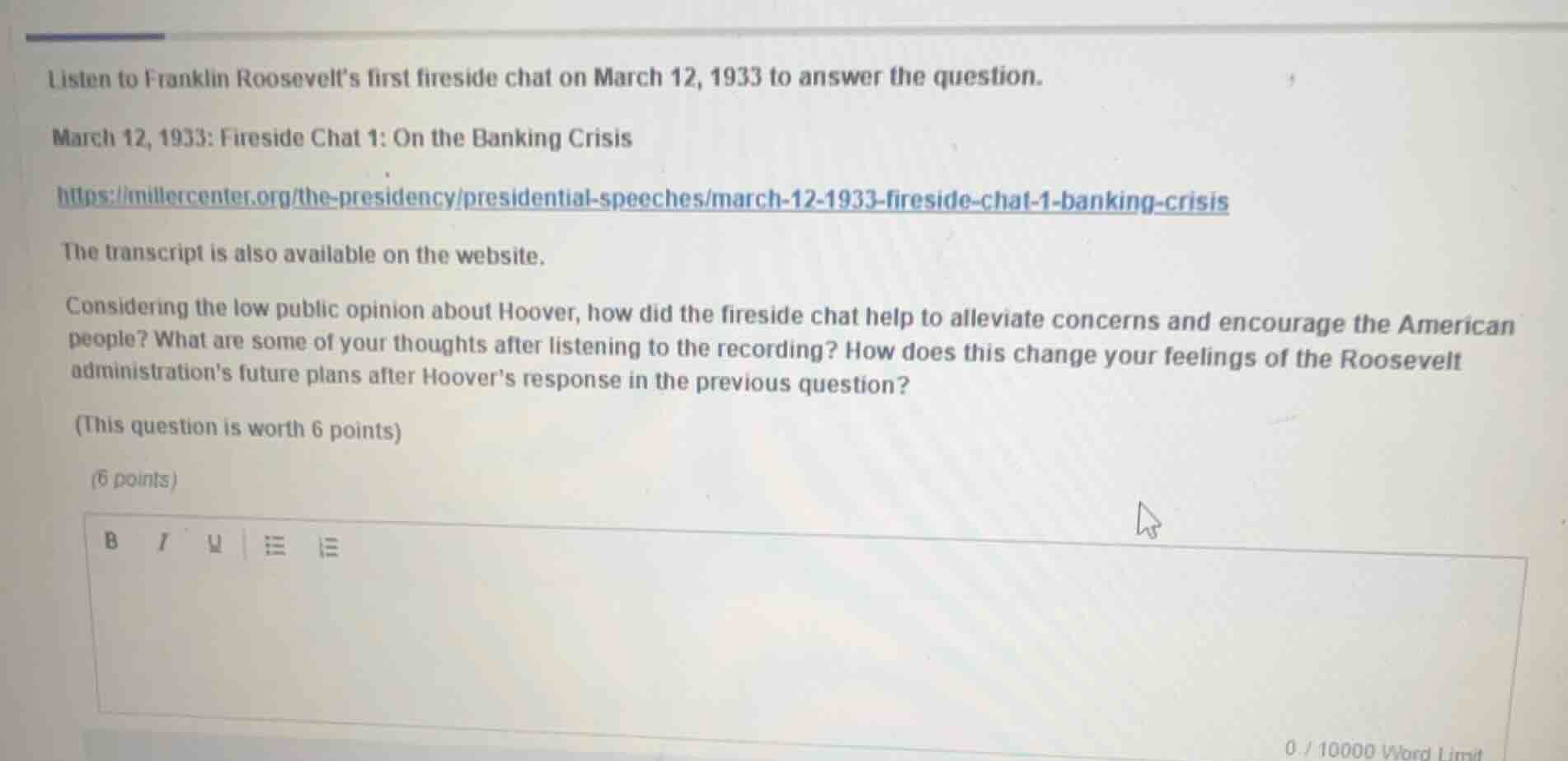
listen to franklin roosevelt’s first fireside chat on march 12, 1933 to answer the question.
march 12, 1933: fireside chat 1: on the banking crisis
https://millercenter.org/the-presidency/presidential-speeches/march-12-1933-fireside-chat-1-banking-crisis
the transcript is also available on the website.
considering the low public opinion about hoover, how did the fireside chat help to alleviate concerns and encourage the american people? what are some of your thoughts after listening to the recording? how does this change your feelings of the roosevelt administrations future plans after hoovers response in the previous question?
(this question is worth 6 points)
(6 points)
- Alleviating Concerns: Roosevelt used simple, conversational language to explain the banking crisis clearly, avoiding jargon. He framed bank closures as a temporary, protective measure rather than a systemic collapse, and outlined concrete steps (like the bank holiday and federal oversight) to stabilize the system, which gave Americans a clear, actionable path to trust banks again. Unlike Hoover's more detached, formal statements that failed to resonate with struggling citizens, Roosevelt's intimate "fireside" tone made people feel heard and understood.
- Personal Thoughts: The chat feels like a direct, empathetic conversation with the public, a stark shift from traditional presidential communication. It humanized the presidency and showed a leader willing to meet people where they were during a terrifying economic moment.
- Shift in Perception of Future Plans: After Hoover's hands-off, slow-to-act approach, Roosevelt's immediate, transparent, and decisive communication signals that his administration will be proactive, communicative, and focused on direct relief and systemic fixes. This creates confidence that the government will take tangible steps to address the Great Depression, rather than waiting for the economy to "correct itself."

Snap & solve any problem in the app
Get step-by-step solutions on Sovi AI
Photo-based solutions with guided steps
Explore more problems and detailed explanations
- The fireside chat alleviated concerns by using plain, conversational language to demystify the banking crisis, explaining temporary bank closures as a protective step, and laying out clear, stabilizing federal actions. Unlike Hoover's detached messaging, Roosevelt's intimate tone made Americans feel their struggles were recognized, reducing panic and encouraging trust in restarting banking activity.
- Listening to the recording, the most striking element is its accessibility—Roosevelt speaks like a trusted neighbor, not an aloof politician, which makes his message far more relatable and reassuring than formal policy announcements.
- Compared to Hoover's passive, slow response to the crisis, this chat makes Roosevelt's future plans feel proactive, transparent, and centered on public support. It shifts the perception from a government that was failing to address hardship to one that will take decisive, communicative action to fix the economy and support struggling Americans.