QUESTION IMAGE
Question
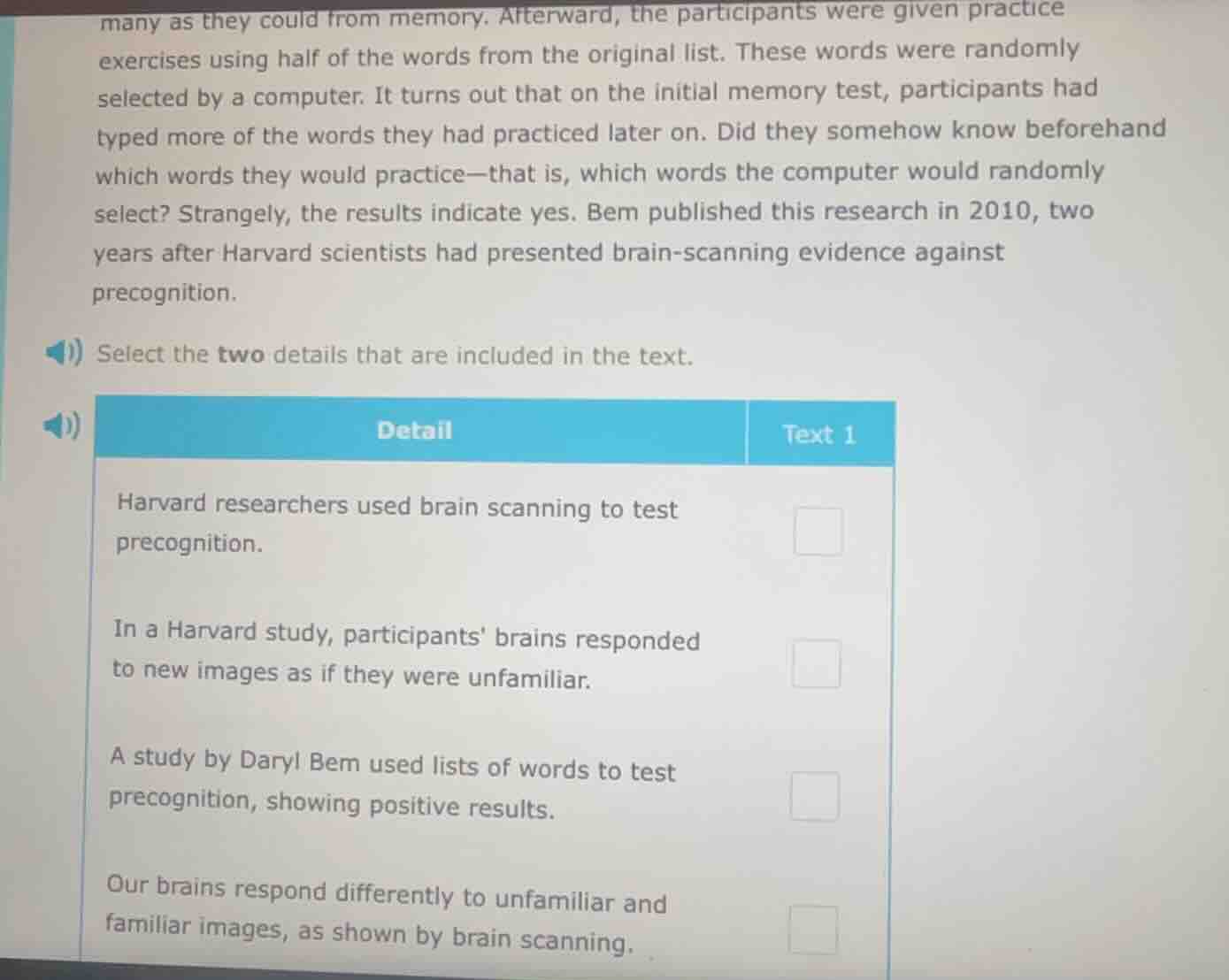
many as they could from memory. afterward, the participants were given practice exercises using half of the words from the original list. these words were randomly selected by a computer. it turns out that on the initial memory test, participants had typed more of the words they had practiced later on. did they somehow know beforehand which words they would practice—that is, which words the computer would randomly select? strangely, the results indicate yes. bem published this research in 2010, two years after harvard scientists had presented brain-scanning evidence against precognition.
select the two details that are included in the text.
| detail | text 1 | ---- | ---- | harvard researchers used brain scanning to test precognition. | □ | in a harvard study, participants brains responded to new images as if they were unfamiliar. | □ | a study by daryl bem used lists of words to test precognition, showing positive results. | □ | our brains respond differently to unfamiliar and familiar images, as shown by brain scanning. | □ |
- The text states Harvard scientists presented brain-scanning evidence against precognition, meaning they used brain scanning to test it.
- The text describes Bem's 2010 word-list study that produced results suggesting precognition (positive results for the hypothesis).
- The other two details about brain responses to familiar/unfamiliar images are not mentioned in the provided text.

Snap & solve any problem in the app
Get step-by-step solutions on Sovi AI
Photo-based solutions with guided steps
Explore more problems and detailed explanations
- Harvard researchers used brain scanning to test precognition.
- A study by Daryl Bem used lists of words to test precognition, showing positive results.