QUESTION IMAGE
Question
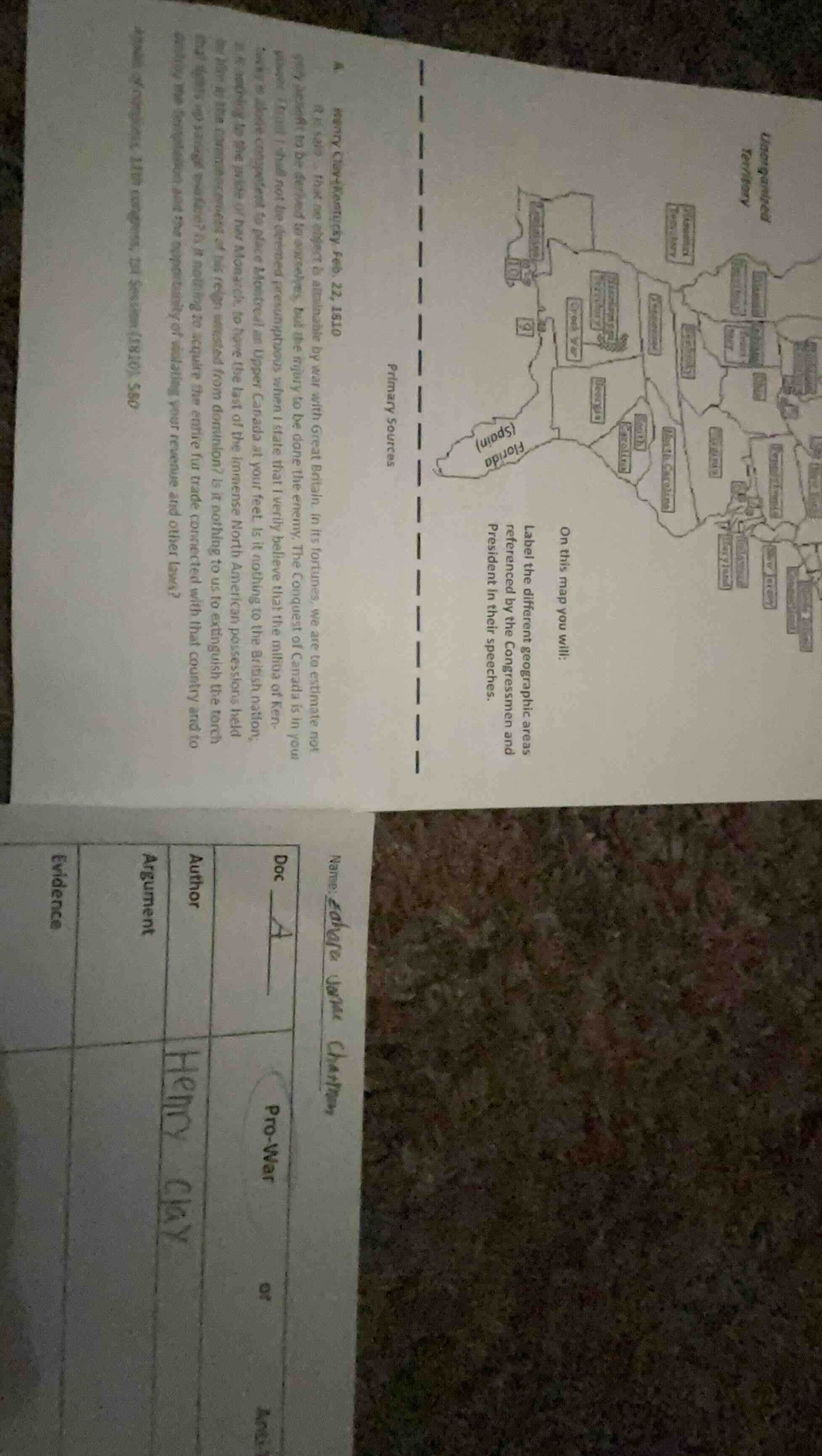
on this map you will: label the different geographic areas referenced by the congressmen and president in their speeches. a henry clay—february 22, 1810 it is said — that we object to allying by war with great britain. in its fortunes, we are to estimate not only ourselves to be denied to ourselves, but the injury to be done the enemy. the conquest of canada is in your power. i will not be denied presumptions when i state that i verily believe that the militia of kentucky is nothing to the british nation; it is nothing to the place of her monarchy, to have the upper canada at your feet. is it nothing to the immense north american possessions held by the commencement of the reign wrested from dominion? is it nothing to us to extinguish the torch and the savage warfare? is it nothing to acquire the entire fur trade connected with that country and to destroy the savages and the opportunity of violating your revenue and other laws? about a congress, 11th congress, 1st session (1810), 580. name: name doc a pro - war or author henry clay argument evidence
To analyze the document (Doc A) for the table:
1. Author
From the text, the author seems to be a pro - war advocate (likely a U.S. figure around the War of 1812, as the date is Feb 22, 1810 and it discusses Canada). Let's assume the author is a pro - war American (the name in the table start might be Henry Clay, a key pro - war figure in that era).
2. Argument
The text argues for war with Great Britain to conquer Canada ( “the Conquest of Canada is in your power”), eliminate British influence in North America, and secure trade/land ( “to acquire the entire fur trade connected with that country and to obtain the Sovereignty and the opportunity of selling your revenue and other lands”).
3. Evidence
- “to be the place of her Monarchy, to have the last of the immense North American possessions held by that savage nation” (portrays British Canada negatively, justifying conquest).
- “the Conquest of Canada is in your power” (claims feasibility of taking Canada).
- “to acquire the entire fur trade... and to obtain the Sovereignty... of selling your revenue and other lands” (economic/territorial benefits of conquest).
Filling the table:
| Doc | Pro - War or Anti - War | Author | Argument | Evidence |
|---|
(Note: The author identification is based on historical context of pro - war sentiment around the War of 1812; Henry Clay was a prominent pro - war voice. The argument and evidence are directly from the document’s text.)

Snap & solve any problem in the app
Get step-by-step solutions on Sovi AI
Photo-based solutions with guided steps
Explore more problems and detailed explanations
To analyze the document (Doc A) for the table:
1. Author
From the text, the author seems to be a pro - war advocate (likely a U.S. figure around the War of 1812, as the date is Feb 22, 1810 and it discusses Canada). Let's assume the author is a pro - war American (the name in the table start might be Henry Clay, a key pro - war figure in that era).
2. Argument
The text argues for war with Great Britain to conquer Canada ( “the Conquest of Canada is in your power”), eliminate British influence in North America, and secure trade/land ( “to acquire the entire fur trade connected with that country and to obtain the Sovereignty and the opportunity of selling your revenue and other lands”).
3. Evidence
- “to be the place of her Monarchy, to have the last of the immense North American possessions held by that savage nation” (portrays British Canada negatively, justifying conquest).
- “the Conquest of Canada is in your power” (claims feasibility of taking Canada).
- “to acquire the entire fur trade... and to obtain the Sovereignty... of selling your revenue and other lands” (economic/territorial benefits of conquest).
Filling the table:
| Doc | Pro - War or Anti - War | Author | Argument | Evidence |
|---|
(Note: The author identification is based on historical context of pro - war sentiment around the War of 1812; Henry Clay was a prominent pro - war voice. The argument and evidence are directly from the document’s text.)