QUESTION IMAGE
Question
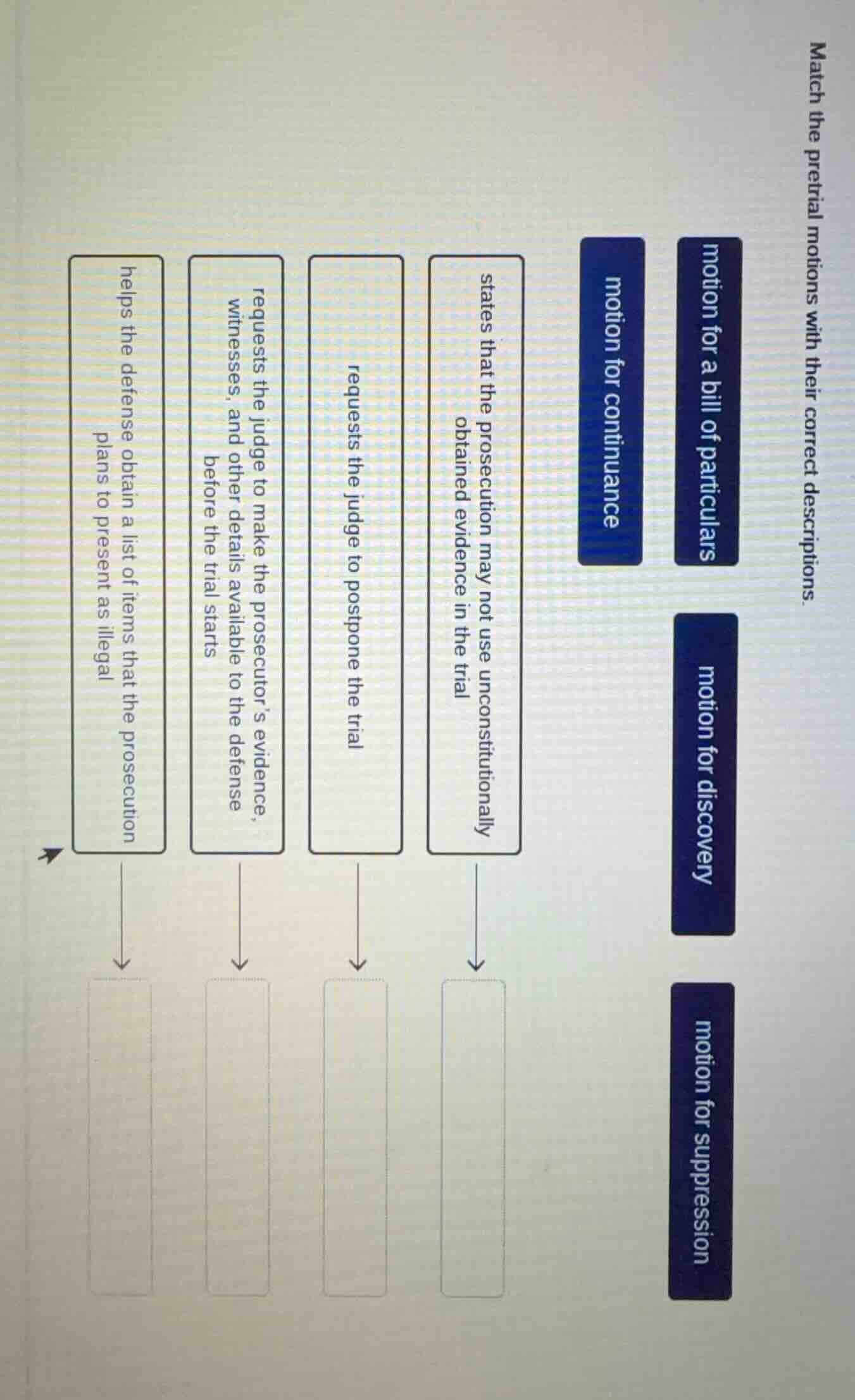
match the pretrial motions with their correct descriptions.
motion for a bill of particulars
motion for continuance
motion for discovery
motion for suppression
states that the prosecution may not use unconstitutionally obtained evidence in the trial
requests the judge to postpone the trial
requests the judge to make the prosecutor’s evidence, witnesses, and other details available to the defense before the trial starts
helps the defense obtain a list of items that the prosecution plans to present as illegal
Brief Explanations
- A motion for a bill of particulars lets the defense get a list of the prosecution's intended illegal evidence items.
- A motion for discovery asks the judge to order the prosecution to share evidence, witness info, and details with the defense before trial.
- A motion for continuance is a request to the judge to delay the trial.
- A motion for suppression argues that evidence the prosecution has was obtained unconstitutionally, so it can't be used at trial.

Snap & solve any problem in the app
Get step-by-step solutions on Sovi AI
Photo-based solutions with guided steps
Explore more problems and detailed explanations
- motion for a bill of particulars → helps the defense obtain a list of items that the prosecution plans to present as illegal
- motion for discovery → requests the judge to make the prosecutor's evidence, witnesses, and other details available to the defense before the trial starts
- motion for continuance → requests the judge to postpone the trial
- motion for suppression → states that the prosecution may not use unconstitutionally obtained evidence in the trial