QUESTION IMAGE
Question
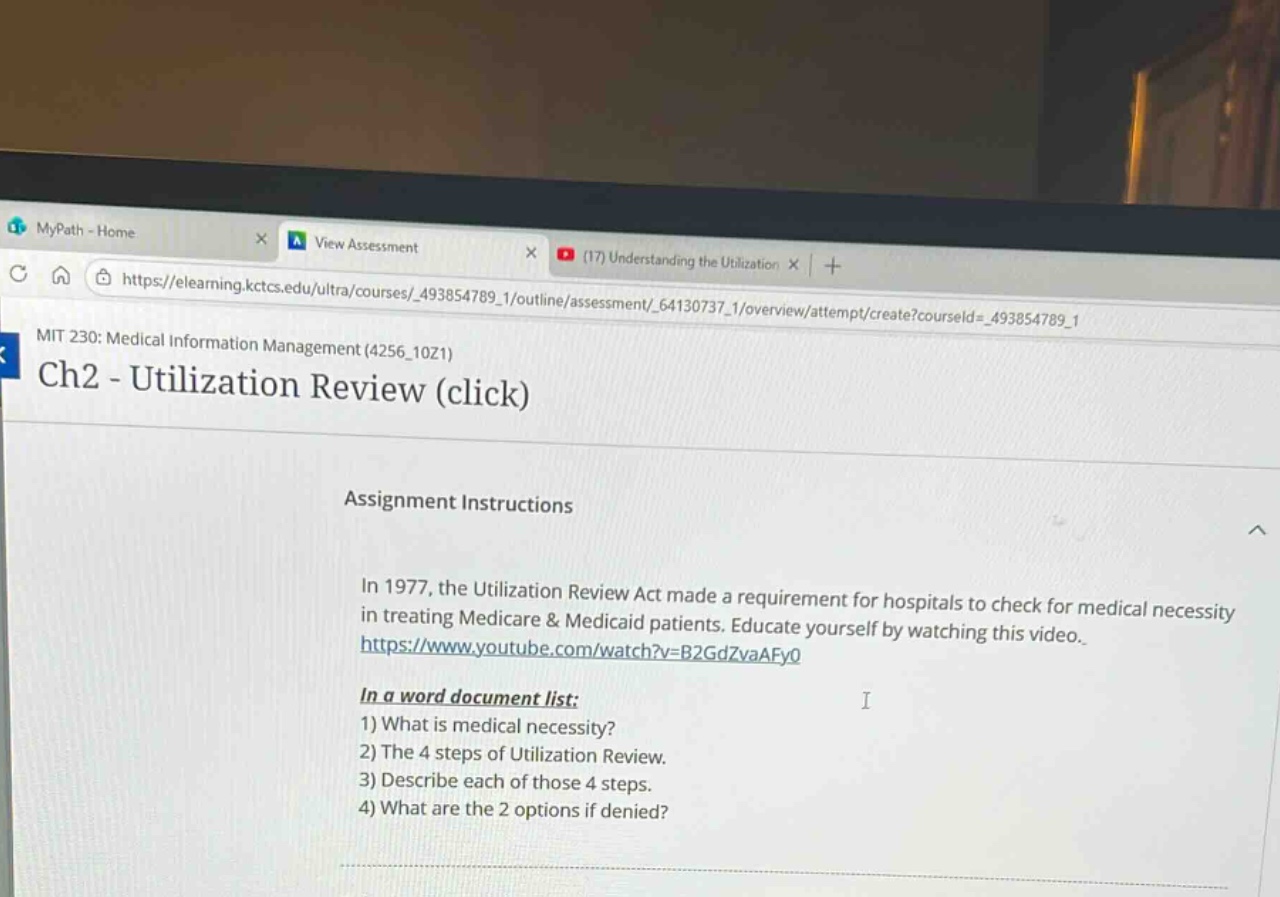
mit 230: medical information management (4256_1021)
ch2 - utilization review (click)
assignment instructions
in 1977, the utilization review act made a requirement for hospitals to check for medical necessity in treating medicare & medicaid patients. educate yourself by watching this video.
https://www.youtube.com/watch?v=b2gdzvaafy0
in a word document list:
- what is medical necessity?
- the 4 steps of utilization review.
- describe each of those 4 steps.
- what are the 2 options if denied?
To address this assignment, we analyze each part based on medical information management (a subfield of Natural Science - Medicine and Health):
1) What is medical necessity?
Medical necessity refers to the determination that a healthcare service, treatment, test, or procedure is reasonable, necessary, and appropriate for the diagnosis or treatment of an illness, injury, condition, or to improve the patient’s health status. It is often defined by whether the service is consistent with the standards of care, clinically appropriate, and not primarily for the convenience of the patient or provider.
2) The 4 steps of Utilization Review
The four common steps of Utilization Review (UR) are:
- Pre - authorization (or Pre - certification): Obtaining approval before a service is provided to confirm it is medically necessary and covered.
- Concurrent Review: Monitoring the patient’s care while it is being delivered, ensuring the treatment plan is appropriate and necessary as the care progresses.
- Retrospective Review: Reviewing the care after it has been provided to determine if the services were medically necessary, appropriate, and billed correctly.
- Discharge Planning Review: Assessing the appropriateness of the patient’s discharge plan, including post - discharge care needs, to ensure a smooth transition and continued medical necessity of any follow - up care.
3) Describe each of those 4 steps
- Pre - authorization: Healthcare providers or payers review the proposed service (e.g., a surgery, a specialized test) before it occurs. They check if the service aligns with medical guidelines, is necessary for the patient’s condition, and is a covered benefit. If approved, the service can proceed; if denied, the provider or patient may need to appeal or choose an alternative.
- Concurrent Review: During the patient’s stay (e.g., in a hospital) or active treatment, UR nurses or reviewers assess the care. They ensure the patient is receiving the right level of care (e.g., not being kept in the hospital longer than necessary, or receiving appropriate therapies). They may communicate with the care team to adjust the treatment plan if needed.
- Retrospective Review: After the care is completed (e.g., after a hospital discharge or a course of treatment), the records are reviewed. This helps identify if any services were unnecessary, over - utilized, or not in line with medical necessity. It also ensures accurate billing and compliance with regulations.
- Discharge Planning Review: Focuses on the patient’s transition out of the acute care setting. It evaluates if the discharge plan (e.g., home care, transfer to a rehabilitation facility) is appropriate for the patient’s condition. This step aims to prevent readmissions by ensuring the patient has the necessary support and care after leaving the hospital.
4) What are the 2 options if denied?
If a utilization review results in a denial (of a service, payment, or authorization), the two common options are:
- Appeal the Decision: The patient or provider can submit an appeal to the payer (e.g., insurance company, Medicare/Medicaid) with additional documentation (e.g., medical records, expert opinions) to support the medical necessity of the service. The payer will review the appeal and may reverse the denial.
- Seek Alternative Care or Payment Arrangements: If the appeal is not successful, the patient or provider may explore alternative treatments that are covered or negotiate a payment plan with the provider (if the issue is related to payment for…

Snap & solve any problem in the app
Get step-by-step solutions on Sovi AI
Photo-based solutions with guided steps
Explore more problems and detailed explanations
To address this assignment, we analyze each part based on medical information management (a subfield of Natural Science - Medicine and Health):
1) What is medical necessity?
Medical necessity refers to the determination that a healthcare service, treatment, test, or procedure is reasonable, necessary, and appropriate for the diagnosis or treatment of an illness, injury, condition, or to improve the patient’s health status. It is often defined by whether the service is consistent with the standards of care, clinically appropriate, and not primarily for the convenience of the patient or provider.
2) The 4 steps of Utilization Review
The four common steps of Utilization Review (UR) are:
- Pre - authorization (or Pre - certification): Obtaining approval before a service is provided to confirm it is medically necessary and covered.
- Concurrent Review: Monitoring the patient’s care while it is being delivered, ensuring the treatment plan is appropriate and necessary as the care progresses.
- Retrospective Review: Reviewing the care after it has been provided to determine if the services were medically necessary, appropriate, and billed correctly.
- Discharge Planning Review: Assessing the appropriateness of the patient’s discharge plan, including post - discharge care needs, to ensure a smooth transition and continued medical necessity of any follow - up care.
3) Describe each of those 4 steps
- Pre - authorization: Healthcare providers or payers review the proposed service (e.g., a surgery, a specialized test) before it occurs. They check if the service aligns with medical guidelines, is necessary for the patient’s condition, and is a covered benefit. If approved, the service can proceed; if denied, the provider or patient may need to appeal or choose an alternative.
- Concurrent Review: During the patient’s stay (e.g., in a hospital) or active treatment, UR nurses or reviewers assess the care. They ensure the patient is receiving the right level of care (e.g., not being kept in the hospital longer than necessary, or receiving appropriate therapies). They may communicate with the care team to adjust the treatment plan if needed.
- Retrospective Review: After the care is completed (e.g., after a hospital discharge or a course of treatment), the records are reviewed. This helps identify if any services were unnecessary, over - utilized, or not in line with medical necessity. It also ensures accurate billing and compliance with regulations.
- Discharge Planning Review: Focuses on the patient’s transition out of the acute care setting. It evaluates if the discharge plan (e.g., home care, transfer to a rehabilitation facility) is appropriate for the patient’s condition. This step aims to prevent readmissions by ensuring the patient has the necessary support and care after leaving the hospital.
4) What are the 2 options if denied?
If a utilization review results in a denial (of a service, payment, or authorization), the two common options are:
- Appeal the Decision: The patient or provider can submit an appeal to the payer (e.g., insurance company, Medicare/Medicaid) with additional documentation (e.g., medical records, expert opinions) to support the medical necessity of the service. The payer will review the appeal and may reverse the denial.
- Seek Alternative Care or Payment Arrangements: If the appeal is not successful, the patient or provider may explore alternative treatments that are covered or negotiate a payment plan with the provider (if the issue is related to payment for an uncovered service). In some cases, the patient may also seek care from a different provider who may offer a covered or more affordable option.
(Note: For a formal submission, you would organize these answers clearly in a word document as per the assignment instructions, potentially supplementing with details from the provided video or additional research on medical information management resources.)