QUESTION IMAGE
Question
4 the most significant long - term impact of charles lindberghs career on u.s. was —
f his popularization of aviation and technology
g his solo flight across the atlantic
h his advocacy for isolationism
j his work with the u.s. airmail service
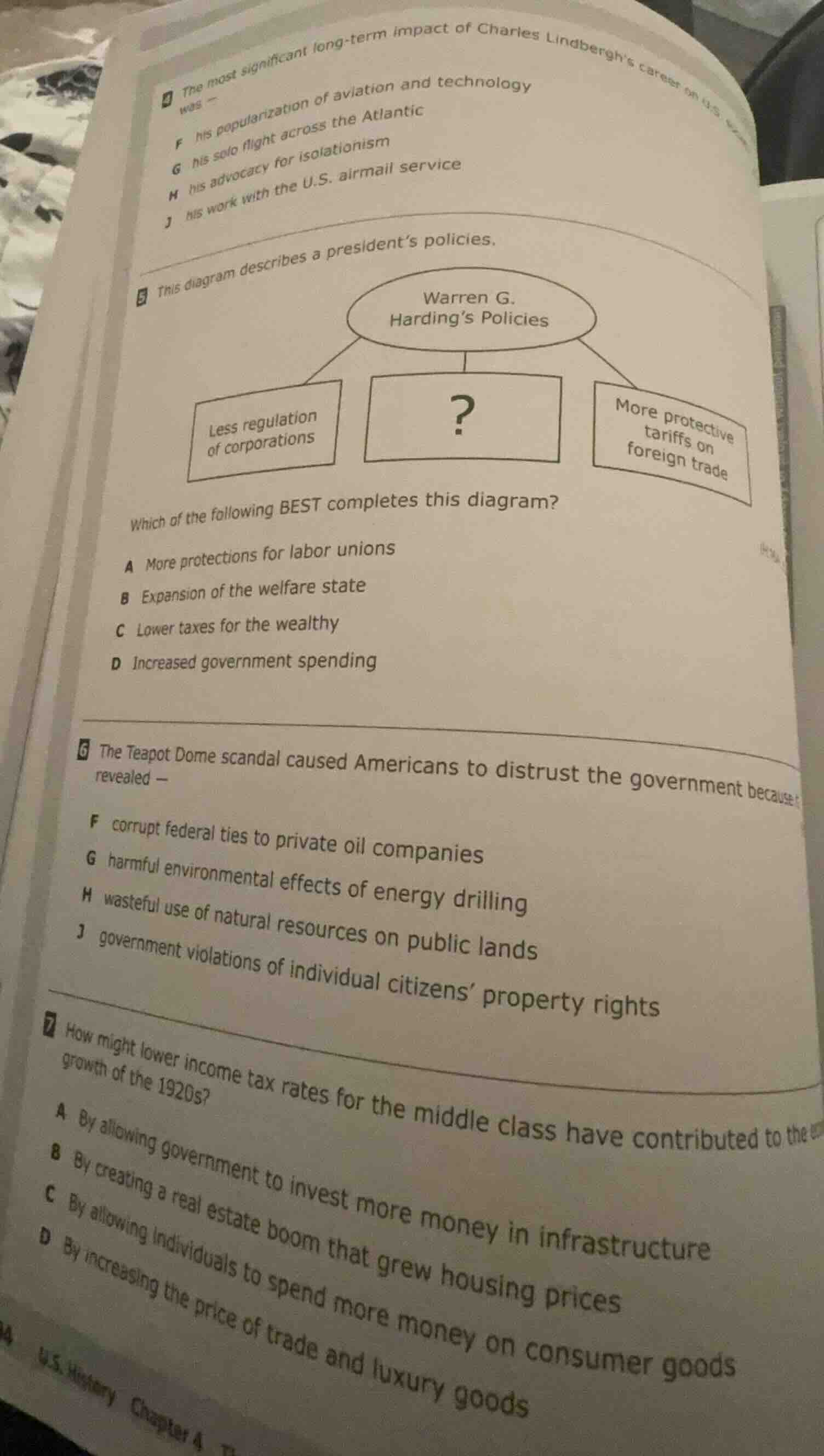
5 this diagram describes a president’s policies.
warren g. harding’s policies
less regulation of corporations ? more protective tariffs on foreign trade
which of the following best completes this diagram?
a more protections for labor unions
b expansion of the welfare state
c lower taxes for the wealthy
d increased government spending
6 the teapot dome scandal caused americans to distrust the government because it revealed —
f corrupt federal ties to private oil companies
g harmful environmental effects of energy drilling
h wasteful use of natural resources on public lands
j government violations of individual citizens’ property rights
7 how might lower income tax rates for the middle class have contributed to the economic growth of the 1920s?
a by allowing government to invest more money in infrastructure
b by creating a real estate boom that grew housing prices
c by allowing individuals to spend more money on consumer goods
d by increasing the price of trade and luxury goods
- Question 4: Charles Lindbergh's 1927 solo transatlantic flight was a sensational event that sparked widespread public interest in aviation, driving long-term growth and technological advancement in the field. His other actions were either short-term or less impactful on the industry's trajectory.
- Question 5: Warren G. Harding's policies were pro-business, focused on reducing government intervention in the economy. Lowering taxes for the wealthy aligned with this pro-business agenda, unlike the other options which involve more government involvement or support for labor/welfare.
- Question 6: The Teapot Dome scandal involved secret leasing of federal oil reserves to private oil companies by government officials in exchange for bribes, which exposed corrupt ties between the federal government and private oil interests, eroding public trust.
- Question 7: Lower middle-class income tax rates meant individuals had more disposable income. This extra money was spent on consumer goods, which fueled the economic growth and consumer culture of the 1920s.

Snap & solve any problem in the app
Get step-by-step solutions on Sovi AI
Photo-based solutions with guided steps
Explore more problems and detailed explanations
- F. his popularization of aviation and technology
- C. Lower taxes for the wealthy
- F. corrupt federal ties to private oil companies
- C. By allowing individuals to spend more money on consumer goods