QUESTION IMAGE
Question
multiple choice
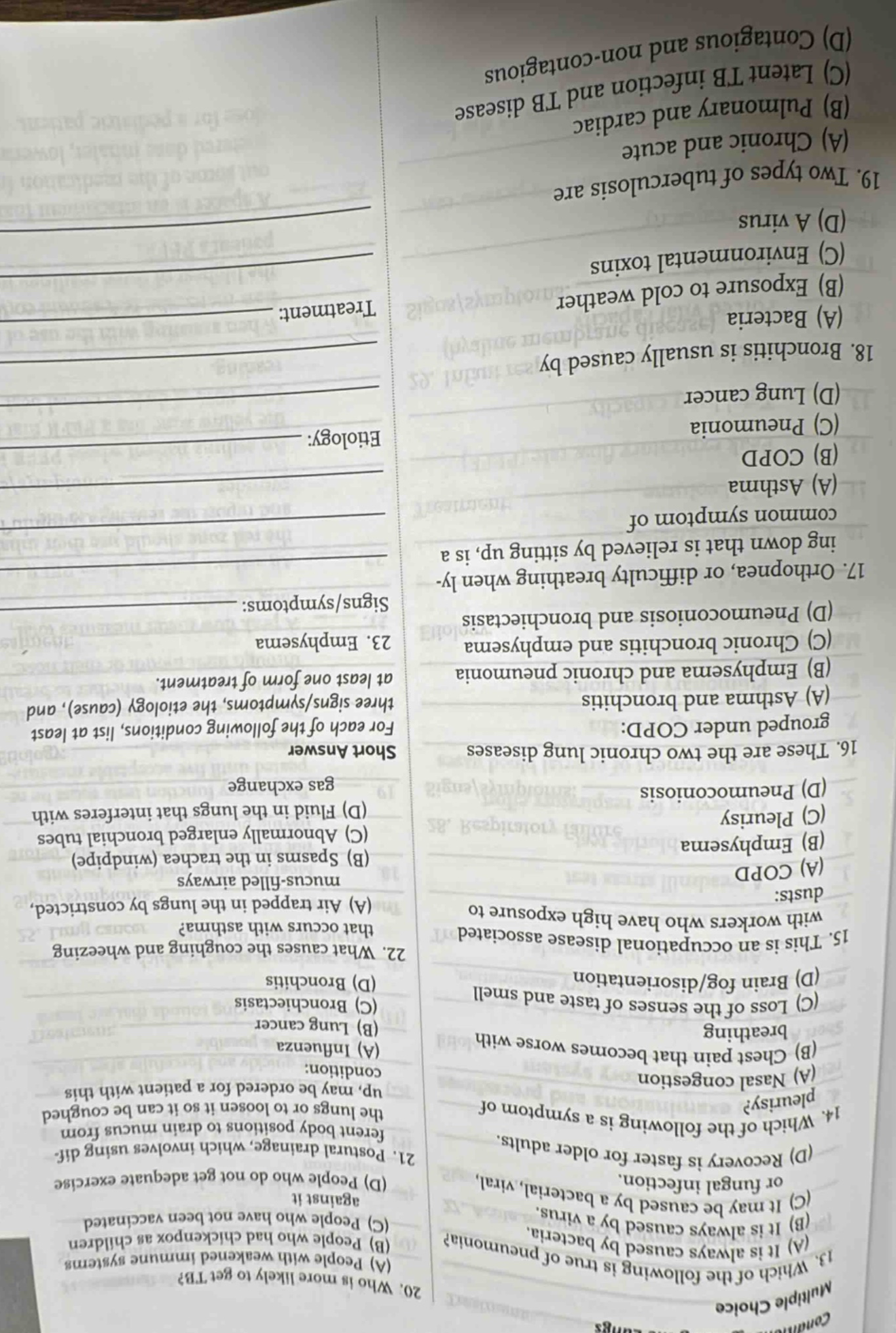
- which of the following is true of pneumonia?
(a) it is always caused by bacteria.
(b) it is always caused by a virus.
(c) it may be caused by a bacterial, viral, or fungal infection.
(d) recovery is faster for older adults.
- which of the following is a symptom of pleurisy?
(a) nasal congestion
(b) chest pain that becomes worse with breathing
(c) loss of the senses of taste and smell
(d) brain fog/disorientation
- this is an occupational disease associated with workers who have high exposure to dusts:
(a) copd
(b) emphysema
(c) pleurisy
(d) pneumoconiosis
- these are the two chronic lung diseases grouped under copd:
(a) asthma and bronchitis
(b) emphysema and chronic pneumonia
(c) chronic bronchitis and emphysema
(d) pneumoconiosis and bronchiectasis
- orthopnea, or difficulty breathing when lying down that is relieved by sitting up, is a common symptom of
(a) asthma
(b) copd
(c) pneumonia
(d) lung cancer
- bronchitis is usually caused by
(a) bacteria
(b) exposure to cold weather
(c) environmental toxins
(d) a virus
- two types of tuberculosis are
(a) chronic and acute
(b) pulmonary and cardiac
(c) latent tb infection and tb disease
(d) contagious and non - contagious
- who is more likely to get tb?
(a) people with weakened immune systems
(b) people who had chickenpox as children
(c) people who have not been vaccinated against it
(d) people who do not get adequate exercise
- postural drainage, which involves using different body positions to drain mucus from the lungs or to loosen it so it can be coughed up, may be ordered for a patient with this condition:
(a) influenza
(b) lung cancer
(c) bronchiectasis
(d) bronchitis
- what causes the coughing and wheezing that occurs with asthma?
(a) air trapped in the lungs by constricted, mucus - filled airways
(b) spasms in the trachea (windpipe)
(c) abnormally enlarged bronchial tubes
(d) fluid in the lungs that interferes with gas exchange
short answer
for each of the following conditions, list at least three signs/symptoms, the etiology (cause), and at least one form of treatment:
- emphysema
etiology:
treatment:
Question 13
Pneumonia can be caused by bacteria (e.g., Streptococcus pneumoniae), viruses (e.g., influenza virus), or fungi (e.g., Pneumocystis jirovecii). Option A is wrong as it's not always bacterial. Option B is wrong as it's not always viral. Option D is wrong as older adults have slower recovery. So option C is correct.
Pleurisy is the inflammation of the pleura (layers around the lungs). Chest pain that worsens with breathing is a classic symptom as the inflamed pleura rubs during respiration. Nasal congestion is not related. Loss of taste/smell is for other conditions. Brain fog/disorientation is not a typical pleurisy symptom. So option B is correct.
Pneumoconiosis is an occupational lung disease caused by long - term inhalation of dusts (e.g., coal dust, silica dust). COPD has multiple causes including smoking. Empyema is a collection of pus in the pleural space, not mainly from dust. So option D is correct.

Snap & solve any problem in the app
Get step-by-step solutions on Sovi AI
Photo-based solutions with guided steps
Explore more problems and detailed explanations
C. It may be caused by a bacterial, viral, or fungal infection