QUESTION IMAGE
Question
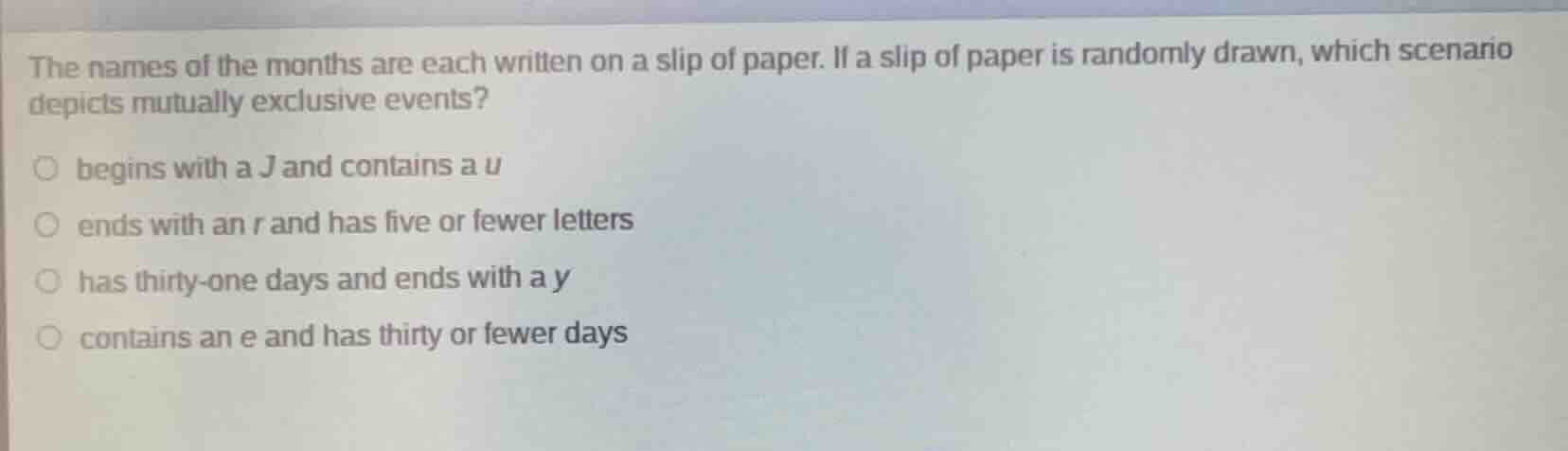
the names of the months are each written on a slip of paper. if a slip of paper is randomly drawn, which scenario depicts mutually exclusive events?
begins with a j and contains a u
ends with an r and has five or fewer letters
has thirty - one days and ends with a y
contains an e and has thirty or fewer days
Brief Explanations
To determine mutually exclusive events, we check if two events can occur at the same time.
- For "begins with a J and contains a u": Months starting with J are January, June, July. June contains 'u', so they are not mutually exclusive.
- For "ends with an r and has five or fewer letters": Months ending with 'r' are January, February, March, April, November, December. None of these have five or fewer letters (January:7, February:8, March:5? Wait, March has 5 letters. Wait, March ends with 'h', not 'r'. Wait, November (8), December (8), January (7), February (8), April (5, ends with 'l'), so no month ends with 'r' and has five or fewer letters. Wait, no—wait, let's list all months: January, February, March, April, May, June, July, August, September, October, November, December. Months ending with 'r': January (ends with 'y'), February (ends with 'y'), March (ends with 'h'), April (ends with 'l'), May (ends with 'y'), June (ends with 'e'), July (ends with 'y'), August (ends with 't'), September (ends with 'r'! Wait, September: S-E-P-T-E-M-B-E-R? No, September is S-E-P-T-E-M-B-E-R? Wait, no, September is spelled S-E-P-T-E-M-B-E-R? Wait, no, correct spelling: September (9 letters, ends with 'r'). October (7, ends with 'r'? O-C-T-O-B-E-R: yes, October ends with 'r' (7 letters). November (8, ends with 'r'), December (8, ends with 'r'). So October (7 letters, ends with 'r'), November (8), December (8). So October has 7 letters, which is more than 5. So no month ends with 'r' and has five or fewer letters. Wait, but let's check the third option: "has thirty - one days and ends with a y". Months with 31 days: January, March, May, July, August, October, December. Months ending with 'y': January, February, May, July. So January, May, July have 31 days and end with 'y'—so they are not mutually exclusive.
- For "contains an e and has thirty or fewer days": Months with 30 or fewer days: February (28/29), April (30), June (30), September (30), November (30). Months containing 'e': February (has 'e'), April (has 'e'), June (has 'e'), September (has 'e'), November (has 'e')—so they are not mutually exclusive. Wait, but the second option: "ends with an r and has five or fewer letters"—let's re - check. Months ending with 'r': September (9), October (7), November (8), December (8). None of these have five or fewer letters. So these two events (ending with 'r' and having five or fewer letters) cannot occur at the same time, so they are mutually exclusive. Wait, but earlier mistake: March has 5 letters but ends with 'h', not 'r'. April has 5 letters, ends with 'l'. So no month ends with 'r' and has five or fewer letters. So the events "ends with an r" and "has five or fewer letters" cannot happen together—so they are mutually exclusive. Wait, but let's check the third option again: "has thirty - one days and ends with a y". January (31, ends with 'y'), May (31, ends with 'y'), July (31, ends with 'y')—so they are not mutually exclusive. The first option: June (starts with J, contains 'u')—so not mutually exclusive. The fourth option: February (has 'e', 28 days), April (has 'e', 30 days), etc.—so not mutually exclusive. So the correct option is "ends with an r and has five or fewer letters".

Snap & solve any problem in the app
Get step-by-step solutions on Sovi AI
Photo-based solutions with guided steps
Explore more problems and detailed explanations
ends with an r and has five or fewer letters