QUESTION IMAGE
Question
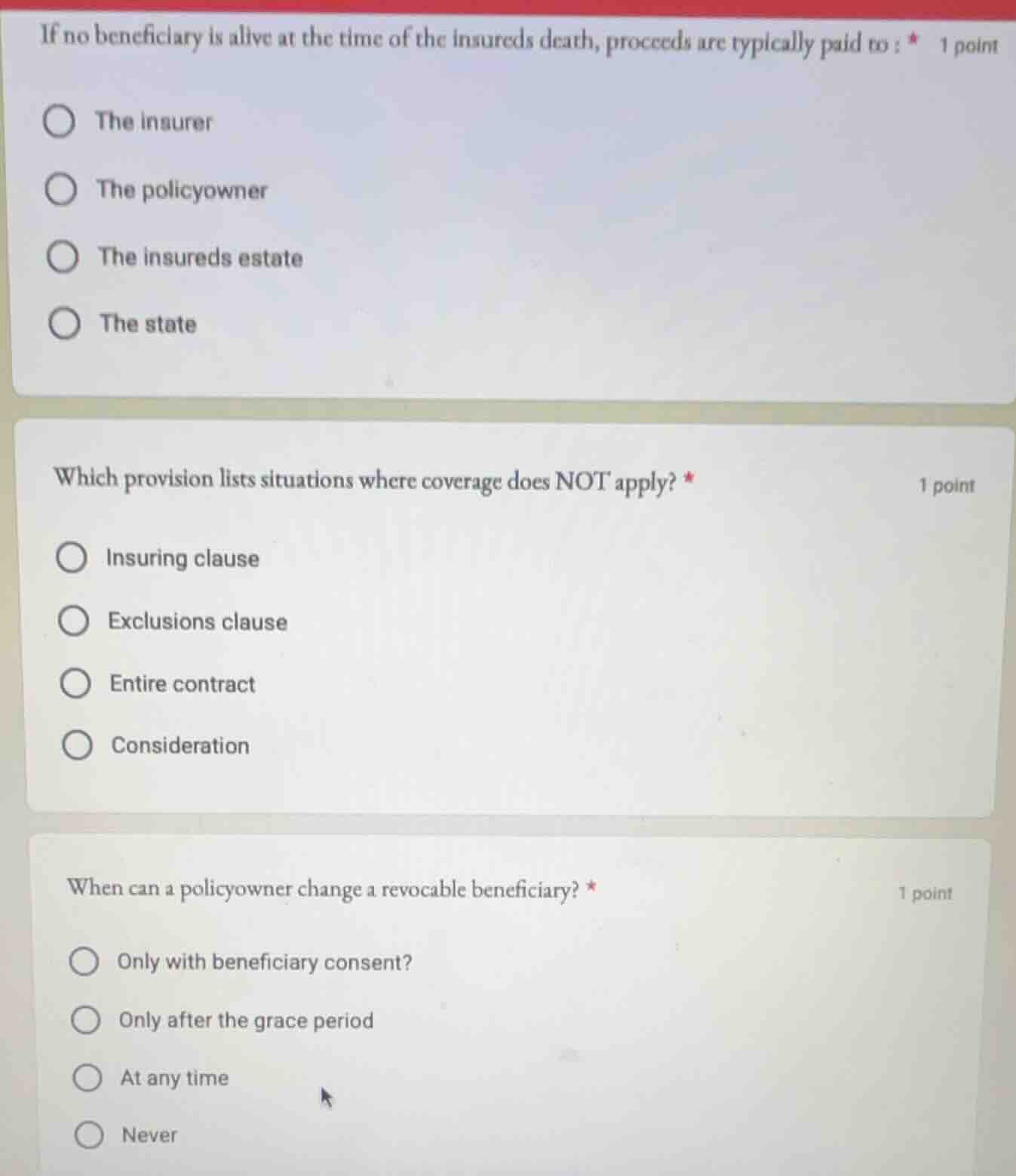
if no beneficiary is alive at the time of the insureds death, proceeds are typically paid to : * 1 point
the insurer
the policyowner
the insureds estate
the state
which provision lists situations where coverage does not apply? * 1 point
insuring clause
exclusions clause
entire contract
consideration
when can a policyowner change a revocable beneficiary? * 1 point
only with beneficiary consent?
only after the grace period
at any time
never
Brief Explanations
- When no named beneficiary is alive upon the insured's death, the death benefits become part of the insured's estate to be distributed according to probate laws.
- The exclusions clause in an insurance policy explicitly outlines scenarios where the insurer will not provide coverage.
- A revocable beneficiary designation allows the policyowner to make changes to the beneficiary without needing approval, at their discretion at any time.

Snap & solve any problem in the app
Get step-by-step solutions on Sovi AI
Photo-based solutions with guided steps
Explore more problems and detailed explanations
- The insureds estate
- Exclusions clause
- At any time