QUESTION IMAGE
Question
obriens author moves- literary techniques
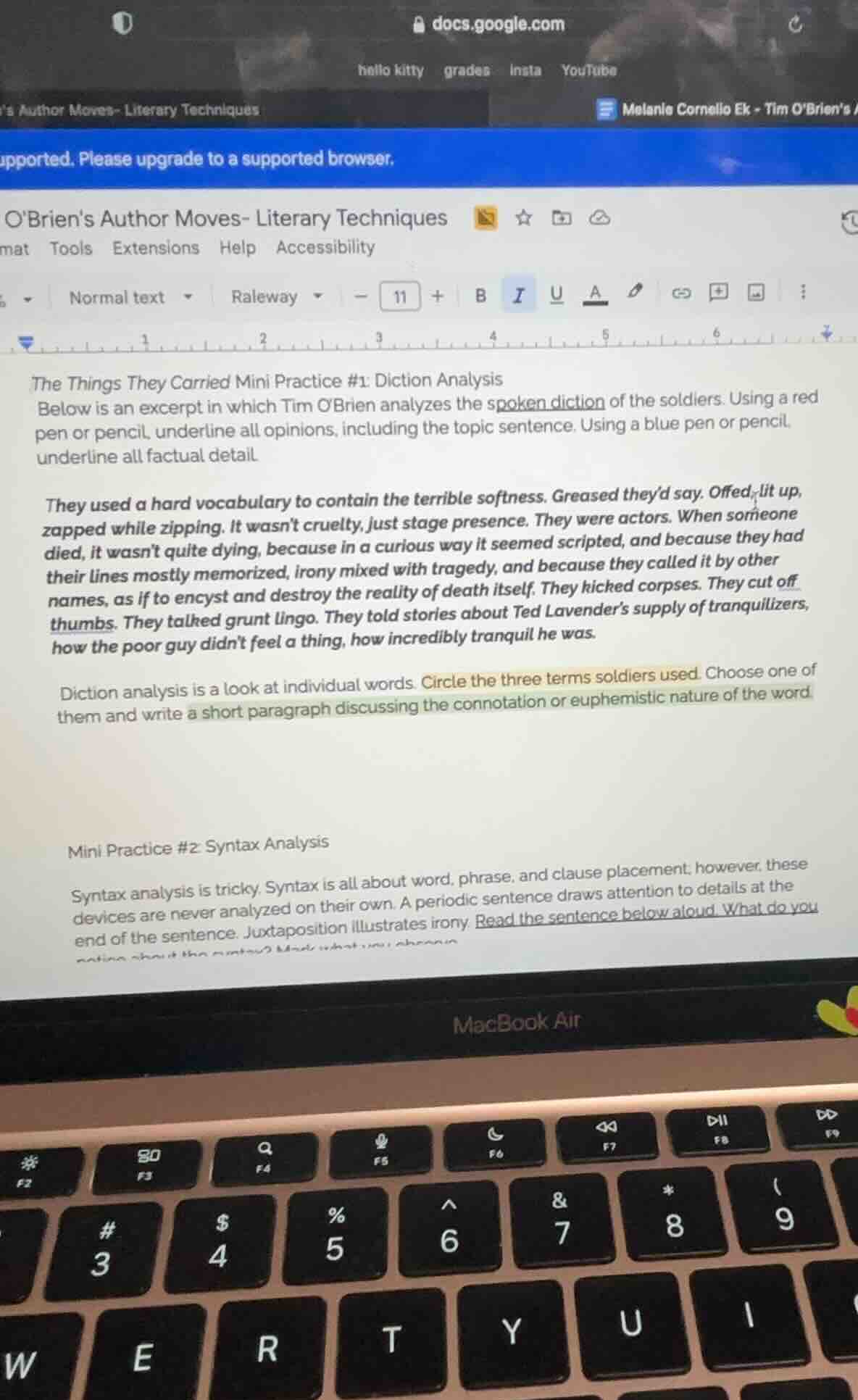
the things they carried mini practice #1: diction analysis
below is an excerpt in which tim obrien analyzes the spoken diction of the soldiers. using a red pen or pencil, underline all opinions, including the topic sentence. using a blue pen or pencil, underline all factual detail.
they used a hard vocabulary to contain the terrible softness. greased theyd say. offed, lit up, zapped while zipping. it wasnt cruelty, just stage presence. they were actors. when someone died, it wasnt quite dying, because in a curious way it seemed scripted, and because they had their lines mostly memorized, irony mixed with tragedy, and because they called it by other names, as if to encyst and destroy the reality of death itself. they kicked corpses. they cut off thumbs. they talked grunt lingo. they told stories about ted lavenders supply of tranquillizers, how the poor guy didnt feel a thing, how incredibly tranquil he was.
diction analysis is a look at individual words. circle the three terms soldiers used. choose one of them and write a short paragraph discussing the connotation or euphemistic nature of the word.
mini practice #2: syntax analysis
syntax analysis is tricky. syntax is all about word, phrase, and clause placement; however, these devices are never analyzed on their own. a periodic sentence draws attention to details at the end of the sentence. juxtaposition illustrates irony. read the sentence below aloud. what do you
First, for Mini Practice #1:
- Opinions (to underline in red):
- "They used a hard vocabulary to contain the terrible softness." (topic sentence/opinion)
- "It wasn't cruelty, just stage presence."
- "They were actors."
- "When someone had died, it wasn't quite dying, because in a curious way it seemed scripted, and because they had their lines mostly memorized, irony mixed with tragedy, and because they called it by other names, as if to encyst and destroy the reality of death itself."
- Factual details (to underline in blue):
- "Greased they'd say. Offed, lit up, zapped while zipping."
- "They kicked corpses. They cut off thumbs. They talked grunt lingo."
- "They told stories about Ted Lavender's supply of tranquilizers, how the poor guy didn't feel a thing, how incredibly tranquil he was."
- Soldiers' terms to circle: Greased, Offed, zapped. For Offed: it is a euphemism for death. Its connotation is detached and desensitized—by using this slang instead of "died" or "killed," the soldiers distance themselves from the violent, tragic reality of death in war, using casual language to cope with the trauma of losing comrades.
For Mini Practice #2, the full sentence for syntax analysis is cut off, but syntax analysis focuses on how word/phrase placement shapes meaning. For example, periodic sentences delay key details to build tension, while juxtaposition places contrasting ideas side by side to highlight irony.

Snap & solve any problem in the app
Get step-by-step solutions on Sovi AI
Photo-based solutions with guided steps
Explore more problems and detailed explanations
Mini Practice #1: Diction Analysis
- Red (Opinions):
- They used a hard vocabulary to contain the terrible softness.
- It wasn't cruelty, just stage presence.
- They were actors.
- When someone had died, it wasn't quite dying, because in a curious way it seemed scripted, and because they had their lines mostly memorized, irony mixed with tragedy, and because they called it by other names, as if to encyst and destroy the reality of death itself.
- Blue (Factual Details):
- Greased they'd say. Offed, lit up, zapped while zipping.
- They kicked corpses. They cut off thumbs. They talked grunt lingo.
- They told stories about Ted Lavender's supply of tranquilizers, how the poor guy didn't feel a thing, how incredibly tranquil he was.
- Circled Terms: Greased, Offed, zapped
- Example paragraph for Offed: The term "offed" is a desensitizing euphemism for death. By using this casual, slang word instead of a direct term like "killed" or "died," the soldiers create a linguistic barrier between themselves and the brutal reality of war. The word’s informal tone frames death as a routine, almost trivial event, allowing them to cope with the constant trauma of losing comrades by stripping death of its emotional weight.
Mini Practice #2: Syntax Analysis
(Note: The full sentence for analysis is missing. In general, to complete this:
- Identify sentence structure (e.g., periodic, juxtaposed phrases).
- Explain how word/phrase placement emphasizes meaning: for a periodic sentence, the delayed key detail builds tension and draws focus to the final, critical information; for juxtaposition, contrasting ideas highlight irony or thematic conflict related to the soldiers' experiences.)