QUESTION IMAGE
Question
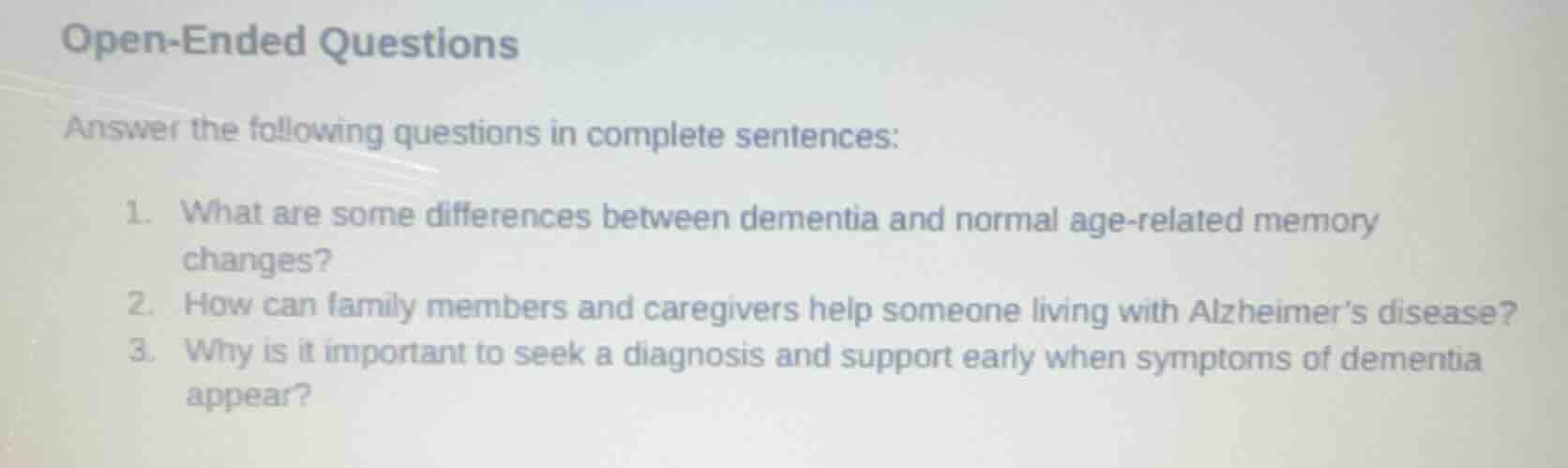
open - ended questions
answer the following questions in complete sentences:
- what are some differences between dementia and normal age - related memory changes?
- how can family members and caregivers help someone living with alzheimer’s disease?
- why is it important to seek a diagnosis and support early when symptoms of dementia appear?
Question 1
Normal age - related memory changes are mild, like occasionally forgetting names or where keys are, but people can still function independently and recall information later. Dementia causes severe memory loss (e.g., forgetting how to do daily tasks, not recognizing loved ones), along with problems in thinking, language, and behavior that interfere with daily life.
Family members and caregivers can help by creating a safe, structured environment (e.g., consistent routines). They can assist with daily tasks (like bathing, eating) when needed, use simple communication (short sentences, clear instructions), and provide emotional support (listening, being patient) as the person with Alzheimer’s may feel confused or frustrated.
Seeking early diagnosis and support for dementia is important because it allows for early treatment (medications can slow progression in some cases), helps the person and family plan for the future (like financial and care arrangements), and provides access to support services (counseling, support groups) that can improve the quality of life for both the person with dementia and their caregivers.

Snap & solve any problem in the app
Get step-by-step solutions on Sovi AI
Photo-based solutions with guided steps
Explore more problems and detailed explanations
Some differences are: Normal age - related memory changes are mild, such as occasionally forgetting a name or where an object is, and people can still manage daily activities and often recall the information later. In contrast, dementia causes severe memory loss (for example, forgetting how to perform daily tasks like dressing or eating, or not recognizing family members), along with impairments in thinking, language, and behavior that significantly disrupt daily life.