QUESTION IMAGE
Question
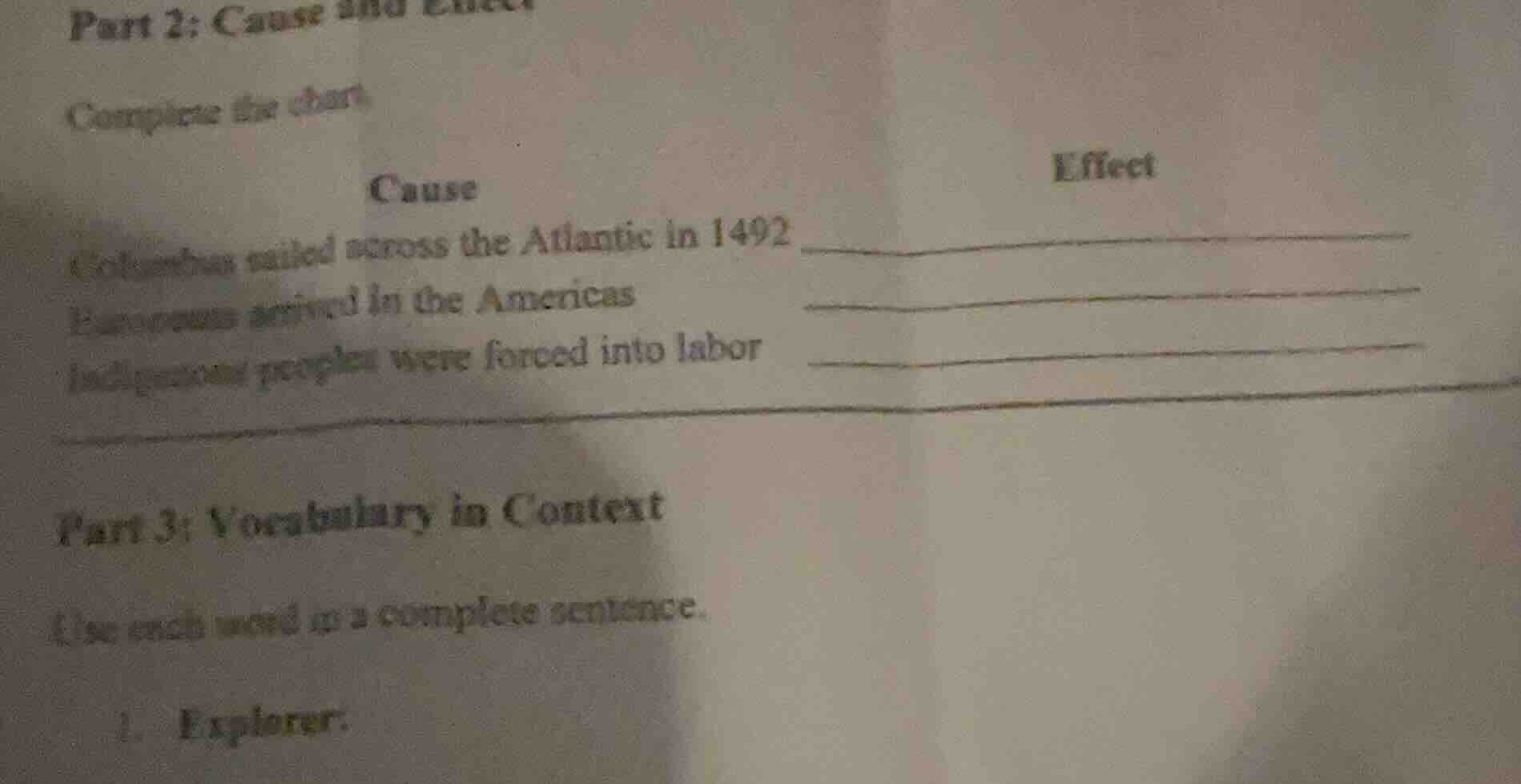
part 2: cause and effect
complete the chart.
cause effect
columbus sailed across the atlantic in 1492
europeans arrived in the americas
indigenous peoples were forced into labor
part 3: vocabulary in context
use each word in a complete sentence.
- explorer:
Part 2: Cause and Effect (Completing the Chart)
To complete the cause - effect chart, we analyze each cause and determine the corresponding effect based on historical knowledge:
- Cause: Columbus sailed across the Atlantic in 1492
- Explanation: Columbus's voyage in 1492 led to the discovery of the Americas (from the European perspective). This voyage opened up the Americas to European exploration and eventual colonization.
- Effect: The Americas were discovered by Europeans (or more specifically, the existence of a new landmass across the Atlantic was made known to Europe, leading to increased European interest in the Americas).
- Cause: Europeans arrived in the Americas
- Explanation: When Europeans came to the Americas, they brought with them new technologies, diseases, and a desire for resources and labor. They also wanted to establish colonies and expand their empires. One of the consequences was the displacement and exploitation of the indigenous populations.
- Effect: Indigenous populations (Native Americans) were displaced, and European colonization of the Americas began (including the establishment of settlements, the introduction of European culture, and the exploitation of natural resources).
- Cause: Indigenous people were forced into labor
- Explanation: Forcing indigenous people into labor, such as in mines or on plantations, led to a high death toll among them due to harsh working conditions, lack of proper care, and the spread of European - brought diseases. As the indigenous population declined, there was a need for alternative labor sources.
- Effect: The population of indigenous people declined significantly, and this led to the trans - Atlantic slave trade (as Europeans sought other sources of labor, mainly from Africa, to work on plantations and in mines in the Americas).
Part 3: Vocabulary in Context (Using "Explorer" in a Sentence)
- Sentence: Christopher Columbus was a famous explorer who sailed across the Atlantic Ocean in 1492 in search of new trade routes and lands.
Final Answers (for Part 2 - Filling the Chart)
| Cause | Effect |
|---|---|
| Europeans arrived in the Americas | Indigenous populations were displaced, and European colonization of the Americas began |
| Indigenous people were forced into labor | Indigenous population declined, and the trans - Atlantic slave trade was initiated |
(For Part 3, the sentence using "explorer" is: "Christopher Columbus was a famous explorer who sailed across the Atlantic Ocean in 1492 in search of new trade routes and lands.")

Snap & solve any problem in the app
Get step-by-step solutions on Sovi AI
Photo-based solutions with guided steps
Explore more problems and detailed explanations
Part 2: Cause and Effect (Completing the Chart)
To complete the cause - effect chart, we analyze each cause and determine the corresponding effect based on historical knowledge:
- Cause: Columbus sailed across the Atlantic in 1492
- Explanation: Columbus's voyage in 1492 led to the discovery of the Americas (from the European perspective). This voyage opened up the Americas to European exploration and eventual colonization.
- Effect: The Americas were discovered by Europeans (or more specifically, the existence of a new landmass across the Atlantic was made known to Europe, leading to increased European interest in the Americas).
- Cause: Europeans arrived in the Americas
- Explanation: When Europeans came to the Americas, they brought with them new technologies, diseases, and a desire for resources and labor. They also wanted to establish colonies and expand their empires. One of the consequences was the displacement and exploitation of the indigenous populations.
- Effect: Indigenous populations (Native Americans) were displaced, and European colonization of the Americas began (including the establishment of settlements, the introduction of European culture, and the exploitation of natural resources).
- Cause: Indigenous people were forced into labor
- Explanation: Forcing indigenous people into labor, such as in mines or on plantations, led to a high death toll among them due to harsh working conditions, lack of proper care, and the spread of European - brought diseases. As the indigenous population declined, there was a need for alternative labor sources.
- Effect: The population of indigenous people declined significantly, and this led to the trans - Atlantic slave trade (as Europeans sought other sources of labor, mainly from Africa, to work on plantations and in mines in the Americas).
Part 3: Vocabulary in Context (Using "Explorer" in a Sentence)
- Sentence: Christopher Columbus was a famous explorer who sailed across the Atlantic Ocean in 1492 in search of new trade routes and lands.
Final Answers (for Part 2 - Filling the Chart)
| Cause | Effect |
|---|---|
| Europeans arrived in the Americas | Indigenous populations were displaced, and European colonization of the Americas began |
| Indigenous people were forced into labor | Indigenous population declined, and the trans - Atlantic slave trade was initiated |
(For Part 3, the sentence using "explorer" is: "Christopher Columbus was a famous explorer who sailed across the Atlantic Ocean in 1492 in search of new trade routes and lands.")