QUESTION IMAGE
Question
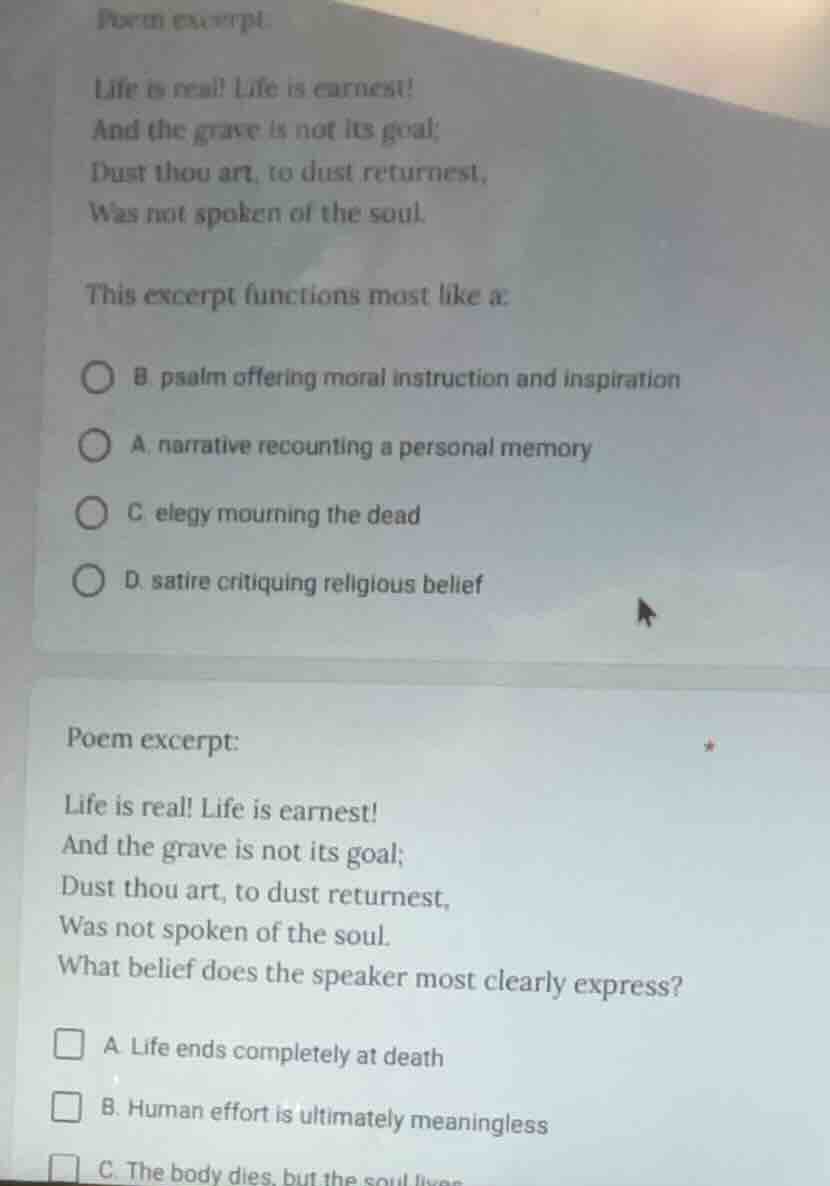
poem excerpt
life is real! life is earnest!
and the grave is not its goal;
dust thou art, to dust returnest,
was not spoken of the soul.
this excerpt functions most like a:
○ b psalm offering moral instruction and inspiration
○ a. narrative recounting a personal memory
○ c. elegy mourning the dead
○ d. satire critiquing religious belief
poem excerpt:
life is real! life is earnest!
and the grave is not its goal;
dust thou art, to dust returnest,
was not spoken of the soul.
what belief does the speaker most clearly express?
□ a life ends completely at death
□ b. human effort is ultimately meaningless
□ c. the body dies, but the soul lives
First Question (Multiple - Choice)
- Option A: The excerpt is not a narrative of a personal memory as it focuses on life and the soul, not a personal story.
- Option B: The lines "Life is real! Life is earnest! And the grave is not its goal" and the distinction between the body (dust) and the soul suggest it offers moral instruction (about the nature of life and soul) and inspiration. A psalm - like text often has such moral and inspiring themes.
- Option C: An elegy mourns the dead, but this excerpt is more about the nature of life and the soul, not mourning.
- Option D: There is no satire or critique of religious belief; it is more of a positive statement about life and soul.
- Option A: The line "Was not spoken of the soul" implies that the soul is different from the body (dust), so life (of the soul) does not end at death. So A is incorrect.
- Option B: The line "Life is real! Life is earnest!" shows that human effort is meaningful, so B is incorrect.
- Option C: The lines "Dust thou art, to dust returnest, Was not spoken of the soul" show that the body (dust) dies, but the soul is not subject to the same (so the soul lives).

Snap & solve any problem in the app
Get step-by-step solutions on Sovi AI
Photo-based solutions with guided steps
Explore more problems and detailed explanations
B. psalm offering moral instruction and inspiration