QUESTION IMAGE
Question
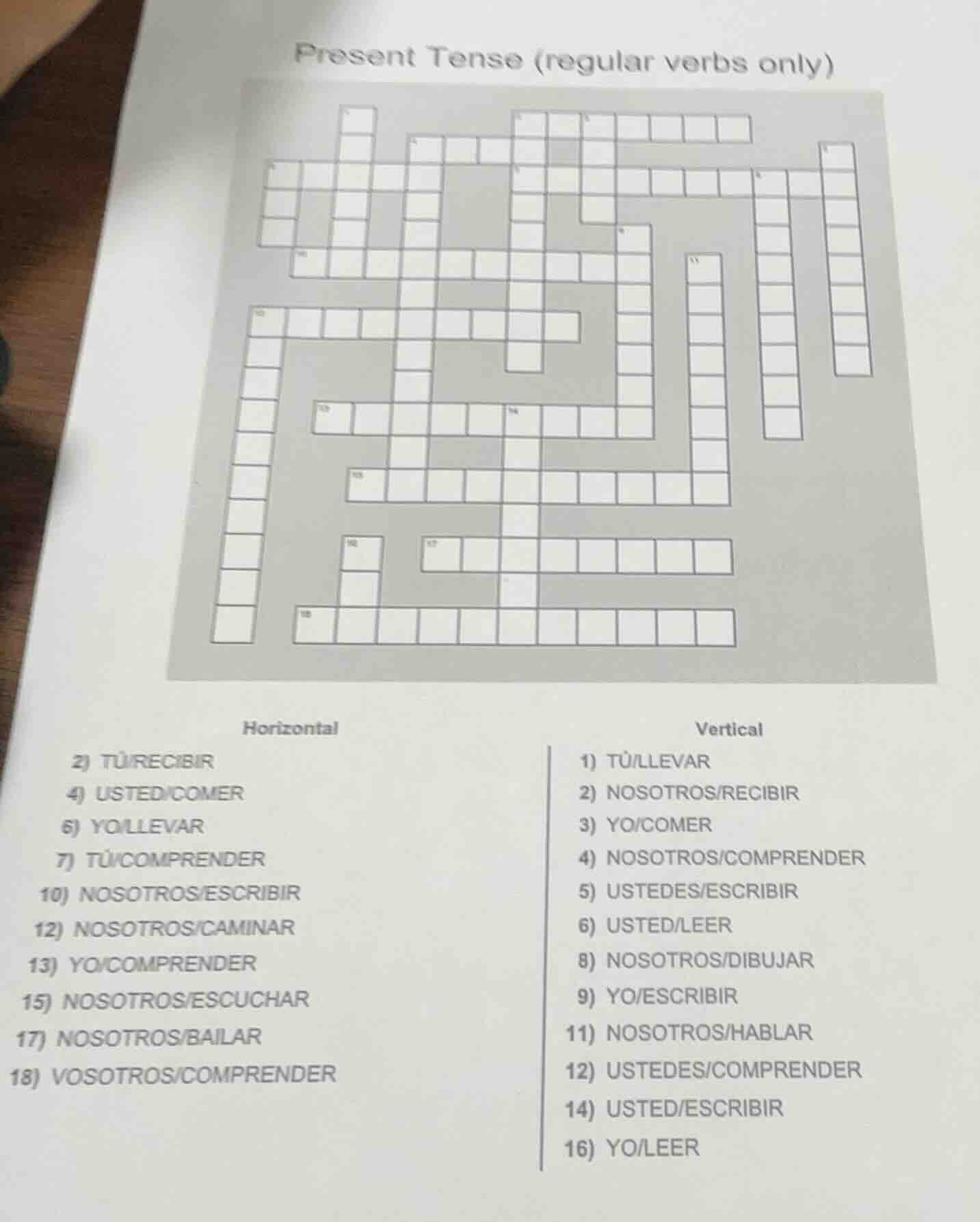
present tense (regular verbs only)
horizontal
- tù/recibir
- usted/comer
- yo/llevar
- tù/comprender
- nosotros/escribir
- nosotros/caminar
- yo/comprender
- nosotros/escuchar
- nosotros/bailar
- vosotros/comprender
vertical
- tù/llevar
- nosotros/recibir
- yo/comer
- nosotros/comprender
- ustedes/escribir
- usted/leer
- nosotros/dibujar
- yo/escribir
- nosotros/hablar
- ustedes/comprender
- usted/escribir
- yo/leer
To solve the crossword, we conjugate each verb in the present tense for the given subject:
Horizontal:
- TÚ/RECIBIR: Tú (second - person singular, informal) + recibir (regular - ir verb). For - ir verbs, the present - tense conjugation for tú is removing - ir and adding - es. So, $recibir
ightarrow recib + es=recibes$.
- USTED/COMER: Usted (second - person singular, formal) + comer (regular - er verb). For - er verbs, the present - tense conjugation for usted is removing - er and adding - e. So, $comer
ightarrow com + e=come$.
- YO/LLEVAR: Yo (first - person singular) + llevar (regular - ar verb). For - ar verbs, the present - tense conjugation for yo is removing - ar and adding - o. So, $llevar
ightarrow llev + o=llevo$.
- TÚ/COMPRENDER: Tú (second - person singular, informal) + comprender (regular - er verb). For - er verbs, the present - tense conjugation for tú is removing - er and adding - es. So, $comprender
ightarrow comprend + es=comprendes$.
- NOSOTROS/ESCRIBIR: Nosotros (first - person plural) + escribir (regular - ir verb). For - ir verbs, the present - tense conjugation for nosotros is removing - ir and adding - imos. So, $escribir
ightarrow escrib + imos=escribimos$.
- NOSOTROS/CAMINAR: Nosotros (first - person plural) + caminar (regular - ar verb). For - ar verbs, the present - tense conjugation for nosotros is removing - ar and adding - amos. So, $caminar
ightarrow camin + amos=caminamos$.
- YO/COMPRENDER: Yo (first - person singular) + comprender (regular - er verb). For - er verbs, the present - tense conjugation for yo is removing - er and adding - o. So, $comprender
ightarrow comprend + o=comprendo$.
- NOSOTROS/ESCUCHAR: Nosotros (first - person plural) + escuchar (regular - ar verb). For - ar verbs, the present - tense conjugation for nosotros is removing - ar and adding - amos. So, $escuchar
ightarrow escuch + amos=escuchamos$.
- NOSOTROS/BAILAR: Nosotros (first - person plural) + bailar (regular - ar verb). For - ar verbs, the present - tense conjugation for nosotros is removing - ar and adding - amos. So, $bailar
ightarrow bail + amos=bailamos$.
- VOSOTROS/COMPRENDER: Vosotros (second - person plural, informal) + comprender (regular - er verb). For - er verbs, the present - tense conjugation for vosotros is removing - er and adding - éis. So, $comprender
ightarrow comprend + éis=comprendéis$.
Vertical:
- TÚ/LLEVAR: Tú (second - person singular, informal) + llevar (regular - ar verb). For - ar verbs, the present - tense conjugation for tú is removing - ar and adding - as. So, $llevar
ightarrow llev + as=llevas$.
- NOSOTROS/RECIBIR: Nosotros (first - person plural) + recibir (regular - ir verb). For - ir verbs, the present - tense conjugation for nosotros is removing - ir and adding - imos. So, $recibir
ightarrow recib + imos=recibimos$.
- YO/COMER: Yo (first - person singular) + comer (regular - er verb). For - er verbs, the present - tense conjugation for yo is removing - er and adding - o. So, $comer
ightarrow com + o=como$.
- NOSOTROS/COMPRENDER: Nosotros (first - person plural) + comprender (regular - er verb). For - er verbs, the present - tense conjugation for nosotros is removing - er and adding - emos. So, $comprender
ightarrow comprend + emos=comprendemos$.
- USTEDES/ESCRIBIR: Ustedes (second - person plural, formal) + escribir (regular - ir verb). For - ir verbs, the present - tense conjugation for ustedes is removing - ir and adding - en. So, $escribir
ightarrow escrib + en=escriben$.
- USTED/LEER: Usted (s…

Snap & solve any problem in the app
Get step-by-step solutions on Sovi AI
Photo-based solutions with guided steps
Explore more problems and detailed explanations
To solve the crossword, we conjugate each verb in the present tense for the given subject:
Horizontal:
- TÚ/RECIBIR: Tú (second - person singular, informal) + recibir (regular - ir verb). For - ir verbs, the present - tense conjugation for tú is removing - ir and adding - es. So, $recibir
ightarrow recib + es=recibes$.
- USTED/COMER: Usted (second - person singular, formal) + comer (regular - er verb). For - er verbs, the present - tense conjugation for usted is removing - er and adding - e. So, $comer
ightarrow com + e=come$.
- YO/LLEVAR: Yo (first - person singular) + llevar (regular - ar verb). For - ar verbs, the present - tense conjugation for yo is removing - ar and adding - o. So, $llevar
ightarrow llev + o=llevo$.
- TÚ/COMPRENDER: Tú (second - person singular, informal) + comprender (regular - er verb). For - er verbs, the present - tense conjugation for tú is removing - er and adding - es. So, $comprender
ightarrow comprend + es=comprendes$.
- NOSOTROS/ESCRIBIR: Nosotros (first - person plural) + escribir (regular - ir verb). For - ir verbs, the present - tense conjugation for nosotros is removing - ir and adding - imos. So, $escribir
ightarrow escrib + imos=escribimos$.
- NOSOTROS/CAMINAR: Nosotros (first - person plural) + caminar (regular - ar verb). For - ar verbs, the present - tense conjugation for nosotros is removing - ar and adding - amos. So, $caminar
ightarrow camin + amos=caminamos$.
- YO/COMPRENDER: Yo (first - person singular) + comprender (regular - er verb). For - er verbs, the present - tense conjugation for yo is removing - er and adding - o. So, $comprender
ightarrow comprend + o=comprendo$.
- NOSOTROS/ESCUCHAR: Nosotros (first - person plural) + escuchar (regular - ar verb). For - ar verbs, the present - tense conjugation for nosotros is removing - ar and adding - amos. So, $escuchar
ightarrow escuch + amos=escuchamos$.
- NOSOTROS/BAILAR: Nosotros (first - person plural) + bailar (regular - ar verb). For - ar verbs, the present - tense conjugation for nosotros is removing - ar and adding - amos. So, $bailar
ightarrow bail + amos=bailamos$.
- VOSOTROS/COMPRENDER: Vosotros (second - person plural, informal) + comprender (regular - er verb). For - er verbs, the present - tense conjugation for vosotros is removing - er and adding - éis. So, $comprender
ightarrow comprend + éis=comprendéis$.
Vertical:
- TÚ/LLEVAR: Tú (second - person singular, informal) + llevar (regular - ar verb). For - ar verbs, the present - tense conjugation for tú is removing - ar and adding - as. So, $llevar
ightarrow llev + as=llevas$.
- NOSOTROS/RECIBIR: Nosotros (first - person plural) + recibir (regular - ir verb). For - ir verbs, the present - tense conjugation for nosotros is removing - ir and adding - imos. So, $recibir
ightarrow recib + imos=recibimos$.
- YO/COMER: Yo (first - person singular) + comer (regular - er verb). For - er verbs, the present - tense conjugation for yo is removing - er and adding - o. So, $comer
ightarrow com + o=como$.
- NOSOTROS/COMPRENDER: Nosotros (first - person plural) + comprender (regular - er verb). For - er verbs, the present - tense conjugation for nosotros is removing - er and adding - emos. So, $comprender
ightarrow comprend + emos=comprendemos$.
- USTEDES/ESCRIBIR: Ustedes (second - person plural, formal) + escribir (regular - ir verb). For - ir verbs, the present - tense conjugation for ustedes is removing - ir and adding - en. So, $escribir
ightarrow escrib + en=escriben$.
- USTED/LEER: Usted (second - person singular, formal) + leer (regular - er verb, note: leer is a regular - er verb in terms of conjugation pattern here). For - er verbs, the present - tense conjugation for usted is removing - er and adding - e. So, $leer
ightarrow le + e=lee$.
- NOSOTROS/DIBUJAR: Nosotros (first - person plural) + dibujar (regular - ar verb). For - ar verbs, the present - tense conjugation for nosotros is removing - ar and adding - amos. So, $dibujar
ightarrow dibuj + amos=dibujamos$.
- YO/ESCRIBIR: Yo (first - person singular) + escribir (regular - ir verb). For - ir verbs, the present - tense conjugation for yo is removing - ir and adding - o. So, $escribir
ightarrow escrib + o=escribo$.
- NOSOTROS/HABLAR: Nosotros (first - person plural) + hablar (regular - ar verb). For - ar verbs, the present - tense conjugation for nosotros is removing - ar and adding - amos. So, $hablar
ightarrow habl + amos=hablamos$.
- USTEDES/COMPRENDER: Ustedes (second - person plural, formal) + comprender (regular - er verb). For - er verbs, the present - tense conjugation for ustedes is removing - er and adding - en. So, $comprender
ightarrow comprend + en=comprenden$.
- USTED/ESCRIBIR: Usted (second - person singular, formal) + escribir (regular - ir verb). For - ir verbs, the present - tense conjugation for usted is removing - ir and adding - e. So, $escribir
ightarrow escrib + e=escribe$.
- YO/LEER: Yo (first - person singular) + leer (regular - er verb). For - er verbs, the present - tense conjugation for yo is removing - er and adding - o. So, $leer
ightarrow le + o=leo$.
Now we can fill in the crossword with these conjugated verbs:
Horizontal Answers:
- $recibes$
- $come$
- $llevo$
- $comprendes$
- $escribimos$
- $caminamos$
- $comprendo$
- $escuchamos$
- $bailamos$
- $comprendéis$
Vertical Answers:
- $llevas$
- $recibimos$
- $como$
- $comprendemos$
- $escriben$
- $lee$
- $dibujamos$
- $escribo$
- $hablamos$
- $comprenden$
- $escribe$
- $leo$
(Note: The actual filling of the crossword grid would involve placing these words in the correct horizontal and vertical slots based on the number of letters and the intersecting letters. For example, the word for 2 (horizontal) "recibes" has 6 letters, which should match the number of squares in that horizontal slot. Similarly, for vertical slots, the number of letters in the conjugated verb should match the number of squares in the vertical slot.)